

Best Nasdaq ETFs for Long Term Investing in 2026
You want to invest in the world's biggest tech companies. Apple. Microsoft. Nvidia. Amazon. These companies have created massive wealth over the past decade. The Nasdaq-100 index tracks them all. ETFs make it easy to own a slice of this growth.
This guide shows you the best Nasdaq ETFs for long term investing. You will learn about QQQ, QQQM, and MON100. You will see which one fits your needs. You will also understand the risks before you invest. No complicated terms. Just clear options that work for Indian and global investors. Read this guide. Build a portfolio that grows with technology.
What Is the Nasdaq-100?
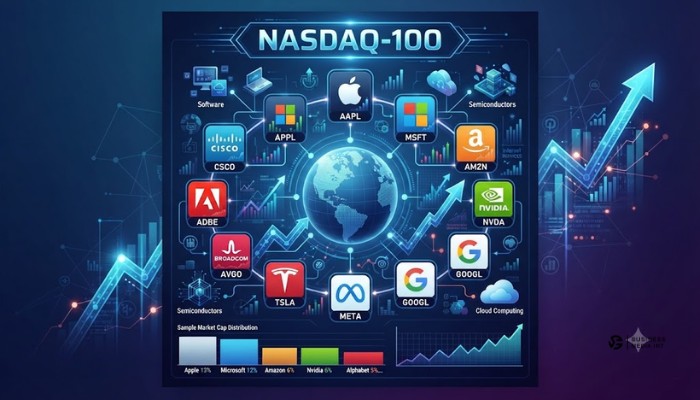
The Nasdaq-100 is an index of the 100 largest non-financial companies listed on the Nasdaq stock exchange . It is heavily weighted toward technology. That is what makes it exciting. It is also what makes it risky.
The index has gained over 26% in the last 12 months. Over the past 5 years, it is up over 90% . This is why investors love it. But past performance does not guarantee future returns.
Read More: Best ETFs to Diversify a Portfolio: Simple Guide for Beginners
Best Nasdaq-100 ETF for Long Term: The Top Options
Invesco QQQ Trust (QQQ)
QQQ is the original Nasdaq-100 ETF. It launched in 1999. It is the largest and most traded. It has $465 billion in assets .
- Expense ratio: 0.18%
- 5-year return: 16.45% annually
- 10-year return: 22.07% annually
Best for: Active traders who need high liquidity. Also good for options trading.
Invesco Nasdaq-100 ETF (QQQM)
QQQM is the newer, cheaper version of QQQ. It tracks the same index. It holds the same stocks. But it charges lower fees.
- Expense ratio: 0.15%
- 5-year return: 13.37% annually
The lower fee means you keep more of your returns. Over 20 years, this difference adds up. QQQM has less liquidity than QQQ. But for long-term investors, this does not matter .
Best for: Long-term buy-and-hold investors. This is the best Nasdaq-100 ETF for most people.
iShares Nasdaq 100 ETF (IQQ)
- BlackRock launched IQQ in July 2026. It is a direct challenge to QQQ .
- Expense ratio: 0.12% (0.10% until 2027)
- IQQ has the lowest expense ratio among the major Nasdaq-100 ETFs. But it is very new. It does not have a long track record.
Best for: Investors who want the lowest possible cost and are willing to bet on a new fund.
State Street SPDR Portfolio Nasdaq 100 ETF (QNDX)
- QNDX launched in June 2026. It is another low-cost option .
- Expense ratio: 0.10%
- Like IQQ, QNDX is new. It has limited history. But the low cost is attractive.
Best for: Cost-conscious investors who do not mind the lack of track record.
Best Nasdaq ETFs for Long Term Investing in India
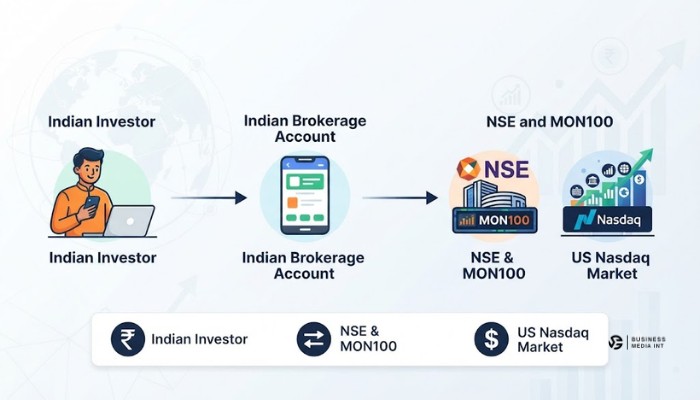
Indian investors have two main ways to access the Nasdaq-100. They can buy Indian ETFs that track the index. Or they can invest in US-listed ETFs through an international brokerage.
Motilal Oswal NASDAQ 100 ETF (MON100)
This is the largest Nasdaq-100 ETF in India. It tracks the Nasdaq-100 index directly .
- AUM: 13,815 crore
- Expense ratio: 0.59%
- 1-year return: 70.96%
- 5-year return: 207.75%
This is the most popular choice for Indian investors. You can buy it on NSE like any other stock. No LRS formalities. No foreign brokerage account .
Best for: Indian investors who want Nasdaq exposure without opening a US account.
Motilal Oswal Nasdaq Q50 ETF (MONQ50)
This ETF tracks the Nasdaq Q-50 index. It holds the next 50 companies after the Nasdaq-100 .
- AUM: 212 crore
- Expense ratio: 0.47%
- 1-year return: 92.37%
This gives you exposure to emerging large US growth companies. It is more focused than the Nasdaq-100.
Best for: Investors who want exposure to the next wave of US growth companies.
Best Nasdaq 100 ETF Vanguard: What You Should Know
- Vanguard does not offer a Nasdaq-100 ETF. This surprises many investors. Vanguard focuses on broad market index funds. Its flagship funds are the Vanguard S&P 500 ETF (VOO) and Vanguard Total Stock Market ETF (VTI).
- If you want Vanguard exposure with a growth tilt, consider the Vanguard S&P 500 Growth ETF (VOOG) . It holds 145 stocks. It has a 49.2% tech weighting. Its expense ratio is 0.04% .
- VOOG has delivered 16.7% annualized returns since inception in 2010 . But it has underperformed QQQ over the past 5 years. QQQ returned 103.8% while VOOG returned 93.8% .
Best for: Vanguard fans who want growth exposure but do not need the Nasdaq-100 specifically.
How to Choose the Right Nasdaq ETF?
Here is a simple guide.
- If you are an Indian investor: Start with MON100. It is the largest, most liquid, and easiest to buy. The expense ratio is higher than US ETFs, but you save on LRS costs and foreign brokerage fees.
- If you have a US brokerage account: Choose QQQM. It has the lowest cost among established Nasdaq-100 ETFs. QQQ is better if you trade actively or use options.
- If you want the absolute lowest cost: Consider IQQ or QNDX. But understand they are new. They have no track record.
- If you want Vanguard: There is no Vanguard Nasdaq-100 ETF. VOOG is your closest option. But it is not the same index.
The Risks You Must Know
The Nasdaq-100 is not diversified like the S&P 500. It is concentrated in technology. Tech makes up 64% of the index . The top holdings are Nvidia, Apple, Microsoft, Amazon, and Alphabet .
This concentration cuts both ways. It drives higher returns when tech is booming. It also drives bigger losses when tech corrects.
The index is also heavily driven by AI. This adds another layer of risk. Concerns over high valuations are building. Any downturn in AI spending could hit these stocks hard .
Indian investors also face currency risk. The rupee-dollar exchange rate affects your returns. If the rupee strengthens, your returns fall even if the index rises .
You May Also Read: ETF Premium to NAV Explained: How to Avoid Overpaying
Quick Summary Table
| ETF | Expense Ratio | Bes For |
|---|---|---|
| QQQM | 0.15% | Long-term buy-and-hold |
| QQQ | 0.18% | Active traders, options |
| IQQ | 0.12% | Lowest cost (new fund) |
| QNDX | 0.10% | Lowest cost (new fund) |
| MON100 | 0.59% | Indian investors |
| MONQ50 | 0.47% | Indian investors, next 50 |
| VOOG | 0.04% | Vanguard growth tilt |
FAQs
1. What is the best Nasdaq-100 ETF for long term investing?
QQQM is the best for most investors. It has a low expense ratio of 0.15%. It tracks the same index as QQQ. The only difference is lower fees and less liquidity. For long-term holders, the lower fee wins .
2. What is the best Nasdaq ETF for Indian investors?
Motilal Oswal NASDAQ 100 ETF (MON100) is the best choice. It is the largest Nasdaq ETF in India with 13,815 crore in assets. You can buy it on NSE without opening a US brokerage account .
3. Does Vanguard have a Nasdaq-100 ETF?
No. Vanguard does not offer a Nasdaq-100 ETF. The closest option is the Vanguard S&P 500 Growth ETF (VOOG). It has a 49.2% tech weighting and a 0.04% expense ratio. But it tracks a different index .
4. What is the difference between QQQ and QQQM?
Both track the Nasdaq-100 and hold nearly identical stocks. QQQM has a lower expense ratio (0.15% vs 0.18%). QQQ has much higher trading volume and liquidity. QQQM is better for long-term investors. QQQ is better for active traders .
5. Is the Nasdaq-100 risky for long-term investing?
Yes. The Nasdaq-100 is concentrated in technology. Tech makes up 64% of the index. It is more volatile than the S&P 500. But over long periods, it has delivered higher returns. You must be comfortable with short-term drops .
6. How much should I invest in Nasdaq ETFs?
Experts suggest keeping 10-20% of your portfolio in international stocks. The Nasdaq-100 is a concentrated tech bet. Do not put all your money in it. Use it as part of a diversified portfolio.
7. Can I buy US-listed Nasdaq ETFs from India?
Yes. You need an international brokerage account. You must complete RBI's LRS formalities. There is a $250,000 annual limit. But Indian ETFs like MON100 are simpler. No LRS needed .
8. What are the top holdings in Nasdaq-100 ETFs?
The top holdings are Nvidia, Apple, Microsoft, Amazon, and Alphabet. These five companies make up a large portion of the index. This is why the index is so concentrated .