

Passive Income from Stocks: Easy Ways to Earn in India
Do you think you can only make money from stocks by buying low and selling high? That is not true. You can earn passive income from stocks without selling a single share. Dividends come to your bank account regularly. You keep your investments and still get cash flow. In India, many companies pay dividends every year. Some pay every quarter. You can also lend your shares and earn extra fees.
This is called stock lending. Your shares stay safe. You get rental income from them. Passive income from stocks is real. It works for everyone. Young adults can start with small amounts. This guide shows you exactly how to do it in simple steps.
What Is Passive Income from Stocks?
Passive income from stocks means earning money from your investments without active trading. You stay invested. Your portfolio generates income for you . This income comes in different forms like dividends or lending fees. You do not need to sell your shares. You do not need to watch the market daily.
For many people, this is the ideal way to build wealth. You get regular cash flow while your investments continue to grow.
Read More: How to Identify Long Term Growth Stocks in India
3 Ways to Earn Passive Income from Stocks in India
1. Dividend Stocks
What Are Dividends?
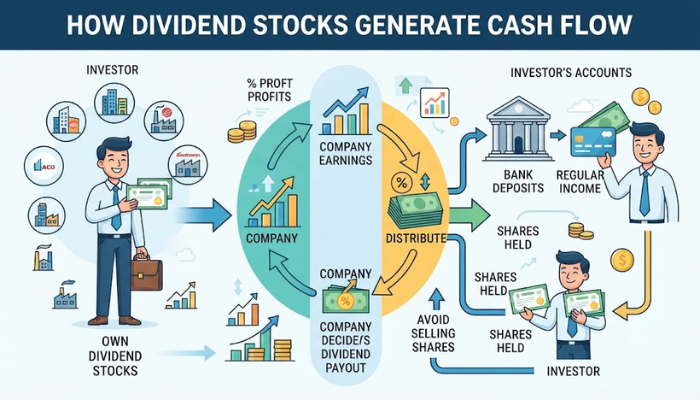
When you buy shares of a company, you become a part-owner. Some companies share their profits with investors. This is called a dividend. You earn income while still holding the shares .
For example, if a company declares a 5 dividend and you own 1,000 shares, you earn 5,000 as income. This money comes directly to your bank account .
Why Dividend Stocks Work Well
Dividend stocks give you two benefits :
- Regular income without selling shares
- Your investment value can grow over time
Example: A 10 lakh investment with a 4% dividend yield can generate about 40,000 annually. That is roughly 3,300 per month . Some companies increase their dividends over time. This helps you beat inflation.
How to Choose Good Dividend Stocks
Look at these factors before investing :
- Dividend yield - Look for a stable yield, not just a high one
- Payout ratio - Check if the company keeps enough profits for growth
- Dividend growth - Prefer companies that consistently increase dividends
- Financial strength - Strong cash flow means steady dividend payments
- Business stability - Stable industries give more reliable income
Risks to Know
Dividend investing has some risks :
- Companies may reduce or stop dividends during difficult times
- Stock prices can go up and down
- Over-concentration in one sector increases risk
2. Stock Lending (SLB Mechanism)
What Is Stock Lending?
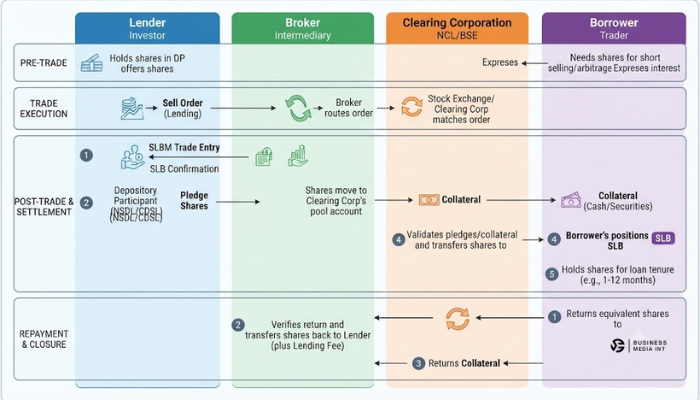
This is a lesser-known way to earn passive income from stocks in India. You lend your shares to traders for a fixed period. They pay you a fee. This is like renting out your house. You still own the shares. You just earn rent on them .
How It Works
Through the Stock Lending and Borrowing (SLB) mechanism, you temporarily lend your shares to short-sellers. These traders borrow shares to sell them first and buy later. They cannot sell what they don't have. So they borrow from you .
How Much Can You Earn?
The lending fee depends on demand. It can be as high as 20 percent per year for stocks in high demand. More commonly, the annual rate is 6 to 12 percent .
Example: You have shares worth 50,000. If you get a lending fee of 1 percent per month, you make 500 each month. That is 6,000 extra per year .
Important Rules
- Minimum lending value is 1 lakh per security
- You need to give margin of 25% of the share value
- Brokers charge 15-18% brokerage on lending fees
- You remain eligible for dividends and bonuses during lending
Safety of Stock Lending
The clearing corporations of NSE and BSE guarantee settlement. If the borrower defaults, the exchange uses their margin to buy shares and return them to you . You do not lose ownership. Your shares come back after the lending period .
3. Systematic Withdrawal Plans (SWP)
What Is SWP?
If you have invested in mutual funds, you can use a Systematic Withdrawal Plan. You invest a lump sum and withdraw a fixed amount regularly. This gives you predictable income .
Why SWP Works
- It provides steady monthly or quarterly income
- It can be more tax-efficient than fixed deposits
- Your remaining investment continues to grow
This approach works well for people who want a steady income without relying only on dividends.
You May Also Read: Difference Between NSE and BSE: Complete Guide for Beginners
Passive Income from Stocks Calculator
How much can you earn? You can use a dividend yield calculator to find out. It shows the annual dividend income you earn for every rupee invested .
The Formula:
Dividend Yield = Annual Dividend per Share ÷ Current Share Price × 100
Example: If a company pays 2 per share annually and the stock trades at 50, its dividend yield is 4% .
Online Tools:
- Dividend yield calculators show forward and trailing yield side by side
- Stock average and profit calculators help estimate your returns
- Financial projection tools can show your future income after tax and inflation
Passive Income Ideas for Young Adults
If you are a young adult, passive income from stocks is a great goal. Start early. Even small amounts grow over time.
How to Start
- Open a demat and trading account
- Research dividend-paying companies
- Start with a small investment
- Reinvest dividends to buy more shares
- Be patient and stay consistent
What to Avoid
- Chasing extremely high yields without checking financial healh
- Investing in only one sector
- Panic selling when markets fall
- Expecting quick returns

Tax on Passive Income from Stocks
Dividend Tax
Dividend income is taxed based on your income slab .
Example:
- Dividend received: 50,000
- Tax rate: 30%
- Tax payable: 15,000
- Net income: 35,000
TDS on dividend income for residents is 10% under Section 194 if the total dividend exceeds 10,000 in a financial year. If PAN is not provided, the TDS rate increases to 20% .
Stock Lending Tax
Income from lending stocks through SLBM is treated as business income, not capital gain. There is no capital gains tax just for lending . This is extra income without changing your long-term investing plan.
FAQs
1. Can I earn passive income from stocks in India without selling?
Yes. You can earn through dividends, stock lending, and systematic withdrawal plans. You keep your shares and still get regular income .
2. What is a good dividend yield for passive income?
A good yield is usually between 2-6%. Yields above 6% may come with higher risk. Check the company's payout ratio and financial health before investing .
3. Is stock lending safe in India?
Yes. The clearing corporations of NSE and BSE guarantee settlement. You get your shares back after the lending period. During lending, you still get dividends and bonuses .
4. How much can I earn from stock lending?
Lending fees range from 6 to 12 percent annually. For high-demand stocks, it can go up to 20 percent. The fee depends on market demand .
5. What is the m inimum amount needed to lend shares?
The minimum order value per security is 1 lakh. You need a demat account and a broker with access to the SLB segment .