

How to Invest in AI Technology Companies: A Simple Guide
Artificial intelligence is changing the world. It is also changing how people invest money. If you want to know how to invest in AI technology companies, you are not alone. Many people are looking for ways to get into this fast-growing sector.
The AI market is huge. The United Nations projects the AI market will reach $4.8 trillion in 2033 . Companies across every industry are building AI into their products. Chipmakers, cloud providers, and software companies are all part of this boom . This guide shows you simple ways to start investing in AI companies. No complicated terms. Just clear steps that work.
Why Invest in AI Technology Companies?
AI is not just a trend. It is changing how businesses work. Companies that use AI can reduce costs, improve efficiency, and create new products. This helps their stock prices grow .
The growth is real. Global spending on AI-powered applications could reach $2.52 trillion in 2026. This is 44 percent growth from the previous year. Three years after ChatGPT made AI famous, the opportunity is bigger than ever .
But there is a catch. AI stocks are volatile. They go up and down quickly. Financial planners say AI stocks are not suitable for short-term goals like buying a house. But for long-term goals like retirement, having some AI exposure makes sense .
Read More: How to Start Investing with Little Money in India

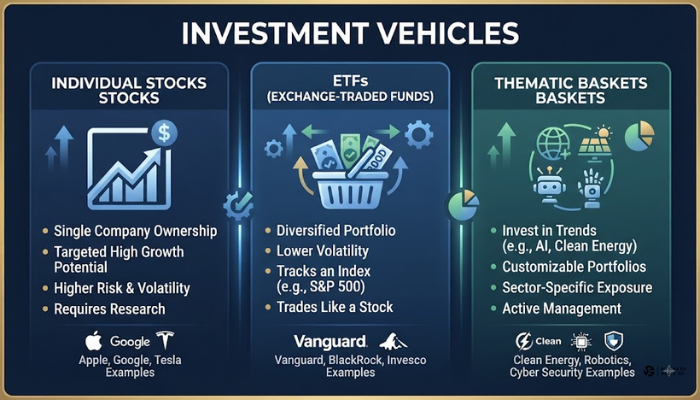
How to Invest in AI Technology Companies: 3 Main Ways
1. Buy Individual AI Stocks
This is the most direct way. You buy shares of specific companies. Your returns depend on how those companies perform. The upside can be big. The downside can also be big .
Many investors start with established tech giants. These companies have stable businesses and are heavily involved in AI . Here are the top AI companies to invest in for 2026.
2. Buy AI ETFs
An ETF is a fund that holds many companies. You buy it like a stock. It gives you diversified exposure to AI companies in one trade. This reduces your risk. If one company performs badly, others can balance it out .
Popular AI ETFs include:
- WisdomTree AI UCITS ETF (WTAI)
- Global X AI & Technology ETF (AIQ)
- iShares Automation & Robotics UCITS ETF (RBOT)
ETFs have low fees. You do not need to pick individual winners .
3. Use a Thematic Basket or Certificate
Some platforms offer curated baskets of AI stocks. These are like ETFs but sometimes give you more flexibility. Swissquote offers an actively managed AI infrastructure certificate. IG offers an AI thematic basket that you can trade in one position .
Top 10 AI Companies to Invest In 2026
These are the best AI companies to invest in based on expert analysis. They cover different parts of the AI ecosystem.
1. Nvidia (NVDA)
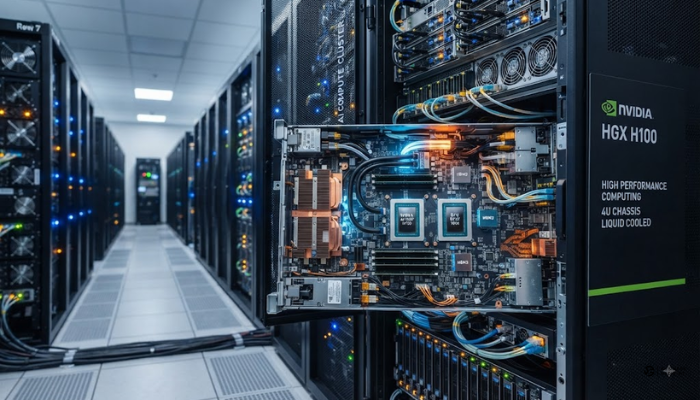
Nvidia is the dominant supplier of graphics processing units (GPUs). These chips are used to train and run AI models. The company is central to the AI economy .
- Key numbers: Revenue was $68.1 billion in the fourth quarter of fiscal 2026, up 73% year over year. Gross margins are 75%. CEO Jensen Huang expects "at least $1 trillion" in data center revenue through 2027 .
- Analyst view: Argus Research has a "buy" rating and $270 price target .
2. Microsoft (MSFT)
Microsoft has invested more than $13 billion in OpenAI, the maker of ChatGPT. Its AI tools are integrated into Azure cloud, Microsoft 365, and Bing. It also launched seven proprietary AI models in 2026 .
- Key strength: Combines AI with a safe, growing dividend. This is rare among AI stocks .
- Analyst view: Argus Research has a "buy" rating and $510 price target .
3. Alphabet (GOOGL)
Google's parent company uses AI across search, YouTube, ad pricing, and Gmail. It created the Gemini AI model and owns DeepMind, an AI research lab . Alphabet plans to sell $80 billion in stock to fund AI infrastructure investments .
Analyst view: Argus Research has a "buy" rating and $440 price target .
4. Amazon (AMZN)
Amazon has the largest cloud infrastructure platform in Amazon Web Services (AWS). AWS is a clear beneficiary of the AI boom, reporting its fastest growth in nearly five years .
- Key AI products: Amazon Bedrock provides access to foundation models. Alexa+ uses AI. It is also an investor in Anthropic, an AI start-up now valued at nearly $1 trillion .
- Analyst view: Argus Research has a "buy" rating and $325 price target .
5. Meta Platforms (META)
Meta uses AI across its advertising business, Facebook, Instagram, and WhatsApp. Meta AI reached 1 billion monthly active users in 2025. Ad impressions increased 18% in the fourth quarter of 2025 .
- Key numbers: Revenue hit a record $59.9 billion in Q4 2025, up 24% year over year .
- Analyst view: Argus Research has a "buy" rating and 36% implied upside .
6. Taiwan Semiconductor Manufacturing (TSM)
TSM is the world's largest semiconductor foundry. It manufactures most advanced AI chips for Nvidia and others. Its advanced packaging capacity for AI chips is "sold out through 2026" .
Analyst view: Argus Research has a "buy" rating and $500 price target .
7. Broadcom (AVCOM)
Broadcom makes chips and infrastructure software. It has significant exposure to AI networking and custom silicon for AI workloads. It offers the highest implied upside among AI stocks according to Argus Research .
Analyst view: Argus Research has a "buy" rating and 49% implied upside .
8. Adobe (ADBE)
Adobe has integrated AI into its creative software ecosystem. Its Firefly generative AI tools are designed to enhance creative work. More than 24 billion images have been generated using Firefly since its 2023 launch .
Key strength: Dominant player in creative and marketing software. Well-positioned for enterprise AI adoption .
9. Palantir (PLTR)
Palantir has become a star of the AI era. Its artificial intelligence platform (AIP) helps customers search through and analyze their data. It has little direct competition . The platform has significantly cut process time for customers' projects, driving strong growth from both government and commercial businesses .
Key strength: Revenue growth has accelerated at scale rather than slowing down .
10. Alibaba (BABA)
Alibaba has broad exposure to AI through cloud computing, e-commerce, and logistics. Its Qwen family of large language models has been downloaded over 1 billion times. It has spawned over 200,000 derivative models, making it the world's most popular open-source model family . The company plans to invest more than $50 billion in AI infrastructure .
Key strength: Trades at a discount to many US peers. Strong competitive position in China .
AI Companies by Sector
Hardware and Chips
- Nvidia (NVDA) - GPUs for AI training and inference
- Taiwan Semiconductor (TSM) - Chip manufacturing
- Broadcom (AVGO) - AI networking and custom chips
- ASML Holding (ASML) - Semiconductor equipment
Cloud and Infrastructure
- Amazon (AMZN) - AWS cloud platform
- Microsoft (MSFT) - Azure cloud, OpenAI partnership
- Alphabet (GOOGL) - Google Cloud, DeepMind
Software and Applications
- Adobe (ADBE) - Creative AI tools
- Palantir (PLTR) - Enterprise AI data analysis
- Salesforce (CRM) - AI agents for customer relationships
- ServiceNow (NOW) - AI for enterprise workflows
- Datadog (DDOG) - AI for cloud monitoring
Consumer AI
- Meta (META) - AI in advertising and social platforms
- Alibaba (BABA) - AI in e-commerce and cloud
How to Invest in AI Stocks for Beginners: Step by Step
Step 1: Assess Your Risk Profile
AI stocks are volatile. Not everyone can tolerate the risk. Financial planner Alim Dhanji says he starts by assessing a client's risk profile and financial goals. If your goals are long-term, like retirement, some AI exposure makes sense. But if you need money in the next 3 years, stay away .
Step 2: Research Your Options
Before investing, do your research. Learn about the companies. Learn about their products. Understand their financial health. Platforms like Fidelity offer stock screening tools to help you compare options .
Step 3: Decide Between Stocks and Funds
Buy individual stocks for direct exposure. Buy ETFs for diversification. For beginners, ETFs are often safer. "Picking individual AI stocks to invest in can be an overly risky move," says financial planner Ryan Lee .
Step 4: Fund Your Account
Open a brokerage account. Link your bank account. Transfer money. You are now ready to invest.
Step 5: Place Your Order
Enter the stock or fund symbol. Decide how much to invest. Choose a market order or limit order. Place your order .
Step 6: Monitor Your Investment
Check your portfolio periodically. Monthly or quarterly is good. Do not check every day. Frequent checking leads to panic selling .
You May Also Read: Best Way to Invest Money in India for Beginners

How Much to Invest in AI Companies?
Experts recommend different allocations based on your risk tolerance:
- Aggressive investor: 15% of your portfolio in AI sector
- Conservative investor: 5% of your portfolio in AI sector
- Money needed in 3 years: 0% in AI stocks
Financial planner Ryan Lee says you may already have AI exposure through index funds like Nasdaq trackers. When you hold a diversified portfolio, you already have some exposure .
Common Mistakes to Avoid
1. Chasing Hype
"My advice is to avoid the hype train," says financial planner Alim Dhanji. Instead, focus on companies with strong balance sheets and cash flows. Avoid buzzy social media recommendations .
2. Investing Money You Need Soon
AI stocks are for long-term goals. Do not invest money you need in the next 3 years. Do not invest your emergency fund .
3. Ignoring Valuations
Many AI stocks trade at high multiples. Some have price-to-sales ratios over 20. These high multiples are bets on the future. They are not free lunches. If growth slows, stocks can fall hard .
4. Putting All Money in One Company
Concentration increases risk. If that company misses earnings or the AI narrative shifts, you lose. Spread your investments across companies and sectors.
5. Not Understanding the Business
Do not buy a stock just because it is an "AI stock." Understand what the company actually does. Understand its products. Understand its competition. This helps you make better decisions.
AI ETFs: A Safer Way to Invest
ETFs let you own many AI companies at once. Here are popular options :
| ETF Name | Ticker | Focus | Expense Ratio |
|---|---|---|---|
| WisdomTree AI UCITS ETF | WTAI | Broad AI, non-US exposure | 0.40% |
| Global X AI & Technology ETF | AIQ | AI software, hardware, services | 0.68% |
| iShares Automation & Robotics | RBOT | AI, robotics, automation | 0.40% |
| Invesco QQQ Trust | QQQ | Mega-cap growth (Microsoft, Nvidia) | 0.18% |
| Technology Select Sector SPDR | XLK | US pure tech leaders | 0.08% |
How to Choose an AI ETF?
Think about where the ETF sits in the AI value chain :
- Mega-cap ETFs - Direct exposure to AI leaders like Microsoft, Nvidia, Alphabet
- Mid-cap ETFs - Emerging AI and software players
- Global ETFs - Exposure to international AI companies like ASML
Owning a single ETF may overweight one layer. Selecting a few targeted ETFs can help you expand your exposure across the AI ecosystem .
FAQs
1. What are the top AI companies to invest in for 2026?
Nvidia, Microsoft, Alphabet, Amazon, Meta, and Taiwan Semiconductor are the top picks. Analysts rate them as "buy" with significant upside potential .
2. How to invest in AI stocks for beginners?
Start with AI ETFs. They give you diversification without picking individual stocks. Open a brokerage account. Fund it. Buy an AI ETF. This is the simplest way .
3. Is it too late to invest in AI companies?
No. The AI market is still growing. Experts say there are still opportunities. But you need to be careful. Some future growth may already be priced into stocks. Focus on companies with strong fundamentals .
4. How much of my portfolio should be in AI stocks?
Experts recommend 5% for conservative investors. 15% for aggressive investors. If you need money in 3 years, keep 0% in AI stocks .
5. What are the risks of investing in AI companies?
AI stocks are volatile. Technology evolves quickly. Today's leader may be outdated tomorrow. Valuations are high. If growth slows, stocks can fall hard .
6. Can I invest in AI companies through my retirement account?
Yes. Many 401(k) plans offer index funds with AI exposure. You can also open a brokerage IRA to buy AI stocks and ETFs .
Your Action Plan
- Decide your risk tolerance - How much can you afford to lose?
- Set a time horizon - Is this money for long-term goals?
- Choose your approach - Individual stocks or ETFs?
- Research companies - Read about the top AI companies listed above
- Start small - Do not invest a lump sum all at once. Use dollar-cost averaging. Invest a fixed amount every month
- Monitor but do not panic - Check quarterly. Stay invested for the long run
- Review and rebalance - Adjust your portfolio once or twice a year