

Best Investing Strategy for Beginners: A Simple Guide
You want to invest. But you do not know where to start. There are too many options stocks mutual funds fixed deposits, gold, real estate everyone has an opinion. Your friend says buy stocks, your uncle says buy gold, your bank says open an FD.
This guide cuts through the noise. It gives you the best investing strategy for beginners in simple words. No complicated terms just clear steps that work.
Why You Need a Strategy?
Without a strategy, you will make emotional decisions. You will buy when prices are high because everyone is talking about it. You will sell when prices fall because you panic. This is how most beginners lose money.
A strategy gives you rules. It tells you what to buy, When to buy, How much to buy, When to sell rules protect you from yourself.
Read More: How to Invest in the AI Infrastructure Boom: Simple Guide
What Are the 4 Investment Strategies?
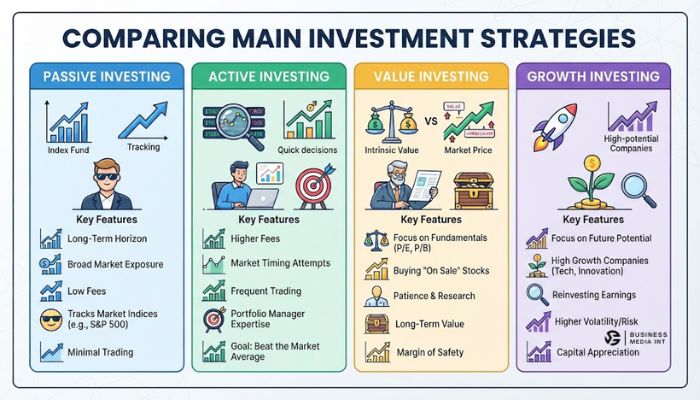
Most investing falls into four broad approaches. Understanding these helps you pick what works for you.
1. Passive Investing
- You buy broad market index funds. You hold them for the long term. You do not try to beat the market. You just match it.
- This is the simplest strategy. It works because most active fund managers fail to beat the index over time. You buy a Nifty 50 index fund. You invest every month. You do nothing else.
2. Active Investing
- You pick individual stocks. You try to beat the market. You research companies. You track earnings. You buy and sell based on your analysis.
- This takes time and skill. Most beginners should not start here. Even professionals struggle to beat the index consistently.
3. Value Investing
- You buy stocks that are undervalued. You look for companies trading below their true worth. You wait for the market to recognize their value.
- This needs patience. It also needs deep research. You must understand financial statements. You must read annual reports. This is not for everyone.
4. Growth Investing
- You buy companies growing faster than the market. You pay higher prices for higher growth. Tech companies often fall in this category.
- This carries more risk. Growth stocks can fall hard if growth slows. But they can also give big returns.
The Best Investing Strategy for Beginners
For most beginners, the best strategy is simple. Passive investing through index funds. Here is why.
- It is low cost. Index funds charge very low fees. Active funds charge 1-2% per year. This difference adds up over decades.
- It is diversified. One Nifty 50 fund gives you 50 companies. One S&P 500 fund gives you 500 companies. You do not depend on one company's success.
- It takes little time. You do not need to research companies. You do not need to track markets daily. You just invest every month.
- It removes emotions. You do not decide when to buy or sell. You follow a fixed plan. This protects you from panic selling.
How to Invest Money to Get Good Returns?
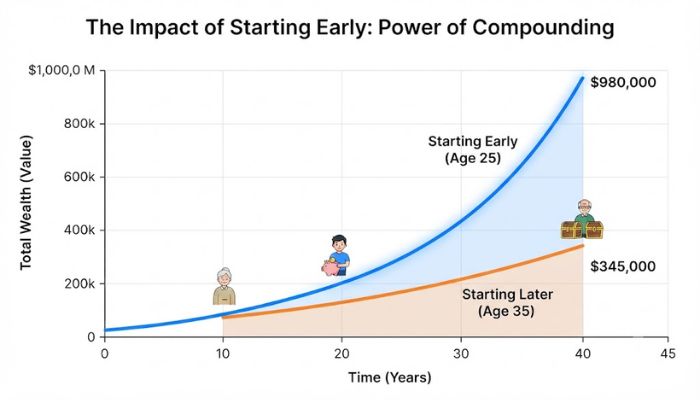
Good returns do not come from picking the right stock. They come from three things.
1. Start Early
Time is your biggest advantage. A person who starts at 25 will have more money at 50 than someone who starts at 35. Even if they invest the same amount. Compounding needs time.
2. Invest Regularly
Do not wait for the perfect time. Invest every month. This is called SIP. When prices are high, you buy fewer units. When prices are low, you buy more units. This averages your cost.
3. Stay Invested
Do not sell when markets fall. Markets recover. If you sell during a crash, you lock in your losses. If you stay invested, you participate in the recovery.
How Does Investing Work for Beginners?
Let me explain the basics.
- You buy an asset. This could be a stock, a mutual fund, or a bond.
- The asset grows. Companies make profits. They grow. Their stock price rises. Mutual funds hold these stocks. So your fund value rises.
- You earn income. Stocks pay dividends. Bonds pay interest. These come to you regularly.
- You sell for a profit. When you need money, you sell. If the asset has grown, you make a profit.
That is investing. It is not complicated. The hard part is controlling your emotions.
You May Also Read: Gold vs Stocks for Long Term Investment India
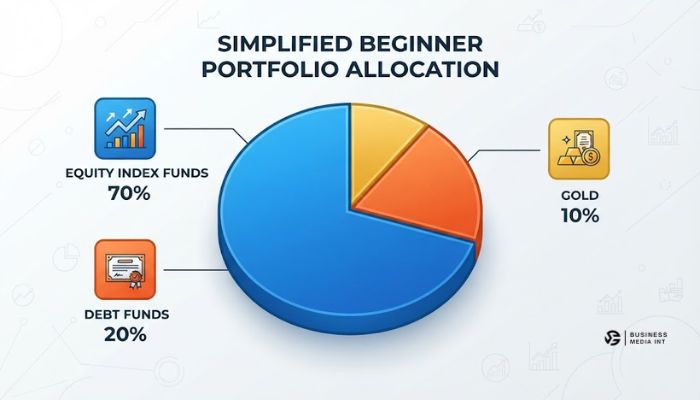
A Simple Beginner Portfolio
Here is a simple strategy you can follow.
- 60-70% in equity index funds. This is your growth engine. It will go up and down. But over 10+ years, it grows.
- 20-30% in debt funds or PPF. This is your stability. It gives steady returns. It protects you during market crashes.
- 5-10% in gold. This is your hedge. Gold rises when stocks fall. It protects your portfolio.
- Emergency fund. Keep 3-6 months of expenses in a savings account. This is not an investment. It is your safety net.
Common Beginner Mistakes
- Waiting for the perfect time. There is no perfect time. Start today.
- Investing money you need soon. Do not invest your rent money. Do not invest your emergency fund.
- Checking prices daily. This leads to panic. Check once a month or quarter.
- Following tips. Your friend's stock tip is not research. Do your own homework or stick to index funds.
- Selling when markets fall. This is the biggest mistake. Markets recover. Stay invested.
Quick Summary Table
| Strategy | Effort | Risk | Best For |
|---|---|---|---|
| Passive (Index Funds) | Low | Moderate | Most beginners |
| Active (Stock Picking) | High | High | Experienced investors |
| Value Investing | High | Moderate | Patient researchers |
| Growth Investing | Medium | High | Risk-tolerant investors |
FAQs
1. What is the best investing strategy for beginners in India?
Passive investing through index funds. Buy a Nifty 50 fund. Invest every month. Do not pick stocks. Do not time the market. This works for most people.
2. How to invest money to get good returns?
Start early. Invest regularly. Stay invested. Use index funds for growth. Add debt funds for safety. Keep some gold. Do not follow tips.
3. How does investing work for beginners?
You buy an asset. It grows over time. You earn dividends or interest. You sell when you need money. Simple.
4. What are the 4 investment strategies?
Passive, active, value, and growth. Beginners should start with passive. It is simple and low cost.
5. How much money do I need to start?
100 is enough. Many index funds allow SIP from 100. Small amounts work. Consistency matters more.
6. Is investing in stocks risky for beginners?
Yes, single stocks are risky. But index funds hold 50 or 500 companies. This spreads the risk. Index funds are safer.
7. Should I invest in mutual funds or stocks?
Mutual funds for beginners. They are managed by professionals. They give instant diversification. Stocks need time and research.
8. What is the best time to start investing?
Now. There is no perfect time. Markets go up and down. Over long periods they grow. Start today. Do not wait.