
Secured vs Unsecured Bonds India: Key Differences Explained
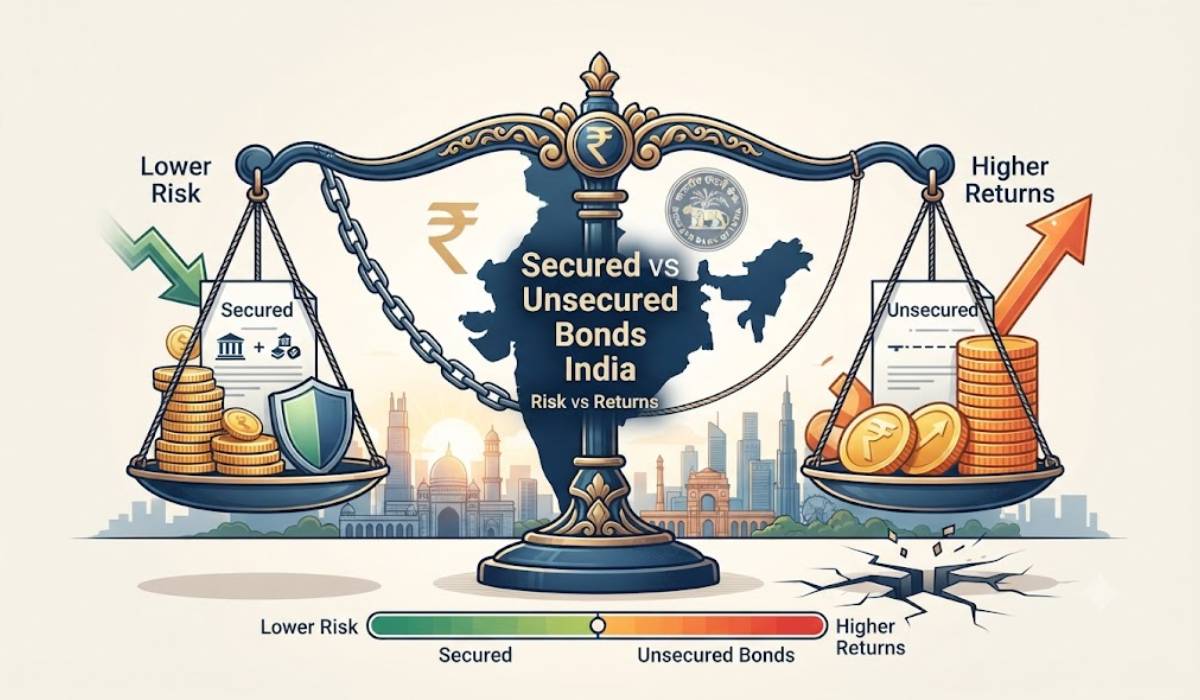
Do you know the difference between secured and unsecured bonds? Many investors do not. They pick bonds without understanding this basic difference. Secured bonds have assets backing them. If the company defaults, bondholders can sell these assets to recover money. Unsecured bonds have no assets backing them. Investors rely only on the issuer's promise to pay.
Government bonds are always unsecured. But they are safe because of the sovereign guarantee. Secured bonds give lower returns but are safer. Unsecured bonds give higher returns but carry more risk. This guide explains secured vs unsecured bonds India in simple words. No complicated terms. Just clear information to help you invest wisely.
What Are Secured Bonds?
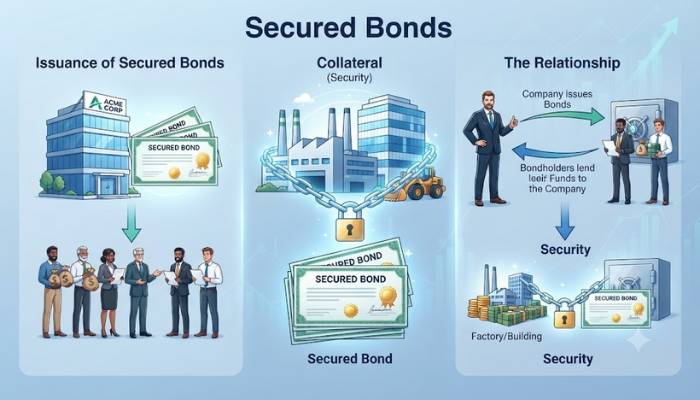
Secured bonds are backed by specific assets. The company pledges real estate, equipment, or other property as collateral . If the company defaults, bondholders can sell these assets to recover their money .
For example, a company issues bonds backed by one of its factories. If the company fails to pay, investors can sell that factory through a trustee . This gives secured bondholders a safety net.
Secured bonds are issued only by corporations and PSUs. Government bonds are never secured . The government does not need to pledge assets because it can print money or raise taxes to pay its debts.
Read More: Can Bonds Be Sold Before Maturity in India? Complete Guide
Types of Secured Bonds
- Mortgage bonds are backed by real estate owned by the issuer .
- Revenue bonds are backed by income from a specific project. For example, a bond for a highway project may be secured by toll collection .
- Covered bonds are backed by a pool of loans like home or car loans. These are issued by banks and NBFCs .
- Secured NCDs are a common type in India. Motilal Oswal raised 500 crore through secured NCDs offering 8.5% returns with a pari passu charge on future receivables . IIFL Finance also launched secured NCDs offering up to 9% yield, rated CRISIL AA/Stable .
What Are Unsecured Bonds?
- Unsecured bonds have no assets backing them . Investors rely only on the issuer's promise to pay. If the company defaults, unsecured bondholders are paid after secured bondholders .
- Government bonds are always unsecured . But government bonds are considered risk-free because of the sovereign guarantee . The government can always pay by printing money.
- Corporate bonds can also be unsecured. They offer higher returns than secured bonds because of higher risk .
Seniority Matters
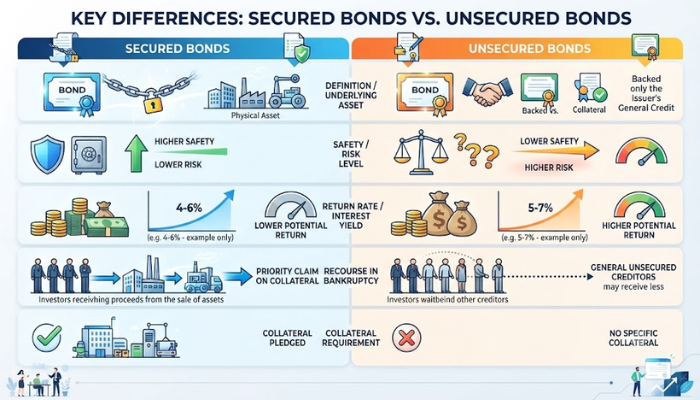
Seniority decides which debt gets paid first . Senior secured bonds are the safest in a company's capital structure. They get paid first in case of bankruptcy . Junior and subordinate debt get paid later.
Secured vs Unsecured Bonds India: Key Differences
Safety
Secured bonds are safer. You have a claim on specific assets if the company fails . Unsecured bonds depend on the issuer's credit rating. Government bonds are unsecured but very safe because of sovereign guarantee .
Returns
Unsecured bonds give higher returns . This compensates for higher risk. Secured bonds give lower returns but are safer. Companies use collateral to improve creditworthiness and offer lower coupons .
Issuers
Corporations and PSUs issue secured bonds . Government bonds are always unsecured . Both private and public companies issue unsecured bonds depending on their credit rating .
Examples of Secured and Unsecured Bonds
| Bond Type | Examples |
|---|---|
| Secured Bonds | Mortgage bonds, Revenue bonds, Covered bonds, Secured NCDs |
| Unsecured Bonds | Government bonds (G-Secs), Corporate debentures, Treasury bills |
Are Government Bonds Secured or Unsecured?
Government bonds are unsecured. There is no asset backing them. But they are considered risk-free because of the sovereign guarantee . The Central and State governments issue bonds and securities through RBI. There is no default risk .
PSU bonds also often have an implicit government guarantee, making them safer .
Which Should You Choose?
Choose secured bonds if you want safety and predictable income. These are good for low-risk investors . Choose unsecured bonds if you want higher returns and are willing to take more risk . However, government bonds are unsecured but safe due to sovereign guarantee.
AAA-rated secured bonds are safest. AA or A rated bonds offer higher returns but with some risk . Consider your investment timeframe too. Holding until maturity eliminates interest rate and liquidity risks .
You May Also Read: Difference Between Bond Price and Bond Yield: Simple Guide
Quick Summary
| Feature | Secured Bonds | Unsecured Bonds |
|---|---|---|
| Backing | Specific assets | None |
| Safety | Higher | Lower |
| Returns | Lower | Higher |
| Issuers | Only corporations | Governments and corporations |
| Examples | Mortgage, Covered, Secured NCDs | G-Secs, Corporate debentures |
| Default Recovery | Sell collateral | Paid after secured holders |
FAQs
1. What is the main difference between secured and unsecured bonds?
Secured bonds have assets backing them. Unsecured bonds do not. If the company fails, secured bondholders get the assets first. Unsecured bondholders get whatever is left.
2. Are government bonds secured or unsecured?
Government bonds are unsecured. There is no asset backing them. But they are safe because the government can always pay.
3. Which gives higher returns?
Unsecured bonds give higher returns. Secured bonds give lower returns. More risk means more return.
4. What happens if a company defaults on secured bonds?
The company sells the pledged asets. Bondholders get the money first. If the assets are worth less than the bond amount, investors may not get full money back.
5. What happens if a company defaults on unsecured bonds?
Unsecured bondholders get paid after secured bondholders. If no money is left, they get nothing. This is why they pay higher interest.
6. What are examples of secured bonds in India?
Mortgage bonds, covered bonds, and secured NCDs are examples. Motilal Oswal and IIFL Finance recently issued secured NCDs.
7. Can retail investors buy secured bonds?
Yes. They can buy through stock exchanges or online bond platforms. Many secured NCDs are also available directly.
8. Which is better for beginners?
Beginners should start with secured bonds or government bonds. Both are safer than unsecured corporate bonds.
9. Are secured bonds risk-free?
No. If the asset value falls below what is owed, you may not get full money back. Secured bonds are safer but not risk-free.
10. How to check if a bond is secured or unsecured?
Read the bond prospectus. It will clearly state if the bond is secured. Bond platforms also show this information.