
How to Buy Bonds Through a Demat Account: A Beginners Guide
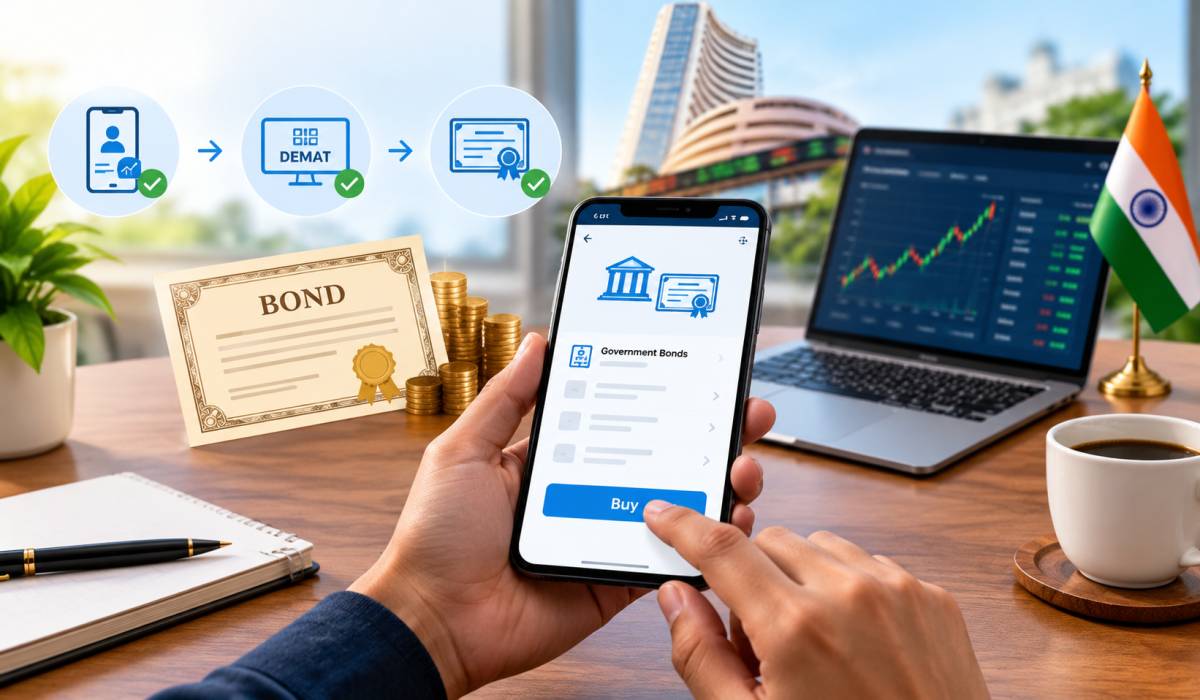
Buying bonds through a demat account is simpler than most people think. You do not need to call a broker or fill out piles of paperwork. Your demat account acts like a digital locker. It holds your bonds safely, just like it holds your shares.
This guide explains how to buy bonds through a demat account in India in simple words. You will learn the steps, the platforms to use, and the things to check before you invest. No complicated jargon. Just clear information that helps you start. Read this guide. Buy your first bond with confidence.
What You Need Before You Start?
You need three things before you can buy any bond.
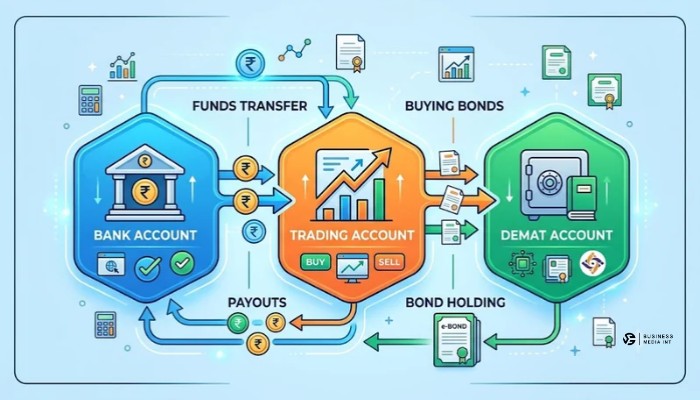
- A demat account. This is where your bonds will be stored electronically. If you already invest in stocks, you have one. If not, you can open one online with any SEBI-registered broker .
- A trading account. This is linked to your demat account. It lets you place buy and sell orders. Most brokers open both together.
- Completed KYC. Your Know Your Customer verification must be done. This links your PAN, Aadhaar, and bank account. It takes about 10 to 15 minutes online .
Read More: How Bond Maturity Value Is Calculated: A Simple Guide
How to Buy Government Bonds (G-Secs)?
Government bonds are the safest. There are two easy ways to buy them.
Option 1: Through Your Broker (NSE goBID)
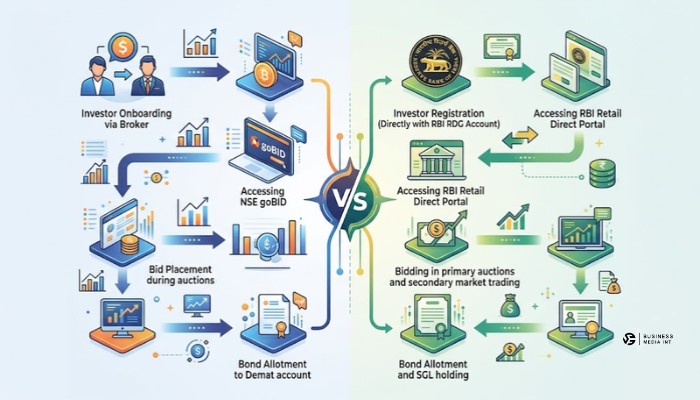
If you have a demat account with a broker that offers NSE goBID, you can buy government bonds directly. Here is how it works.
Log in to your broker's app. Go to the bonds or goBID section. You will see a list of available government securities. Select the one you want enter the amount you want to invest. The minimum is usually 10,000. Submit your bid. The money is blocked from your bank account. If you get the allotment, the bonds are credited to your demat account .
Option 2: RBI Retail Direct
This is the official platform from the Reserve Bank of India. It is free. You open a Retail Direct Gilt (RDG) account directly with the RBI. You need your PAN, bank account, email, and mobile number .
Once your account is open, you can bid for government bonds in primary auctions. You can also buy and sell them in the secondary market. The bonds are held in your RDG account. The RBI has also enabled a facility to transfer G-Secs between your RDG account and your regular demat account seamlessly .
Which is better? RBI Retail Direct is best if you only want government bonds and want zero fees. NSE goBID is better if you already have a broker and want everything in one place.
How to Buy Corporate Bonds?
Corporate bonds are issued by companies. They give higher returns than government bonds. But they carry more risk. You can buy them through stock exchanges or dedicated bond platforms.
Through Your Stock Broker
Brokers like Zerodha, HDFC Securities, Angel One, and Upstox now offer corporate bonds.
- On Zerodha: Log in to Console. Open the "Bonds" section. Browse the available bonds. Check the credit rating and maturity date. Select the bond and place your order. The bonds will be credited to your demat account .
- On HDFC Securities: Log in and go to the "Fixed Income" or "Bonds" section. Browse the options and invest using your linked bank account .
The advantage of using your broker is convenience. Everything is in one app. The disadvantage is that the selection may be limited. Some brokers only list a small number of bonds.
Through Dedicated Bond Platforms
Specialized platforms give you a much wider selection. These platforms are registered with SEBI as Online Bond Platform Providers (OBPPs) .
- IndiaBonds: A dedicated platform for exchange-listed bonds. Minimum investment is around 10,000. It offers corporate bonds, government bonds, and tax-free bonds. The process is fully online. You complete KYC, select a bond, and pay online .
- GoldenPi: One of the largest bond marketplaces in India. It has a huge inventory, including corporate bonds, G-Secs, SDLs, and tax-free bonds. Minimum investment is around 10,000. It is best for investors who want variety and understand credit risk .
- Wint Wealth: Best for beginners. It offers a curated list of senior secured bonds. The minimum investment can be as low as 1,000. The platform does the due diligence for you. Returns are typically 8% to 11% .
- Bondbazaar: Claims to have over 8,000 bonds. It allows you to buy and sell. Zero account opening and maintenance fees .
- Grip Invest: Offers corporate bonds and alternative fixed-income products like lease-backed investments. Good for diversification beyond plain bonds .
Step-by-Step: How to Buy a Bond on a Platform
Here is what the process looks like on most online bond platforms.
- Step 1: Sign up and complete KYC. Enter your PAN, Aadhaar, and bank details. The verification is usually instant .
- Step 2: Link your demat account. The platform needs your demat details so the bonds can be credited to you. Some platforms help you open a new demat account if you do not have one .
- Step 3: Browse and compare. You will see a list of bonds with their coupon rate, yield, maturity date, and credit rating. Compare them carefully. Do not just chase the highest yield .
- Step 4: Place your order. Select the bond. Enter the amount you want to invest. Confirm the order.
- Step 5: Pay online. Use net banking or UPI. The money goes to the clearing corporation.
- Step 6: Bonds credited to your demat. After settlement (usually T+1 or T+2 days), the bonds will show up in your demat account. Interest payments will come directly to your bank account .
Things to Check Before You Buy
- Credit rating. AAA is the safest. AA is safe. A and BBB carry more risk. Higher ratings mean lower returns. Lower ratings mean higher returns but higher risk of default .
- Yield vs coupon. The coupon is the fixed interest rate. The yield is the actual return based on the price you pay. If you buy above face value, your yield is lower than the coupon. If you buy below, your yield is higher .
- Liquidity. Can you sell the bond easily if you need money? Some bonds are thinly traded. You might not find a buyer at a fair price. Government bonds are generally more liquid than corporate bonds .
- Secured or unsecured. Secured bonds are backed by assets. If the company defaults, you can claim those assets. Unsecured bonds are riskier .
- Maturity date. This is when you get your principalback. Match it to your financial goals.
You May Also Read: Taxable Bonds vs Tax-Free Bonds: Simple Guide to Returns and Tax
Quick Summary Table
| What You Want to Buy | Where to Buy | Minimum Investment |
|---|---|---|
| Government Bonds (G-Secs) | RBI Retail Direct, NSE goBID | 10,000 |
| Corporate Bonds (via broker) | Zerodha Console, HDFC Securities | Varies |
| Corporate Bonds (wide selection) | IndiaBonds, GoldenPi, Bondbazaar | 10,000 |
| Corporate Bonds (beginner-friendly) | Wint Wealth | 1,000 |
FAQs
1. Can I buy bonds with a regular demat account?
Yes. Your demat account is the storage place for bonds. You can buy bonds through your broker's platform, NSE goBID, or a dedicated bond platform. The bonds will be credited to your demat account .
2. Do I need a separate account for government bonds?
You can use your regular demat account through NSE goBID. Or you can open a free RBI Retail Direct account. The RBI account is separate from your regular demat, but the RBI has enabled transfers between the two .
3. What is the minimum amount to buy a bond?
Government bonds through NSE goBID start at 10,000. Corporate bonds on most platforms start at 10,000. Wint Wealth allows starting at 1,000 .
4. Which is the best platform to buy bonds in India?
It depends on what you want. RBI Retail Direct is best for government bonds (free). IndiaBonds and GoldenPi are best for variety. Wint Wealth is best for beginners who want curated, safer options .
5. How do I check if a bond platform is safe?
Check if it is registered with SEBI as an Online Bond Platform Provider (OBPP). SEBI maintains a list of registered platforms. Do not use unregistered platforms .
6. How long does it take for bonds to appear in my demat account?
After you place the order and pay, settlement usually takes 1 to 2 days. The bonds will then show up in your demat account .
7. Can I sell bonds before maturity?
Yes, if the bond is listed on an exchange. You can sell it through your broker or platform. But liquidity can be low. You might not get a buyer at a fair price .
8. Are bonds risk-free?
No. Government bonds are very safe because they carry a sovereign guarantee. Corporate bonds carry credit risk. The company might default. Always check the credit rating before investing .