

Can Bonds Be Sold Before Maturity in India? Complete Guide
Yes, you can sell bonds before maturity in India. Most listed bonds can be sold in the secondary market whenever you need cash or want to exit a position. This is one of the key features of bond investing that gives you flexibility.
When you sell a bond before maturity, you are selling to another investor. The issuer does not get involved. The price you get depends on current market conditions, interest rates, and how easy it is to find a buyer.
How to Sell Bonds Before Maturity?
There are several ways to sell bonds before maturity in India.
Selling on a Stock Exchange
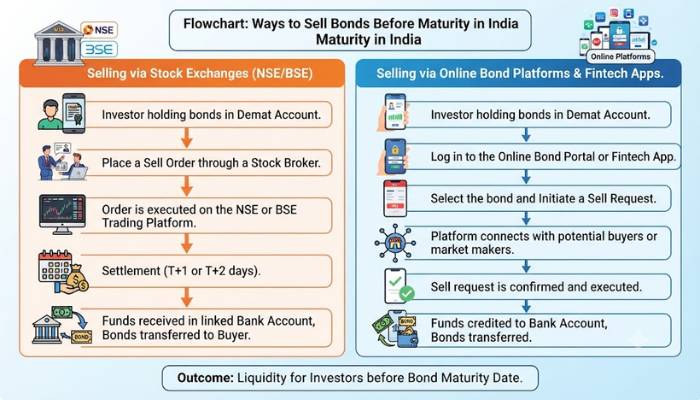
The simplest way is through a stock exchange. If your bond is listed on NSE or BSE, you can sell it like a stock. Log in to your trading account. Go to your holdings. Select the bond. Place a sell order. The exchange matches your order with a buyer.
Once the trade is done, the bond leaves your Demat account. The money comes to your bank account. Government bonds settle in one day. Corporate bonds settle in two days.
Selling Through an Online Bond Platform
SEBI-registered online bond platforms like IndiaBonds also help you sell. You enter the bond details and your expected price. The platform connects you with a buyer. Settlement happens through the clearing corporation.
IndiaBonds offers a Request for Quote system where you submit your request and a bond manager guides you through the process. This is useful for bonds that are not traded actively on exchanges.
Selling G-Secs Through RBI Retail Direct
If you bought government bonds through RBI Retail Direct, you can sell them on the NDS-OM platform. This is the RBI's platform for trading government securities. You place a sell order and the system finds a matching buyer.
Selling Through a Broker
You can also sell bonds through your broker. Some brokers can help you find buyers for bonds that do not trade frequently. This is especially useful for smaller or less popular bonds.
Read More: Difference Between Bond Price and Bond Yield: Simple Guide
What Affects the Price When You Sell?
Your sale price will not always match what you paid. Bond prices change for several reasons.
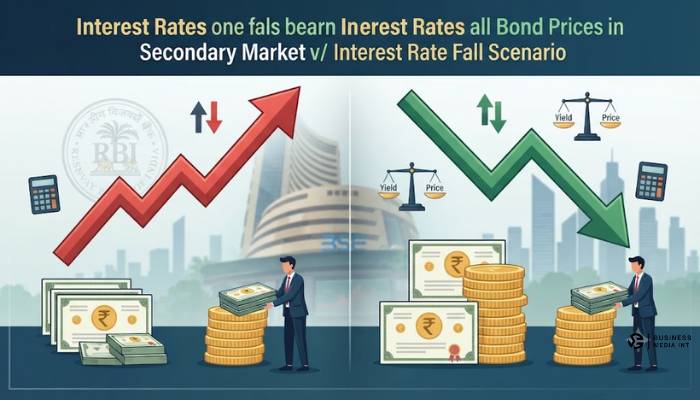
- Interest rate changes have the biggest impact. When RBI raises rates, existing bond prices fall. When rates fall, bond prices rise. This is because new bonds offer better or worse returns than your bond.
- Credit rating changes also affect price. If the company's rating goes down, the bond value drops. An upgrade does the opposite.
- Time left to maturity matters. Longer-term bonds are more sensitive to rate changes than short-term ones.
- Market liquidity is another factor. If buyers are scarce, you might have to accept a lower price. Corporate bonds are less liquid than government bonds because they are traded less frequently.
Liquidity Challenges in India
The biggest challenge when selling bonds before maturity is liquidity. The retail bond market in India is much thinner than the equity market. Many bonds trade infrequently. Spreads can be wide. Getting a fair price is not always guaranteed.
Government bonds generally have good liquidity. They trade frequently and find buyers easily. Corporate bonds can be harder to sell. Smaller issues or lower-rated bonds may not have active buyers.
One Zerodha user on Trading Q&A reported being unable to sell G-Secs because there were no buyers and no Last Traded Price available. This shows that even government bonds can face liquidity issues at times.
SEBI's Liquidity Window: A New Option
- SEBI has introduced a liquidity window facility to help investors sell bonds. This allows bond issuers to offer buyback options at specific intervals before maturity.
- Under this rule, issuers can offer to buy back at least 10% of the total issue size after 12 months. The buyback price is based on the bond's value just before the liquidity window opens.
- The issuer cannot buy back at a discount of more than 1%. So if a bond is valued at 98, the issuer must pay at least 97.2.
- This gives retail investors more confidence. They have an exit route even if the secondary market is not active. However, it is up to the issuer whether to offer this option.
Special Case: Sovereign Gold Bonds (SGBs)
Sovereign Gold Bonds can be sold before maturity in two ways.
- Premature redemption is available after 5 years on interest payment dates. The RBI allows investors to redeem eligible SGB tranches early. For example, in August 2026, several series are eligible for premature redemption.
- Selling on stock exchanges is another option. You can sell SGBs on NSE or BSE if there is market liquidity. The price will be based on current gold prices.
Tax on Selling Bonds Before Maturity
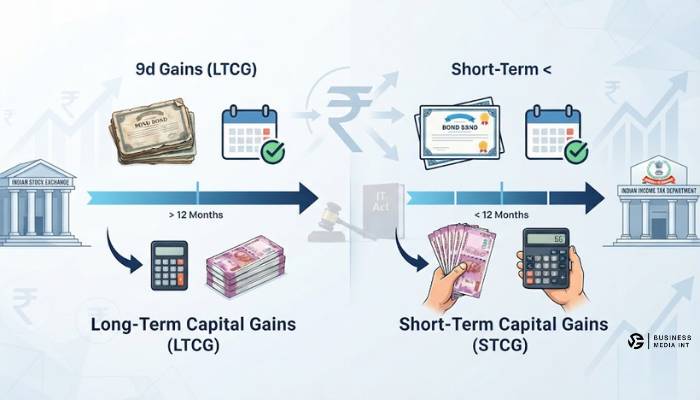
- When you sell a bond before maturity, you may have to pay tax on any profit.
- For listed bonds, the tax depends on how long you held it. If you sell within 12 months, the profit is taxed at 20%. If you held for more than 12 months, the profit is taxed at 12.5% without indexation benefits.
- Tax-free bonds are different. The interest is tax-free. But if you sell them before maturity at a profit, that profit is taxable. This catches many investors by surprise.
Costs to Consider
When you sell bonds before maturity, there are costs involved. Brokerage fees apply. The bid-ask spread can be wide for less liquid bonds. Transaction fees may also apply.
These costs can eat into your returns. In some cases, they might make selling early not worth it.
Should You Sell Before Maturity?
Before you decide, ask yourself a few questions.
- Do you really need the money right now? If you can hold until maturity, you will get the full face value back. Selling early could mean taking a loss.
- Is there a better investment opportunity? Sometimes it makes sense to sell a low-yielding bond and invest in a higher-yielding one.
- Can you find a buyer at a fair price? Check the bond's liquidity before you decide. If the bond trades infrequently, you might have to accept a discount.
You May Also Read: Best Bonds to Invest in 2026: Complete Investment Guide
Summary
| Aspect | Details |
|---|---|
| Can you sell? | Yes, if the bond is listed |
| Where to sell? | NSE, BSE, RBI Retail Direct, online bond platforms |
| Price | Market-determined, may be above or below face value |
| Main challenge | Liquidity - finding a buyer |
| Tax | Capital gains tax applies on profits |
FAQs
1. Can I sell bonds before maturity in India?
Yes. If your bond is listed on NSE or BSE, you can sell it anytime through your trading account. You will get the current market price. Government bonds can also be sold on the RBI Retail Direct platform.
2. How to sell bonds before maturity in India through Zerodha?
Log in to your Zerodha account. Go to your holdings. Select the bond you want to sell. Place a sell order like you would for a stock. The trade will be executed if there is a buyer at your price.
3. How to sell bonds on IndiaBonds platform?
IndiaBonds offers a Request for Quote system. You submit your request with the bond details and expected price. A bond manager will guide you through the process and connect you with a buyer.
4. Can I sell Sovereign Gold Bonds before maturity?
Yes. You can sell SGBs on NSE or BSE if there is market liquidity. You can also redeem them early after 5 years on interest payment dates through the RBI's premature redemption facility.
5. What happens to the price when I sell early?
The price depends on current market conditions. Interest rate changes, credit rating changes, and time left to maturity all affect the price. You may get more or less than what you paid.