

How to Rebalance an Investment Portfolio: A Simple Guide
Over time, your investments grow at different speeds. One asset shoots up another lags behind. Your planned mix starts to drift. Before you know it, your risk level is not what you wanted.
This guide explains how to rebalance an investment portfolio in simple words. You will learn when to rebalance. You will see a portfolio rebalancing example. You will also learn how to rebalance without selling and without paying heavy taxes. No complicated jargon just clear steps that work. Read this guide keep your portfolio on track. Protect your money from unnecessary risk.
What Is Portfolio Rebalancing?
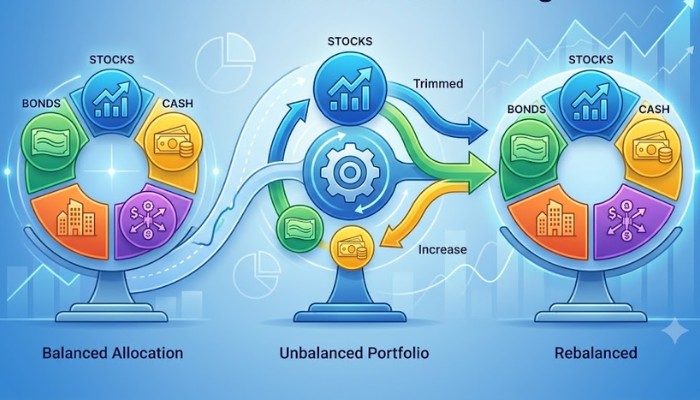
Rebalancing means bringing your portfolio back to your target mix. You sell some of what grew too much. You buy more of what lagged. This keeps your risk level where you want it.
Think of it like a seesaw. When one side gets too heavy, you add weight to the other side. Rebalancing does the same thing for your money.
Read More: Value Investing vs Growth Investing: Which Is Better?
Why Rebalancing Matters?
Without rebalancing, your portfolio drifts. It becomes riskier over time. Why? Because stocks usually grow faster than bonds. After a few good years, stocks take over your portfolio.
If a crash comes, you lose more than you planned. Rebalancing protects you from this. It forces you to sell high and buy low. It is mechanical. It removes emotions from your decisions.
Portfolio Rebalancing Example
Let me give you a simple example.
You have 10,00,000. Your target is 60% stocks and 40% bonds.
- Stocks: 6,00,000
- Bonds: 4,00,000
After one year, stocks grew 25%. Bonds grew 5%.
- Stocks: 7,50,000
- Bonds: 4,20,000
- Total: 11,70,000
Now your mix is 64% stocks and 36% bonds. You are taking more risk than planned.
To rebalance, you need 60% of 11,70,000 in stocks. That is 7,02,000. You sell 48,000 of stocks and buy 48,000 of bonds.
Now you are back to 60/40. You sold high and bought low. That is the power of rebalancing.
When to Rebalance?
There are two common methods.
- Calendar rebalancing: You check your portfolio on a fixed date. Once a year. Or every six months. If it has drifted, you rebalance.
- Threshold rebalancing: You set a limit. If any asset moves more than 5% from its target, you rebalance. This can happen anytime.
Most experts suggest a mix. Check every six months. Rebalance if the drift is more than 5%. This balances cost and control.
Portfolio Rebalancing Calculator
You can use online calculators to do the math for you. Here is what they ask for:
- Current portfolio value
- Current allocation of each asset
- Target allocation of each asset
The calculator tells you how much to buy or sell of each asset. Many free tools are available online. Your broker may also have one built into their app.
How to Rebalance Portfolio Without Selling?
Selling triggers taxes. It also creates costs. But you can rebalance without selling. Here is how.
Use New Contributions
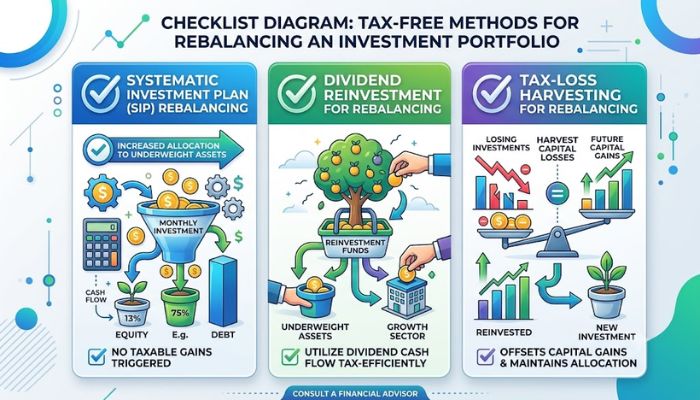
Instead of selling stocks, direct your new SIP money into bonds. This slowly brings your mix back to target. It takes longer. But it avoids taxes and selling costs.
Example: If stocks are too high, put your next few SIPs into bonds. Do not sell stocks. Just buy more bonds. Over time, the mix balances out.
Use Dividends and Interest
If you receive dividends from stocks or interest from bonds, do not reinvest them in the same asset. Use that cash to buy the underweight asset.
Example: If stocks are too high, take the stock dividends and buy bonds. This rebalances without selling.
Rebalance Within Tax-Advantaged Accounts
If you have retirement accounts, rebalance there first. Selling inside these accounts does not trigger taxes. Keep your taxable accounts untouched.
Portfolio Rebalance Tool
Several tools can help you rebalance.
- Your broker's app: Most brokers have a rebalancing tool. It shows your current allocation and suggests trades.
- Spreadsheets: You can build a simple spreadsheet. List your assets. Enter current values. Enter target percentages. The sheet calculates what to buy or sell.
- Online calculators: Many free calculators do this. Just search "portfolio rebalancing calculator."
- Robo-advisors: Some robo-advisors rebalance automatically. They do it for you. You do not have to think about it.
How to Rebalance Stock Portfolio Without Paying Taxes?
Taxes are a big concern. Selling stocks held over 12 months triggers capital gains tax. In India, this is 12.5% above 1.25 lakh per year. Selling within 12 months triggers 20% tax.
Here is how to avoid taxes.
- Use new money. Direct new investments to the underweight asset. Do not sell anything.
- Use dividends. Take dividends in cash. Use them to buy the underweight asset.
- Rebalance in retirement accounts. Sell and buy inside these accounts. No taxes.
- Harvest losses. If you have losing positions, sell them. Use the losses to offset gains. Then rebalance with the proceeds.
- Be patient. If the drift is small, wait. Use new contributions to fix it over time. Do not sell just to rebalance.
You May Also Read: Best Investing Strategy for Beginners: A Simple Guide
Quick Summary Table
| Method | How It Works | Tax Impact |
|---|---|---|
| Sell and Buy | Sell overweight, buy underweight | Triggers taxes |
| New Contributions | Direct new money to underweight | No tax |
| Dividends/Interest | Use cash to buy underweight | No tax |
| Retirement Accounts | Rebalance inside tax-advantaged | No tax |
| Loss Harvesting | Sell losers, offset gains | Reduces tax |
FAQs
1. How often should I rebalance?
Once a year is enough. Or when your mix drifts by 5% or more. Checking too often adds costs and taxes. It does not help returns.
2. What is a rebalancing example?
You start with 60% stocks and 40% bonds. After a year, stocks grow to 70%. You sell 10% ofstocks and buy bonds. Back to 60/40.
3. How do I rebalance without selling?
Use new money. Put your SIP into the underweight asset. Use dividends and interest to buy it. Turn off auto-reinvest. No selling. No tax.
4. How to rebalance without paying taxes?
Use PPF or NPS to rebalance inside. Use new money. Harvest losses to offset gains. Hold for long term. Rebalance less often.
5. What is a rebalancing calculator?
A tool that shows how much to buy or sell. You enter current holdings and target mix. It gives you the numbers.
6. What is threshold rebalancing?
You set a drift limit. Say 5%. When your mix moves 5% away, you rebalance. This cuts down extra trades.
7. What is calendar rebalancing?
You rebalance on a fixed date. Once a year. Or every six months. Simple to follow.
8. Does rebalancing improve returns?
Not always. It controls risk. It makes you sell high and buy low. Over time, this can improve risk-adjusted returns. But it may lower returns in a strong bull market.