

How to Invest in the AI Infrastructure Boom: Simple Guide
AI is changing the world. But most people do not know how to invest in this trend. The real opportunity is not just in AI software. It is in the physical infrastructure that makes AI work. Data centers. Power grids. Chips. Networking equipment. These are the "picks and shovels" of the AI gold rush.
This guide shows you how to invest in the AI infrastructure boom in simple words. No complicated jargon. Just clear steps that help you start.
What Is the AI Infrastructure Boom?
AI needs massive computing power. Companies like Google, Microsoft, Amazon, and Meta are spending billions to build data centers. These data centers need chips, power, cooling, and networking equipment.
The four largest tech companies are on track to invest more than $500 billion in 2026 to expand AI-ready infrastructure . This spending creates opportunities for investors.
Morgan Stanley Research says AI infrastructure will become an "intelligence superhighway" that provides significant net benefits to economies worldwide . The firm expects demand for AI compute to significantly outpace supply for years to come.
Read More: Gold vs Stocks for Long Term Investment India
The Four Waves of AI Investment

Experts see AI investment flowing in four distinct waves . Understanding these waves helps you pick the right investments.
Wave 1: Infrastructure and Physical Buildout
This is where we are today. Companies are building data centers, buying chips, and expanding power capacity. This wave has another two to three years of strong momentum .
Investment opportunities: Hyperscalers (Microsoft, Google, Amazon), semiconductor companies (Nvidia, AMD, TSMC), and data center power and cooling providers.
Wave 2: Tools, Data, and Cloud Platforms
As infrastructure expands, companies need tools to scale AI. This includes data preparation, cybersecurity, and cloud-based AI platforms. This wave will run three to five years .
Investment opportunities: Data analytics companies, cybersecurity firms, and cloud platform providers.
Wave 3: Early Enterprise AI Integration
Companies are starting to embed AI into everyday business tools. This wave will unfold over three to four years .
Investment opportunities: Enterprise software companies that successfully integrate AI into their products.
Wave 4: Productivity-Enabled Value Creation
This is the most powerful wave. It is still years away. Companies that use AI to create new products and services will win .
How to Invest in AI Stocks for Beginners?
You do not need to be an expert to invest in AI. Here are simple ways to start.
1. Buy AI ETFs
ETFs are the easiest way for beginners. One ETF holds many AI companies. You get diversification without picking individual stocks.
Top AI infrastructure ETFs:
- iShares A.I. Innovation and Tech Active ETF (BAI): This ETF holds 49 stocks focused on AI development and deployment. It returned 76% since its launch in October 2024, more than double the S&P 500's 31% return . Top holdings include Micron, Nvidia, AMD, Broadcom, and TSMC. You can buy one share for less than $50 .
- WisdomTree Artificial Intelligence and Innovation Fund (WTAI): This fund focuses on AI bottlenecks. It holds companies that solve memory bandwidth and optical networking challenges. Top holdings include Micron (4.70%), Samsung Electronics (4.55%), and Nvidia (4.23%) .
- Dan Ives Wedbush AI Revolution ETF (IVES): This ETF is based on research from Dan Ives, a top tech analyst. It holds companies across the AI spending cycle. The fund trades for about $33 per share. You can buy a few shares with just $100 .
2. Buy Individual AI Stocks
If you want to pick individual companies, here are the key players.
- Nvidia (NVDA): Nvidia makes the graphics processing units (GPUs) that power AI. Fidelity sees Nvidia as the top AI stock for 2026. It is the largest position in several Fidelity funds, with up to 26% weighting .
- Taiwan Semiconductor (TSM): TSMC manufactures AI chips for Nvidia, AMD, and others. Fidelity calls TSMC one of the two most important providers of computing power for AI .
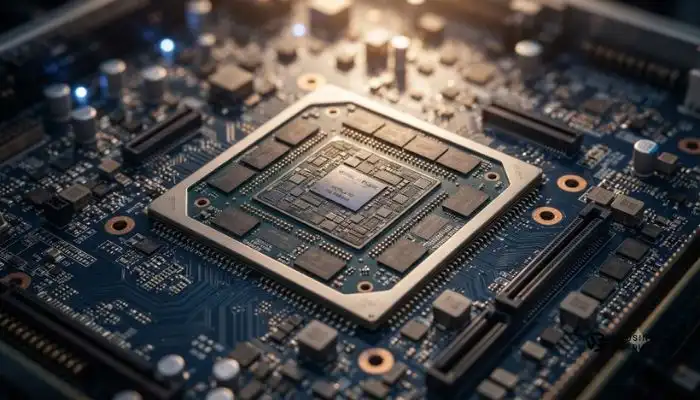
- Micron Technology (MU): Micron makes high-bandwidth memory (HBM) that AI chips need. HBM has become the critical substrate for GPU performance .
- Broadcom (AVGO): Broadcom provides AI networking and custom silicon for AI workloads.
- Power infrastructure companies: Quanta Services, Eaton, Bloom Energy, and NextEra Energy are building the power infrastructure AI data centers need .
Best AI Investing Platform
Several platforms make AI investing easy for beginners.
Composer by SoFi
Composer by SoFi is an AI-powered investing platform. It helps you create, test, and automate investment strategies using everyday language . You can search over 2,000 community-built strategies and deploy one in seconds. You do not need coding skills.
Interactive Brokers
Interactive Brokers supports AI trading agents. You can draft trades using Claude or ChatGPT and send them to your IBKR account for review . The final decision stays with you.
Webull
Webull offers AI trading tools with safety features. You can cap order value, restrict trading to specific symbols, and run in read-only mode until you are ready .
You May Also Read: How to Diversify an Investment Portfolio in India
Fidelity AI Fund Options
Fidelity has several funds with significant AI exposure.
- Fidelity fund managers call AI "the most powerful innovation wave of the last 25 years" . The company sees AI driving 60% of recent US economic growth.
- Fidelity's top AI picks include Nvidia, TSMC, Micron Technology, Broadcom, and Marvell Technology . These companies provide essential components for AI infrastructure.
- The KCGI-Fidelity Hanmi AI Tech Fund invests in key AI companies in Korea and the US. It selects 20 to 40 stocks from a universe of 150 tech companies .
How to Invest in AI Stocks with Little Money?
You do not need thousands of dollars to start. Here are ways to invest with small amounts.
- Fractional shares: Many brokers now offer fractional shares. You can invest $10 or $50 in an expensive stock like Nvidia.
- Low-cost AI ETFs: The Dan Ives Wedbush AI Revolution ETF (IVES) trades at about $33 per share . The iShares AI ETF (BAI) trades at about $44 per share .
- Monthly SIP: Invest a fixed amount every month. This averages your purchase cost and builds discipline.
- Start with one ETF: Pick one broad AI ETF. Invest a small amount. Learn how it works. Add more later.
AI Infrastructure Opportunities Beyond Chips
Most people focus on chip companies. But the AI boom needs much more.
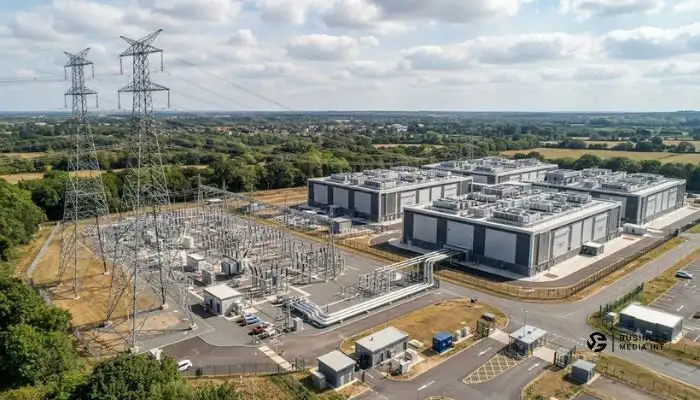
- Power infrastructure: AI data centers need enormous amounts of electricity. Companies like NextEra Energy expect to build 15 to 30 GW of new generation capacity for US data centers by 2035 .
- Electrical equipment: Quanta Services builds high-voltage transmission lines and substations. It ended Q1 2026 with a record backlog of approximately $48.5 billion .
- Cooling solutions: Data centers need advanced cooling. Companies like Eaton provide switchgear and power distribution equipment. Eaton's Electrical Americas orders rose 42% in Q1 2026 .
- Fuel cells: Bloom Energy provides on-site power generation for data centers. It has signed agreements with hyperscalers including Oracle to deploy 2.8 GW of fuel cell systems .
Quick Summary Table
| Investment Type | Examples | Best For |
|---|---|---|
| AI ETFs | BAI, WTAI, IVES | Beginners wanting diversification |
| Semiconductor Stocks | Nvidia, TSMC, Micron, Broadcom | Growth-focused investors |
| Power Infrastructure | Quanta, Eaton, NextEra | Income + growth |
| AI Platforms | Composer by SoFi, Interactive Brokers | Active investors |
| Fidelity Funds | Fidelity Select Technology | Long-term investors |
FAQs
1. What is the AI infrastructure boom?
The AI infrastructure boom is the massive spending on data centers, chips, power, and networking equipment needed to run AI. The four largest tech companies alone will invest more than $500 billion in 2026 .
2. How to invest in AI stocks for beginners?
Start with AI ETFs. They give you diversification without picking individual stocks. The iShares AI ETF (BAI) and Dan Ives Wedbush AI Revolution ETF (IVES) are good options for beginners .
3. What is the best AI investing platform for beginners?
Composer by SoFi is excellent for beginners. It uses AI to help you build and test investment strategies using plain English. You do not need coding skills .
4. How to invest in AI stocks with little money?
You can start with as little as $10 using fractional shares. AI ETFs like IVES trade for about $33 per share. BAI trades for about $44 per share .
5. Does Fidelity have an AI fund?
Yes. Fidelity has several funds with significant AI exposure. Nvidia is the largest position in several Fidelity funds, with up to 26% weighting . Fidelity also partners with KCGI on the KCGI-Fidelity Hanmi AI Tech Fund .
6. What are the risks of investing in AI infrastructure?
AI stocks are volatile. Valuations are high. If growth slows, stocks can fall hard. Morgan Stanley sees power availability and labor shortages as potential speed bumps, though not deal breakers .
7. Should I invest in AI chips or AI software?
Both have opportunities. Chips are the current bottleneck. But software and enterprise AI integration are coming waves. A balanced approach through ETFs captures both .