

Best Long Term Investment Plans for 5–10 Years
The best long term investment plans for 5–10 years in India focus on safe options like Public Provident Fund at 7.1% interest, Fixed Deposits from 6-7.3%, and National Savings Certificate at 6.8%, all backed by government or banks for zero risk.
These beat inflation of 5-6% yearly and offer tax savings up to Rs 1.5 lakh under Section 80C, growing Rs 1 lakh to Rs 1.4-2 lakh over time with easy starts at post offices or SBI branches. For higher returns around 8-10%, National Pension System suits steady workers, while monthly income comes from POMIS at 7.4%—perfect for families planning homes, education, or retirement without market worries.
Why Choose 5–10 Year Plans Now?
Times are changing fast with rising costs for daily needs and big life events. A good plan over 5 to 10 years lets your money work for you through fixed returns or smart growth options. In India, government schemes and bank products stand out because they keep your money safe while beating inflation most years. Families trust these for long-term peace of mind, especially when saving for kids or old age.
People often start small, say with Rs 500 a month, and see real results after 5 years. Banks and post offices make it easy to join, with clear rules on how much you put in and what you get back. This time frame fits working adults who want balance between saving and using money if needed.
Read More: How to Invest in Nifty 50 for Beginners | 2026 Simple Guide
Top Safe Options with Good Returns
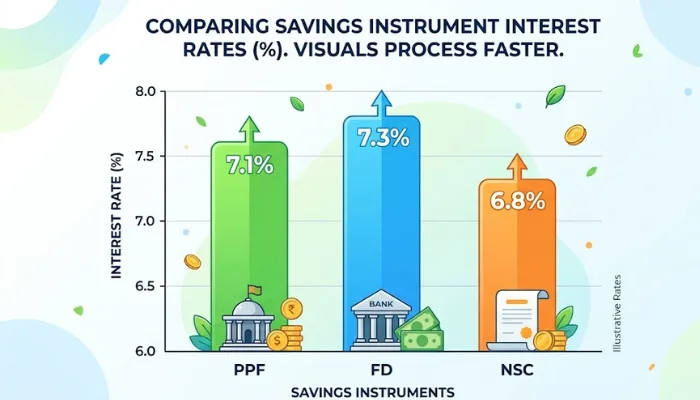
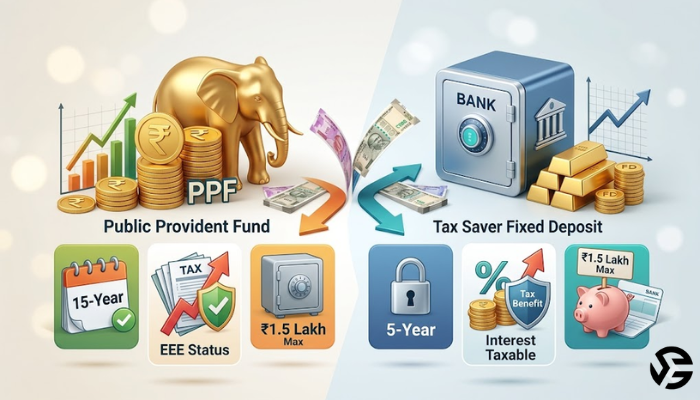
Public Provident Fund tops the list for safety. You open an account at a bank or post office with just Rs 500. It gives about 7.1% interest each year, and the government sets the rate quarterly. Over 5 to 10 years, your money grows tax-free, meaning no tax on interest or when you take it out after 15 years. Many salaried folks add Rs 1.5 lakh yearly to max tax savings under Section 80C.
Fixed Deposits come next for quick access. Banks like SBI or private ones offer 6 to 7.3% for 5 years. Put in Rs 1 lakh, and after 5 years, it grows to around Rs 1.35 lakh with monthly interest payout options. Seniors get extra 0.5%, making it great for parents. Choose ones with DICGC cover up to Rs 5 lakh per bank for full safety.
National Savings Certificate works like a fixed savings stamp. Buy for Rs 100, and it doubles in about 10 years at 6.8% compound interest. Post offices sell it, and you get tax break on investment. Families use it for steady growth without market worries.
How These Plans Beat Inflation?
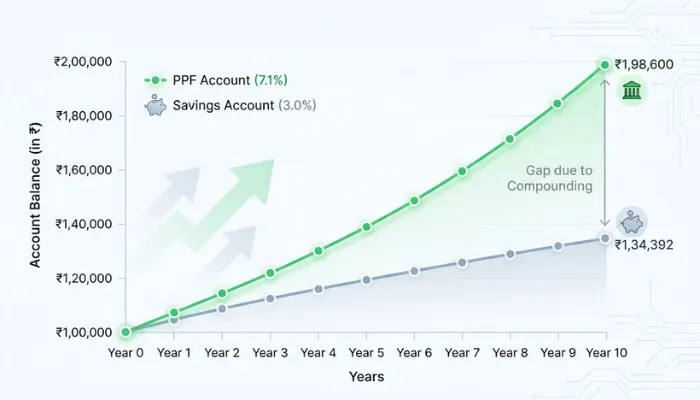
Inflation in India runs around 5-6% yearly, eating into savings. PPF at 7.1% stays ahead, so Rs 10 lakh becomes Rs 14 lakh in 5 years. Fixed Deposits match this if you pick longer terms. Over 10 years, compounding makes a big difference – Rs 50,000 yearly in PPF turns into Rs 8 lakh plus interest.
Real stories show this works. A teacher in Delhi put Rs 10,000 monthly in PPF for 7 years. She now has a fund for her son's college fees, all tax-free. Such plans protect against price rises in food, fuel, and homes.
Risk Levels and Who Should Pick What
Low-risk lovers go for PPF or NSC – government backs them fully. No chance of losing money. Fixed Deposits suit those needing cash sooner, with options to break after 6 months. For slightly higher returns around 8-10%, National Pension System mixes debt and equity, but lock-in till 60 suits patient savers.
Young workers with steady jobs pick NPS for retirement tie-in. Housewives or retirees stick to POMIS for monthly income – Rs 9 lakh gives Rs 5,400 monthly at 7.4%.
| Plan Name | Returns (2026) | Lock-in Time | Best For | Tax Help |
|---|---|---|---|---|
| PPF | 7.1% | 15 years | Family savings | Full EEE |
| FD | 6-7.3% | 5-10 years | Quick growth | 80C up to Rs 1.5L |
| NSC | 6.8% | 5 years | Small investors | 80C |
| POMIS | 7.4% | 5 years | Monthly payout | 80C |
| KVP | Doubles in 115 months | 2.5-10 years | Safe doubling | None |
Steps to Start Your 5–10 Year Plan
Visit your bank or post office with ID proof and PAN card. Fill a form, deposit cash or online transfer. For PPF, link to savings account for auto-debits. Track growth yearly via passbook or app. After 5 years, options open for partial withdrawal in PPF.
Mix plans for best results. Put 50% in PPF, 30% FD, 20% NSC. This spreads safety. Review every year as rates change – like PPF went up last quarter.

Common Mistakes to Avoid
Do not chase high returns without safety; chit funds failed many. Skip if no emergency fund first keep 6 months expenses in savings. Ignore tax rules at your peril; claim 80C properly. Start late, and compounding misses out begin at 30 for 10-year goal. Friends share how ignoring diversification lost them in 2020 market dips. Stick to basics for sure wins.
Tax Benefits for Indian Savers
Section 80C covers up to Rs 1.5 lakh across PPF, FD, NSC. Interest on PPF stays tax-free forever. NPS gives extra Rs 50,000 under 80CCD(1B). File ITR to claim, or lose money back to government. A family of four claims full by splitting investments. This saves Rs 46,800 tax in 30% bracket yearly.
Real Life Examples in India
Ramesh from Mumbai, 35, invests Rs 12,500 monthly in PPF since 2018. By 2028, he hits Rs 10 lakh for home down payment. Priya, retiree in Bangalore, uses SCSS at 8.2% for Rs 4,000 monthly needs. These stories repeat across cities – Delhi clerks, Pune engineers all grow wealth this way.
Future Outlook for These Plans
With RBI rates steady in 2026, expect 7%+ on safe options. Gold or REITs add variety for 10% but watch market swings. Government pushes digital opens – use UPI for easy PPF top-ups. Stay updated via bank apps. Adjust as life changes, like job switch or kid's marriage.
You May Also Read: Best Investment Plan for Monthly Income 2026 | Safe Payouts
Quick Comparison for 5 vs 10 Years
For 5 years, POMIS or FD shine with steady payout. 10 years favour PPF for tax-free compounding. Rs 1 lakh in FD at 7% grows to Rs 1.4 lakh in 5 years, Rs 1.97 lakh in 10. PPF does better long-term.
| Time Frame | Top Pick | Growth on Rs 1 Lakh | Why Choose |
|---|---|---|---|
| 5 Years | FD/POMIS | Rs 1.4 lakh | Income now |
| 10 Years | PPF/NPS | Rs 2 lakh | Big future |
Conclusion
The best long term investment plans for 5–10 years come down to simple choices like PPF or Fixed Deposits that fit right into daily life for Indian families saving for homes or kids' studies.
Walk into your nearby post office or SBI branch this week, put aside what you can from salary, and let it build quietly month by month—folks just like you in places from Delhi streets to small-town markets have turned small starts into big security over time.
FAQ
What makes the best long term investment plans for 5–10 years fully safe in India?
PPF and National Savings Certificate carry government promise, so your money stays secure with 7.1% or 6.8% growth that covers rising prices year after year for everyday savers.
Which safe investments with high returns in India suit first-time family savers?
Bank Fixed Deposits or Post Office Monthly Income Scheme work easy for starters—drop Rs 10,000, collect regular interest, and cut tax by Rs 1.5 lakh through Section 80C without any hassle.
How does Rs 1 lakh turn out after long-term investment plans for 10 years?
PPF grows it to near Rs 2 lakh all tax-free, FDs reach about Rs 1.97 lakh, both perfect for plans like paying school fees or home deposits down the line.
Do safe investments with high returns in India pay cash every month?
Post Office Monthly Income Scheme does at 7.4% on Rs 9 lakh max, turning Rs 5 lakh into roughly Rs 3,000 monthly handy for retired parents or homemakers counting on steady flow.
What tax breaks help with best long term investment plans for 5–10 years?
Put up to Rs 1.5 lakh yearly into PPF, FDs, or NSC under Section 80C to lower your tax bill, plus PPF keeps interest tax-free for good, so working people hold onto more cash each year.