

How to Calculate PE Ratio in Indian Stock Market (2026 Guide)
To calculate PE ratio, (PE ratio means Price to Earnings ratio) divide the current share price by earnings per share (EPS) from the latest company reports, like TTM figures on Moneycontrol. For example, Reliance at Rs 2500 with Rs 100 EPS gives a PE of 25 – meaning you pay Rs 25 for every Rs 1 of profit. In India, a good PE ratio stays under 20 for Nifty stocks, with banks like SBI around 10-12 and tech firms up to 30.
Use NSE data or apps like Groww for stock market calculations, and for private companies, estimate value from deals then divide by profit. Check sector averages and Nifty's current 22 level to spot fair buys in 2026 markets.
What is PE Ratio and Why Care in India?
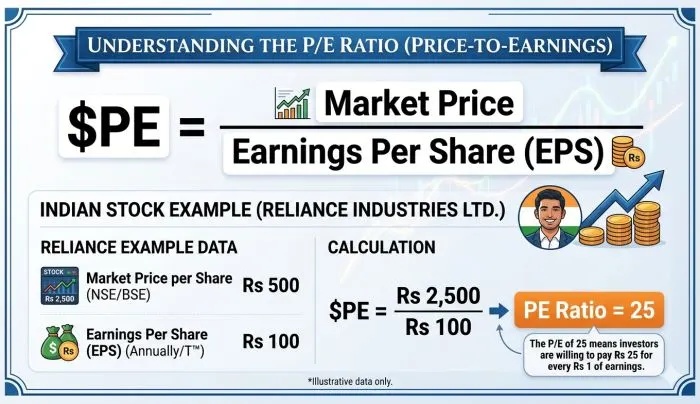
PE ratio tells you the price of one share divided by the earnings per share. Earnings per share means the profit a company makes for each share after all costs. In simple terms, it answers how many years it might take to get back your money from profits if things stay the same.
In India, this matters a lot right now. With the stock market growing fast, many folks from cities like Mumbai, Delhi, or even smaller towns put money in mutual funds or direct shares. For example, during good times like after Diwali or budget days, prices go up, and PE changes. If you know how to calculate PE ratio, you avoid buying overpriced stocks. Sites like Groww or Zerodha explain it this way because beginners need clear steps.
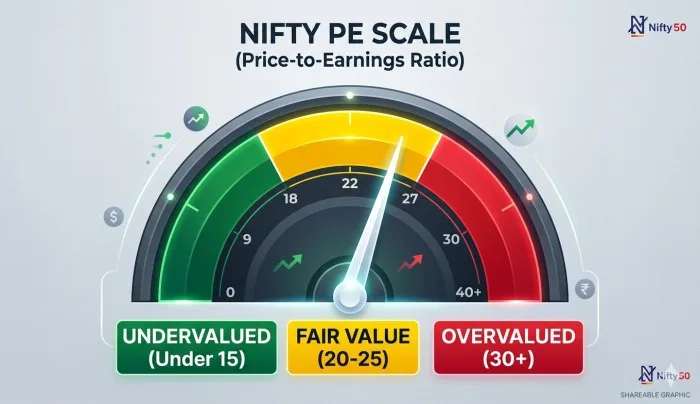
Most Indian investors look at Nifty PE, which stays around 20 to 25 in normal times. When it goes above 30, markets feel hot, and below 15, they look cheap. This helps you decide if Tata Motors or Infosys fits your pocket.
Read More: How to Find Best Penny Stocks Under 100 Rupees BSE Today (Real Method)
How to Calculate PE Ratio in Stock Market – Step by Step
Let me take you through how to calculate PE ratio in stock market. You only need two things: the current price of the share and its EPS. No fancy tools required at first.
Take Step 1: Look up the share price
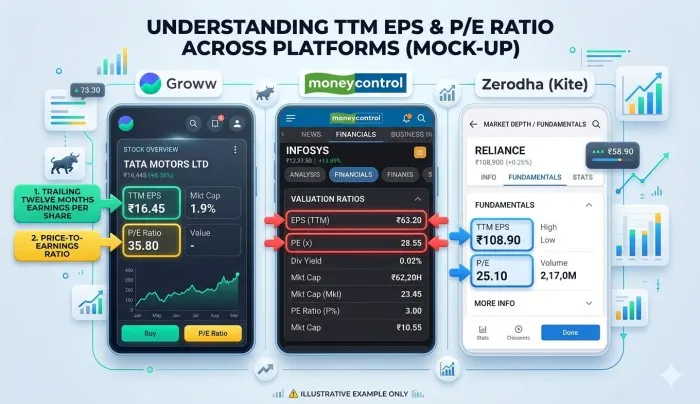
Pull out your phone and open an app such as Upstox or Groww. Or visit the NSE India website. Search for a stock, let's pick Reliance Industries. Suppose today's price shows Rs 2,500 per share. Write that down.
Step 2: Note the EPS value
EPS comes straight from the company's financial reports. Look for the trailing twelve months figure, or TTM EPS, from the last four quarters. For Reliance, it might read Rs 100. You spot this easily on sites like Moneycontrol or Screener.in without any login hassle.
Step 3: Do the division
Now divide the price by EPS. So 2500 divided by 100 equals 25. Your PE ratio is 25. That tells you investors hand over Rs 25 for every Rs 1 of earnings.
Step 4: Put it in context
See how it stacks up against similar stocks. If HDFC Bank shows a PE of 18 in the banking group, it might offer better value right then. Try this with ITC or SBI next time you check your demat account.
Look at these examples from Indian stocks based on recent numbers:
| Stock Name | Share Price (Rs) | EPS TTM (Rs) | PE Ratio |
|---|---|---|---|
| Reliance | 2,500 | 100 | 25 |
| Infosys | 1,800 | 60 | 30 |
| HDFC Bank | 1,600 | 90 | 18 |
| Nifty 50 Avg | - | - | 22 |
Practice this every weekend with a few stocks. During Muhurat trading around Diwali, families sit together and do exactly this to pick safe bets. Over time, it feels natural, like checking the weather before stepping out.
What Makes a Good PE Ratio for Stocks in India?

Asking what is a good PE ratio depends on a few things, not just one magic number. For Nifty 50 companies over the past couple of decades, staying under 20 often signals a good time to buy. Above 25, caution creeps in as prices stretch.
Bank stocks such as SBI trade at 8 to 12 most days – low and steady for those who like less risk. Tech companies like TCS push towards 30 or higher because everyone expects them to grow fast in our digital boom. Match the PE to its sector: public sector units hover around 10, while pharma firms sit near 25 comfortably.
But dig a bit deeper. A low PE could mean the stock hides problems, like falling sales. A high one bets on future wins, yet earnings might disappoint. As a beginner, aim for under 20 in companies with steady names you recognize from daily life. In early 2026, with markets holding firm, Nifty around 22 feels balanced for most pockets.
Compare within groups too. If Maruti Suzuki shows 22 while other car makers average 20, weigh if the extra makes sense for your goals. This habit turns casual saving into smart wealth building over months and years.
Calculating PE Ratio for Private Companies in India
Private companies skip the stock market spotlight, so no live price exists. Still, you can work out a PE ratio when thinking of investing in one, like a local business or startup pitch from a friend.
Step 1: Guess the right value for shares
Without trading, fall back on book value from balance sheets or a recent sale. Say someone offers 10% of a firm for Rs 10 lakh – that puts the full business at Rs 1 crore.
Step 2: Work out EPS from their books
Grab last year's total profit and divide by number of shares. Profit at Rs 10 lakh with 1 lakh shares gives EPS of Rs 10. Private firms share less openly, so ask for audited papers.
Step 3: Run the numbers same as public ones
Total value Rs 1 crore divided by Rs 10 lakh profit equals PE 10. Per share: Rs 100 price over Rs 10 EPS still 10.
Experts tweak it using public peers. For a private tech outfit, start with Infosys at 30 but cut for extra risks like no public scrutiny. In India, family-run shops or angel deals in Bangalore hubs use this approach daily. Speak to a chartered accountant for polish, but grasping the base lets you talk confidently at meetings.
Private PE brings hurdles – profits jump around without steady reports, values stay guesswork. Yet it empowers you in negotiations, whether buying into a neighbourhood venture or checking a relative's firm.
Different Types of PE Ratios Common Here
Investors pick from two main kinds that fit Indian needs. Trailing PE relies on past EPS from recent quarters – safe and factual, straight from Screener.in updates. Forward PE looks ahead to expected profits next year, based on company hints during earnings calls.
Reliance might guide stronger sales ahead, dropping forward PE even if today's price holds. Finance sites suggest trailing for careful picks, forward when chasing growth plays. Mutual funds from Mirae Asset or others list both to help you choose.
Quick Tools and Everyday Tips
Forget notebooks today. Moneycontrol flashes PE live with every stock tick. Tickertape scans for low PE names in seconds, ET Money adds filters for sectors. Enter price and EPS into free calculators if you prefer hands-on.
Pair PE with checks on debt levels and sales trends – it paints the full picture. With global shifts like trade talks in 2026, glance at Nifty PE each Monday morning over chai.
You May Also Read: Best Stocks to Invest in 2026 for Long Term Growth
Mistakes to Skip When Using PE
Folks often grab low PE stocks blind, missing reasons like upcoming losses. Metals trade low normally – don't assume bargains everywhere. Chasing high PE dreams without proof leads to heartburn later. Overlook time too: EPS from five years ago loses punch against today's prices. Stick to fresh TTM data always.
Conclusion
Learning how to calculate PE ratio gives you real power in the Indian stock market. Next time you open Groww or check NSE prices, grab the share price and EPS, do the simple division, and see if the stock fits your plan. Over time, this habit helps you pick better shares like Reliance or HDFC Bank without guessing.
Start small, check Nifty levels each week, and build your investments step by step. Share these steps with friends or family – everyone wins when more people understand how to calculate PE ratio in stock market.
Questions People Often Ask
How to calculate PE ratio?
Take the current share price and divide it by EPS from the latest reports. For example, Rs 2500 price with Rs 100 EPS gives PE of 25.
What is a good PE ratio for Indian stocks?
Under 20 works well for safe buys in Nifty companies, while banks like SBI stay around 10-12. Always check the sector average too.
How to calculate PE ratio in stock market for beginners?
Use apps like Moneycontrol: find price on NSE, get TTM EPS, then divide. Practice with five stocks to get comfortable fast.
What is a good PE ratio right now in India?
Nifty sits near 22 in 2026, so below that looks fair for most picks. Tech stocks can go higher if growth looks strong.
How to calculate PE ratio for private company?
Estimate total value from recent deals, divide by yearly profit, or use per share figures. Adjust down from public peers like Infosys for risks.