

High Return Bonds in India: Best Investment Guide
Are you tired of getting low interest on your fixed deposits? Do you want better returns on your savings? Then you need to know about high return bonds in India. These bonds give you much higher interest than bank FDs. Many investors are moving their money from FDs to bonds. They want better income from their savings.
The Reserve Bank of India has cut interest rates. Bank FDs now give only 6 to 7 percent returns. But high return bonds can give you 8 to 13 percent or more. That is a big difference. If you invest 10 lakh rupees, you could earn 80,000 to 1.3 lakh rupees every year. With FD, you would earn only 60,000 rupees. The extra money makes a big difference over time.
But you must be careful. Higher returns come with higher risk. Some bonds are safe. Some bonds are risky. You need to know which ones to pick. You need to understand what you are buying. This guide will help you understand everything about high return bonds. We will show you the top options, tell you about risks, and help you make smart choices.
What Are High Return Bonds?
High return bonds are debt instruments that pay more interest than regular bonds or FDs. Companies and governments issue these bonds to raise money. They pay you interest every year. When the bond matures, you get your principal back.
There are different types of high return bonds in India:
- Corporate bonds are issued by companies. They need money for expansion or working capital. They pay higher interest than government bonds because they have more risk.
- Government bonds are issued by the central or state government. They are very safe. But they give lower returns than corporate bonds.
- High yield corporate bonds are also called junk bonds. These are issued by companies with lower credit ratings. They pay very high interest because there is more risk of default.
The main difference between safe bonds and high return bonds is credit rating. Credit rating agencies like CRISIL and ICRA rate bonds. AAA is the safest rating. Lower ratings mean higher risk but also higher returns.
Read More: Best Bond Investment Strategy and Apps for Beginners in India

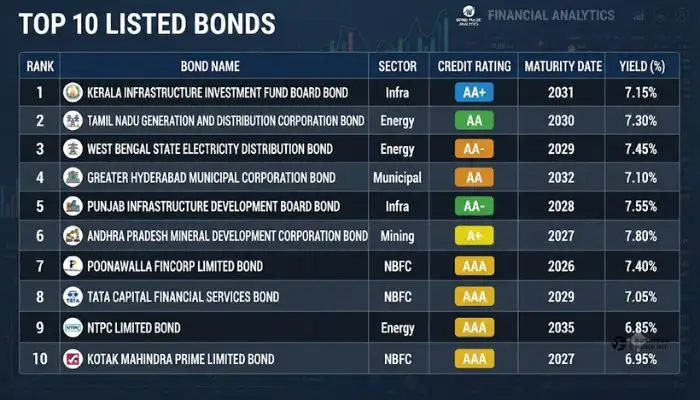
Top 10 High Return Bonds in India
Here are some of the top high return bonds in India right now. These bonds give good returns above FDs.
1. Kerala Infrastructure Investment Fund Board Bond
This bond gives a yield of 9.53 percent. It has an AA rating. That means it is relatively safe. KIIFB uses this money for infrastructure projects in Kerala. The bond pays interest quarterly. It matures between 2031 and 2035. This is one of the best government-backed options for higher returns.
2. Tamil Nadu Generation and Distribution Corporation Bond
This bond gives a very high yield of 13.5 percent. It has an A rating. This is a state electricity company. The yield is high because the risk is higher. Only invest if you can handle some risk.
3. West Bengal State Electricity Distribution Bond
This bond gives a yield of 11.95 percent. It also has an A rating. Like the Tamil Nadu bond, it offers high returns with higher risk. Good for investors who want higher income.
4. Greater Hyderabad Municipal Corporation Bond
This bond gives a yield of 10.55 percent. It has an AA rating. This is a municipal bond for city infrastructure. It offers a good balance of safety and returns.
5. Punjab Infrastructure Development Board Bond
This bond gives a yield of 11.7 percent. It has a BBB rating. This is a lower rating, so risk is higher. But the return is very attractive for investors willing to take more risk.
6. Andhra Pradesh Mineral Development Corporation Bond
This bond gives a yield of 8.92 percent. It has a state government guarantee. This makes it safer. The return is still much better than FD rates.
7. Poonawalla Fincorp Limited Bond
This corporate bond gives a coupon rate of 10.75 percent. It has an AA rating. This NBFC has strong financial backing. The bond offers excellent returns for the risk level.
8. Tata Capital Financial Services Bond
This bond gives a coupon rate of 10.15 percent. It has an AAA rating from CRISIL. This is the highest safety rating. Tata is a trusted group. You get good returns with very low risk.
9. NTPC Limited Bond
This bond gives a coupon rate of 8.48 percent. It has an AAA rating. NTPC is India's largest power company. It is government-backed. This is one of the safest corporate bonds available.
10. Kotak Mahindra Prime Limited Bond
This bond gives a coupon rate of 8.05 percent. It has an AAA rating. This is the vehicle financing arm of Kotak Mahindra Bank. Very safe with decent returns.
High Return Corporate Bonds vs FDs
Many investors ask why they should choose bonds over FDs. Here is the direct answer. Corporate bonds give you better returns. Let us look at the numbers.
A 3-year bank FD gives about 6.5 percent interest. A high-rated corporate bond of the same tenure gives 7.5 to 7.7 percent. That means you earn 1 to 1.2 percent extra every year.
On a 10 lakh rupee investment, that is 10,000 to 12,000 rupees extra every year. Over 3 years, that is 30,000 to 36,000 rupees more in your pocket.
High yield corporate bonds give even more. Some bonds give 10 to 13 percent returns. That is 4 to 6 percent more than FDs. On 10 lakh rupees, that is 40,000 to 60,000 rupees extra per year.
There is also a tax advantage. If you buy listed bonds directly and sell after one year, you pay only 12.5 percent capital gains tax. If you invest in bonds through mutual funds, you pay tax at your income tax slab rate, which could be up to 30 percent.
High Return Bonds Calculator: How to Calculate Your Returns
You need to know exactly how much you will earn before investing. Here is how to calculate returns on bonds.
Simple interest calculation
If a bond has a coupon rate of 10 percent and face value of 1,000 rupees, you earn 100 rupees per year. If you invest 1 lakh rupees, you earn 10,000 rupees per year.
Yield calculation
Yield is different from coupon rate. Yield depends on the price you pay for the bond. If you buy a bond at a discount, your yield is higher than the coupon rate.
Example: A bond has a coupon of 8 percent and face value of 1,000 rupees. You buy it at 900 rupees. You still get 80 rupees interest. But your yield is 80/900 = 8.89 percent.
Yield to maturity
This is the total return you will get if you hold the bond until maturity. It includes both the interest payments and any capital gain or loss. This is the most accurate measure of your returns.
Online calculators
Many bond platforms have free high return bonds calculators. You just enter the bond price, coupon rate, and maturity date. The calculator shows your exact yield. Use these before investing.

Risks You Must Know
High returns come with higher risks. Do not ignore this. Here are the main risks.
Credit Risk
This is the risk that the company will not pay you back. They may default on interest or principal. This happened recently. TruCap Finance defaulted on 150 crore rupees of bonds sold through online portals. The bonds were rated BBB at issue and gave 13 percent yield.
Default Risk
Lower-rated bonds have higher default risk. BBB-rated bonds are one notch above junk. Experts say the yield on these should be between 14 and 18 percent because of the risk. Many retail investors do not understand this and buy risky bonds for high returns.
Liquidity Risk
Some bonds are hard to sell before maturity. The secondary market is not very active. If you need money urgently, you may not find a buyer. Or you may have to sell at a loss.
Interest Rate Risk
When interest rates rise, bond prices fall. If you sell before maturity, you may lose money. This is more of a problem for long-term bonds.
How to Choose High Return Bonds Safely?
Do not just look at the yield. Follow these steps before investing.
- Check the credit rating. AAA and AA are safest. A and BBB have higher risk. Read the rating rationale from CRISIL, ICRA, or CARE. A downgrade trend is a warning sign.
- Check if the bond is secured or unsecured. Secured bonds give you a claim on company assets if something goes wrong. Unsecured bonds do not have this protection.
- Check the company's financial health. Look at their balance sheet. Check their debt-equity ratio. See if they have enough cash flow to pay interest. A healthy business can easily service debt. A stretched business is borrowing just to stay afloat.
- Check liquidity. See if the bond is traded on exchanges. Check trading volumes. If volumes are low, you may not be able to exit when you want.
- Diversify your portfolio. Do not put all your money in one bond. Spread your investment across different issuers. This reduces your risk if one company defaults.
You May Also Read: How to Build a Bond Portfolio Strategy in India (2026 Guide)
How to Invest in High Return Bonds?
Investing in bonds is now easier for retail investors. Here are your options.
- Online bond platforms: More than a dozen SEBI-registered online bond portals offer bonds directly to retail investors. These platforms let you compare yields, ratings, and maturities. You can invest with amounts as low as 10,000 rupees.
- Through brokers: Many SEBI-registered brokers offer bonds on their platforms. You can buy like any other listed security.
- Debt mutual funds: These funds invest in corporate bonds. They are managed by professionals. This is a good option if you do not want to research individual bonds. Corporate bond mutual funds invest 80 percent in corporate bonds.
- RBI Retail Direct: For government bonds, you can use the RBI Retail Direct platform. This lets you buy G-Secs and state development loans directly.
Key Takeaways
- High return bonds give you 8 to 13 percent returns, much better than FDs
- AAA and AA rated bonds are safer, lower rated bonds give higher returns but more risk
- Top options include KIIFB bonds (9.53%), TANGEDCO bonds (13.5%), and Tata Capital bonds (10.15%)
- Always check credit rating, security, cash flows, and liquidity before investing
- Use online bond platforms for easy access, start with 10,000 rupees minimum
- Diversify across different issuers to reduce risk
- Tax advantage: listed bonds held over 1 year taxed at 12.5% capital gains
FAQs
1. What are high return bonds and how do they work?
High return bonds are debt instruments that give higher interest than bank FDs. Companies and governments issue these bonds to raise money. They pay you interest every year. You get your principal back when the bond matures. The returns range from 8 to 13 percent or more.
2. Are high return bonds safe?
It depends on the credit rating. AAA and AA rated bonds are relatively safe. Lower rated bonds like A and BBB have higher risk. Always check the rating before investing. Higher returns mean higher risk. Do not invest without understanding the risk.
3. Which are the best high return bonds in India right now?
Top options include KIIFB bond (9.53%), TANGEDCO bond (13.5%), Tata Capital bond (10.15%), and NTPC bond (8.48%). These give better returns than FDs. Choose based on your risk appetite. AAA rated bonds are safest.
4. How is tax calculated on bond returns?
If you hold listed bonds for more than one year, you pay 12.5 percent capital gains tax on profits. If you sell within one year, tax is as per your income slab. Interest income is added to your income and taxed at your slab rate. This can be up to 30 percent.
5. Can I buy high return bonds with small amount?
Yes. Online bond platforms let you invest with amounts as low as 10,000 rupees. You do not need large money to start. This makes bonds accessible for small investors. You can build a portfolio gradually over time.