
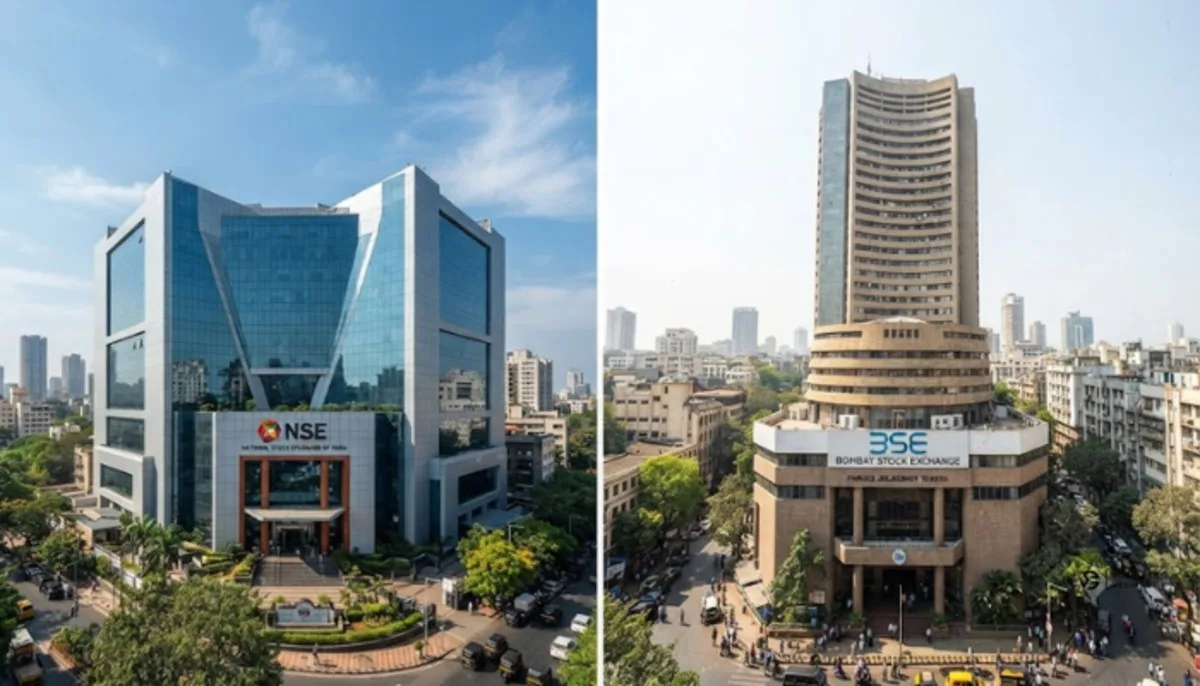
Difference Between NSE and BSE: Complete Guide for Beginners
If you are new to the stock market, you must have heard two names - NSE and BSE. Many people get confused about these two. They do not know which one to choose. They do not know the difference between NSE and BSE stocks. This guide clears all your doubts.
What is BSE?
BSE stands for Bombay Stock Exchange. It is the oldest stock exchange in Asia. It started in 1875. That means it has been running for more than 140 years. BSE is located in Mumbai. It is where people buy and sell shares of companies.
BSE has many companies listed on it. Some are big companies. Some are small companies. The main index of BSE is called Sensex. Sensex tracks the top 30 companies on BSE. When you hear people say Sensex went up or down, they are talking about BSE.

What is NSE?
NSE stands for National Stock Exchange. It started in 1992. It is newer than BSE. But it grew very fast. NSE is also located in Mumbai. It is now the biggest stock exchange in India.
NSE also has many companies listed on it. The main index of NSE is called Nifty. Nifty tracks the top 50 companies on NSE. When you hear people say Nifty went up or down, they are talking about NSE.
Read More: How Margin Trading Works in Stock Market Complete Guide for Indian Investors
Difference between NSE and BSE - Key Points
Here is the difference between NSE and BSE in simple language.
Age
BSE is older. It started in 1875. NSE is newer. It started in 1992. BSE has more history. NSE has more modern technology.
Size
NSE is bigger. More people trade on NSE. The volume of trading is higher on NSE. BSE is also big but NSE handles more daily trades.
Index Names
BSE has Sensex. NSE has Nifty. Sensex has 30 companies. Nifty has 50 companies.
Technology
NSE uses better technology. Trading on NSE is faster. BSE is improving but NSE is ahead in technology.
Listing Rules
Both exchanges have listing rules. But BSE has more strict rules for small companies. NSE is more flexible.
Fees
Trading fees are different on both exchanges. NSE fees are slightly lower. BSE fees are slightly higher.
Number of Listed Companies
BSE has more total companies listed. More than 5000 companies are on BSE. NSE has around 2000 companies. But NSE has bigger companies.
Trading Volume
NSE has much higher trading volume. About 80 percent of all stock trading in India happens on NSE. BSE has only 20 percent.
International Presence
NSE has more international investors. Foreign investors prefer NSE because of technology and liquidity. BSE is also popular but NSE leads.
Accessibility
Both exchanges are easy to access. You can trade on both through your broker. Most brokers give you access to both exchanges.
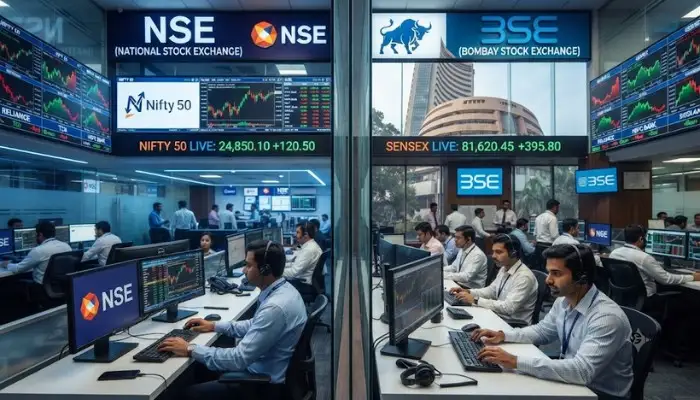
Difference between NSE and BSE Stocks
Now let us talk about the difference between NSE and BSE stocks. Stocks are listed on either exchange. Some stocks are listed on both.
Liquidity
NSE stocks have more liquidity. This means you can buy and sell easily. When you want to sell, you find buyers quickly. BSE stocks have less liquidity. For smaller stocks, it takes time to find buyers.
Price Movement
Prices on NSE change more actively. More traders mean more price movement. BSE prices are also active but slightly slower.
Availability
Big company stocks are available on both exchanges. But some small company stocks are only on BSE. BSE has more small and mid-size companies.
Cost
Buying and selling NSE stocks costs slightly less. The brokerage and fees are lower on NSE. BSE fees are a bit higher.
Investor Type
Large investors prefer NSE. Foreign investors prefer NSE. Retail investors like you use both exchanges equally.
Which is Better BSE or NSE for Long-Term?
This is a common question. Which is better BSE or NSE for long-term investment?
The honest answer is that both are good. Your choice should depend on which stocks you want to buy.
- If you want to buy big company stocks, both exchanges have them. Reliance is on both. TCS is on both. HDFC is on both. You can buy these stocks on either exchange. The price is almost the same on both.
- If you want to buy small company stocks, check which exchange they are listed on. Many small companies are only on BSE. If you find a good small company on BSE, buy it on BSE.
- For long-term investing, the exchange does not matter much. What matters is the company you choose. Pick good companies. Hold them for years. You will make money whether you buy on NSE or BSE.
- The main difference for long-term investors is liquidity. If you ever want to sell, you want to sell quickly. NSE has better liquidity. So if you are buying stocks on NSE, selling is easier. This is a small advantage for NSE.
- But do not make your decision based only on exchange. Focus on company quality. Focus on business growth. Focus on management. These things matter more.
BSE or NSE, Which is Better for Beginners
Now let us answer this question. BSE or NSE, which is better for beginners?
For beginners, NSE is slightly better. Here is why.
Easy Trading
NSE has better technology. Trading is smoother. Orders get executed faster. This helps when you are new and learning.
More Liquidity
When you buy on NSE, you can sell easily. This gives you confidence. You know you are not stuck with shares you cannot sell.
Better Information
More people follow NSE stocks. You get more analysis and news. This helps you learn faster.
Lower Costs
Fees on NSE are lower. As a beginner, you want to save every rupee. Lower fees means more money stays in your pocket.
More Brokers
Most brokers focus on NSE. You get better service on NSE. More options for trading platforms.
But this does not mean BSE is bad for beginners. BSE is also good. Many beginners start with BSE and do well.
The best approach is to use both. Open an account that gives you access to both exchanges. Then buy stocks from whichever exchange offers better price on that day.
How to Trade on NSE and BSE?
Trading on both exchanges is simple. Here is the process.
Step 1: Open a Demat Account
You need a Demat account. This holds your shares. Most brokers give this.
Step 2: Open a Trading Account
This is linked to your Demat account. You use this to place buy and sell orders.
Step 3: Link to Your Bank Account
Your money goes in and out of your bank account. Link it to your trading account.
Step 4: Choose Your Exchange
When you place an order, you select NSE or BSE. You can also see both prices on your screen.
Step 5: Place Your Order
Enter the quantity and price. Click buy or sell. Your order goes to the exchange.
Step 6: Settlement
Shares come to your Demat account in two days. Money goes to your bank account in two days.
You May Also Read: Difference Between Stock Market and Share Market Explained Simply
Difference Between NSE and BSE - Quick Table
| Feature | BSE | NSE |
|---|---|---|
| Full Name | Bombay Stock Exchange | National Stock Exchange |
| Started | 1875 | 1992 |
| Index Name | Sensex | Nifty |
| Index Companies | 30 | 50 |
| Total Companies | 5000+ | 2000+ |
| Trading Volume | 20 percent | 80 percent |
| Technology | Older | Newer |
| Fees | Slightly higher | Slightly lower |
| Liquidity | Lower | Higher |
| Best For | Mid and small stocks | Big stocks |
Final Verdict
Here is the final answer to the difference between NSE and BSE.
Both exchanges are good. NSE is bigger and has more trading. BSE is older and has more companies. For beginners, NSE is slightly better because of technology and liquidity. For long-term investing, both are fine. Focus on company quality, not exchange name.
If you are starting today, open your Demat account. Link it to your bank. Start buying shares of good companies. Whether you buy on NSE or BSE, make sure you choose strong companies. That is the real secret to making money in the stock market.
Common Questions About NSE and BSE
Are prices same on NSE and BSE?
Prices are mostly the same. But small differences can happen. Sometimes NSE price is slightly higher. Sometimes BSE price is slightly higher. You should check both before buying.
Can I buy on NSE and sell on BSE?
No. You buy on one exchange and sell on the same exchange. If you buy on NSE, you sell on NSE. If you buy on BSE, you sell on BSE.
Which exchange is safer?
Both are safe. Both are regulated by SEBI. SEBI is the market regulator in India. Both follow SEBI rules. Your money is safe on both.
Do I need separate accounts for each exchange?
No. One account gives you access to both exchanges. Your broker automatically gives you both.
Which is more popular?
NSE is more popular. More people trade on NSE. More volume happens on NSE. But BSE is also very popular.