
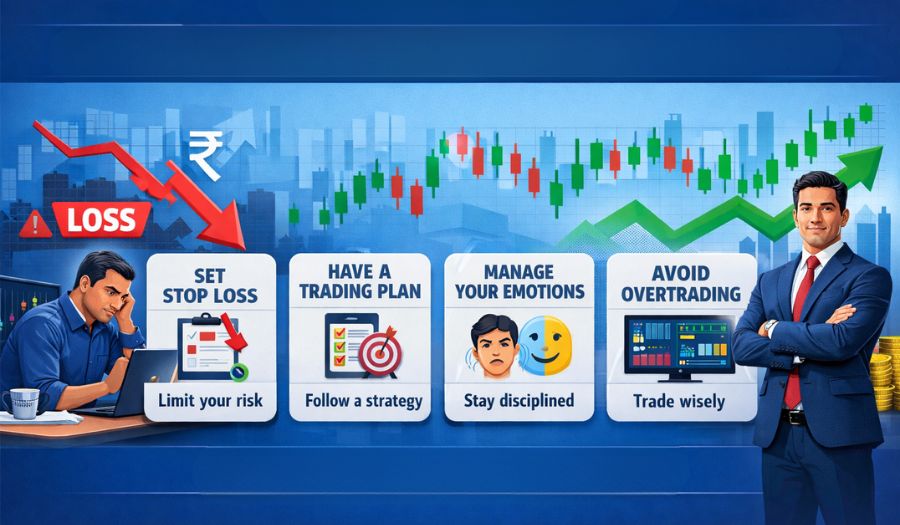
How to Avoid Intraday Losses in Indian Markets | 7 Strategies
Intraday trading in Indian markets can give good returns if you trade smart. Many new traders lose money because they jump in without knowing what to do. This guide shares simple ways to cut your losses and trade better on NSE or BSE every day.
Why So Many Traders Lose Money in Intraday
People often think they can make quick cash from stocks like Reliance or HDFC Bank. The market starts at 9:15 in the morning, and by 3:30 in the afternoon, prices go up and down fast because of news or big buy orders. You might buy a stock for Rs 100, thinking it will reach Rs 105 soon. But then it drops to Rs 95 all of a sudden, and you lose a big part of your money.
In our country, more than 70 out of 100 intraday traders end up losing money every year. This happens because they forget to use stop loss or keep holding on to trades that are going wrong. Things like foreign investors selling shares or news from RBI make the market move in ways you can't always guess. The real trick is to go after small gains and get out fast instead of taking big risks that can empty your account.
Read More: Difference Between Trading and Investing for Beginners

Make a Trading Plan Before You Start
Sit down with a paper and pen before you even look at your trading app like Zerodha or Upstox. Think about how much money you are okay to lose in one trade. A good rule is to risk just 1% of what you have in total. So if your account has Rs 1 lakh, you should not lose more than Rs 1,000 on any single trade.
Pick a target for the day and the week. Tell yourself you want Rs 2,000 profit from Nifty options or Bank Nifty futures. Once you reach that by around 2 in the afternoon, close your screen and walk away. That way, you don't hand back all your gains when the market gets slow later. Keep a small book where you write down each trade: what price you got in, what price you got out, why you took that trade, and what mistake you made if any. Do this for a full month, and you will start to notice why some days go bad.
Put Stop Loss on Every Single Trade
Stop loss works like a guard that protects your pocket. Let's say you buy Tata Motors shares at Rs 800. Right then, set your stop loss at Rs 790. If the price starts falling, your broker will sell it for you without you having to watch.
A lot of people skip this step because they keep hoping the price will come back up. But in Indian markets, when a stock falls below a key level, it usually keeps going down for some time. Keep your stop loss tight, around 0.5% or 1% away from your buy price for regular stocks. For options, make it even smaller. On days when the market shakes a lot, like when the budget comes out, give it a bit more room at 1.5%. If you follow this every time, you will save yourself from most of the really bad days.
Follow the Market Trend, Don't Fight It
Every market day has a main direction: it goes up, it goes down, or it stays flat. Pull up a 15-minute chart on TradingView for Nifty 50 index. If the price line stays above the 50 EMA line, look only for buying chances. If it drops below, think about selling short.
Going the wrong way against the trend has ruined many trading accounts. Think back to Diwali last year when Nifty dropped sharp because everyone sold to book profits. Those who bought instead of selling lost hundreds of points. Stick to this: if there is no clear direction by 9:30 AM, don't take any trade at all. Wait until the price breaks out of the range it made in the first few minutes.
Take Small Profits Often Instead of Waiting Big
Forget about holding for a 5% jump. Get out with 0.5% or 1% gain as soon as you can. You buy Infosys at Rs 1,800 and sell it at Rs 1,815. Repeat that four or five times in a day, and you build real money without much worry.
The pull of big money makes traders greedy, but prices turn around before you know it. In the Indian trading hours, the best action happens in the first hour after open. Grab your profit there and stay away from the messy moves between 2 and 3 PM. Once your stock starts going up, move your stop loss higher so you keep what you earned even if it pulls back a little.
7 secret intraday strategies
Secret Intraday Strategy 1: Breakout from First 15 Minutes
From 9:15 to 9:30 AM, watch the candle on your chart closely. That sets the range for the morning. If Nifty breaks above the high of that range with lots of buying volume, jump in to buy. Plan to take 0.5% profit, and put stop loss just below the low of that range.
Big traders and funds decide the day's path early, so this gives you an edge. On a recent Monday, Nifty opened near 24,000. When it broke to 24,100 with strong volume, traders made 100 points in no time. Test this on paper trades a few days before using real money.
Secret Intraday Strategy 2: Ride Momentum on Early Gainers
Around 9:45 AM, look at the NSE list of top gaining stocks. Find ones that are already up 2% or more and have heavy trading volume, say after some good company news like with Adani Ports.
Wait for a small dip back to the VWAP line, which shows the average price so far. Get in there and ride it up until the speed slows down or RSI hits above 70. Last week, this worked great on Suzlon, giving a clean 3% move from entry to exit.
Secret Intraday Strategy 3: Quick Trades on News Breaks
When RBI cuts rates or a company puts out earnings numbers, stocks jump 5% or even 10%. If the news looks good and volume picks up fast, buy in for a short ride.
This is scalping: you go in and out in just 5 to 10 minutes. Keep stop loss very close at 0.3%. I remember ITC shares shot up 4% on a rumor about tax cuts – easy to grab 1% there without stress.
Secret Intraday Strategy 4: When Resistance Turns to Support
Before market opens, mark the high and low from the day before on your chart. When a stock price breaks above that old high, the level flips and acts as new support on any pullback.
Buy when it comes back to touch that level. Sun Pharma did this perfectly: broke Rs 1,600, dipped to Rs 1,605, then climbed to Rs 1,650. Your target is the next old high from before.
Secret Intraday Strategy 5: Cross of Moving Averages
On a 5-minute chart, draw the 9 EMA and 21 EMA lines. When the faster 9 line crosses above the slower 21 line, that is your buy signal.
Pick liquid names like HDFC Bank where this works clean. Get out when they cross back or you hit your set profit target. Skip days when price bounces around with no clear moves.
Secret Intraday Strategy 6: Trade Around Pivot Points
Take yesterday's high price, low price, and closing price. Add them up and divide by 3 to get the pivot point. Trade bounces up or down from that line, or from the R1 and S1 levels around it.
Bank Nifty respects these levels most days. You can find free calculators inside apps like Groww to do the math quick.
Secret Intraday Strategy 7: Spot Reversals with Volume Spike
Watch for a hammer shape candle right at a support price, but only if volume doubles the normal amount. That shows buyers stepping in strong for a turn around.
Yes Bank showed this last Friday at Rs 20 support level with massive volume – it turned and went up 8% from there. Double-check with RSI under 30 to feel sure.
You May Also Read: Difference Between Swing Trading And Day Trading Strategies
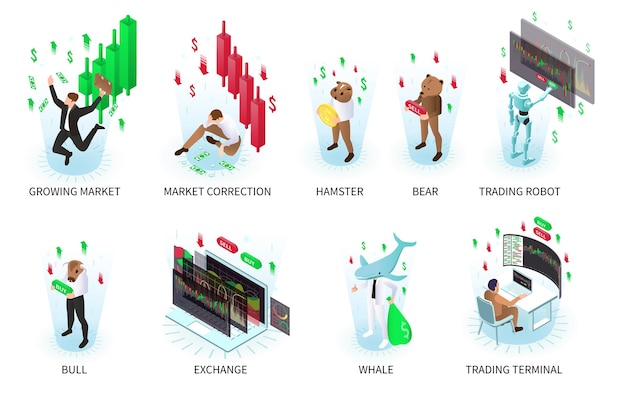
How to Do Intraday Trading Step by Step
- Start by opening an account with a low-cost broker like Angel One. Put in at least Rs 50,000 to get going.
- Learn to read candlestick charts, EMA lines, and volume bars on the Kite screen or similar.
- In the morning before open, check the F&O ban list and what happened overnight in global markets like SGX Nifty.
- From 9:15 to 9:30, just watch and mark the opening range without trading.
- When you see a setup, enter the trade but always with stop loss and a clear target price.
- Check your trades every five minutes, but keep your phone away so you don't get pulled into other things.
- By 3:15 PM, make sure all positions are closed – no overnight holds.
Rules to Manage Risk as an Indian Trader
Never put more than 2% of your full capital at risk in one day. Figure out how many shares to buy based on your stop loss distance.
- Spread out: take no more than three trades at once, mix between regular shares and options.
- Skip trading on F&O expiry days unless you have years of practice.
- Limit your time in front of the screen to just two hours to stay sharp.
Mistakes Traders Make and Fixes That Work
- After a losing trade, some keep jumping into more trades to win it back – step away after two losses in a row.
- Not looking back at what happened: spend 30 minutes each evening going over your charts.
- Letting feelings decide trades instead of your written plan.
- Paying too much in fees: pick brokers that charge flat Rs 20 per order.
Tools That Help You Win More
- Use TradingView's free charts to see everything clear.
- Set up scanners on Streak or Chartink to find breakout stocks fast.
- Go with Zerodha for cheap trades and good speed.
- Track your trades in a simple Excel sheet on your laptop.
Conclusion
Sticking to these steps day after day will help you cut down losses and build steady gains in Indian intraday trading. Start small with Nifty or Bank Nifty, follow your plan without fail, and review every trade at night. Over time, small wins add up while big losses stay away.
Remember, markets reward those who trade with patience and clear rules, not those chasing quick riches. Past trades don't guarantee future results – always check with a SEBI advisor before risking your hard-earned cash.
FAQ
1. How to avoid intraday losses in Indian markets for beginners?
New traders should set stop loss on every trade and risk only 1% of their capital per go. Wait for clear trends after 9:30 AM and book small profits fast instead of holding too long.
2. What is the best intraday trading strategy for Indian stock market?
Opening range breakout from first 15 minutes works well on NSE stocks. Buy above the high with volume, target 0.5-1%, and cut losses quick below the low.
3. Where can I get 7 secret intraday strategies PDF download?
Check the link above for the free PDF with all 7 strategies explained step by step, including charts and examples for Nifty and Bank Nifty.
4. How to do intraday trading step by step in India?
Open a broker account, learn charts on TradingView, watch pre-market cues, enter trades post 9:30 with stop loss, monitor every 5 minutes, and exit by 3:15 PM.
5. Why do most people face intraday losses in Indian markets?
They trade without a plan, skip stop loss, fight the trend, or overtrade after losses. Discipline and small targets fix 80% of these problems.