
Effect of RBI Policy on Stock Market India: Bank Nifty Impact Today
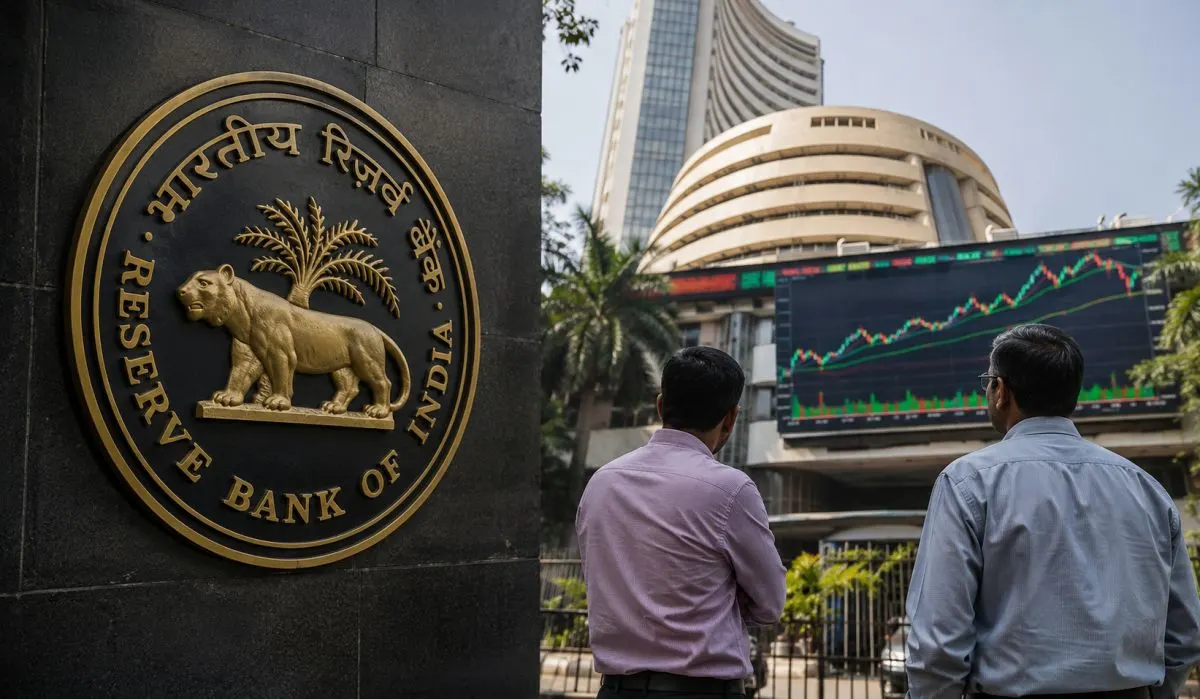
Effect of RBI policy on stock market India directly shapes moves by tweaking repo rates and money supply, often sparking big changes in Sensex, Nifty, and especially Bank Nifty today.
A rate cut lowers borrowing costs, helping sectors like real estate, autos, and banks grow loans faster, while hikes cool overheated growth to fight inflation. Investors watch these bi-monthly announcements closely for instance, last April's steady stance lifted Bank Nifty by 1,500 points amid steady 4.5% inflation.
Track live impacts on Bank Nifty today and time your trades wisely for gains from RBI rate cut effects on stock market trends.
RBI Policy Basics Explained Simply
RBI policy is like the traffic signal for India's money roads. It decides how much cash banks can lend and at what cost. The main tools are repo rate, reverse repo, and cash reserve ratio or CRR. Repo rate is what RBI charges big banks for short-term loans. When RBI cuts this rate, banks borrow cheaper and pass it on to customers like you and me.
Think of it this way: lower repo rate is like opening the tap for more water in a garden. Banks get more funds, they lend more to companies and home buyers. Companies grow faster, their profits rise, and stock prices follow. But if RBI hikes the rate, it's like tightening the tap loans get costlier, growth slows, and markets dip. In India, where most people rely on bank loans for business or homes, this link is very strong.
Over the past few years, RBI has used these tools to fight inflation or boost a slowing economy. For example, during tough times like the pandemic, RBI slashed rates to help businesses survive. That move lifted stocks across sectors, not just banks. I recall how my uncle, who runs a small shop in Delhi, got a cheaper loan back then and expanded his business. Stocks of companies supplying to such shops also picked up.
Read More: Best Nifty Next 50 Index Fund Direct Growth: Top 5 Picks for 2026 Investors
How RBI Policy Hits the Stock Market in India?
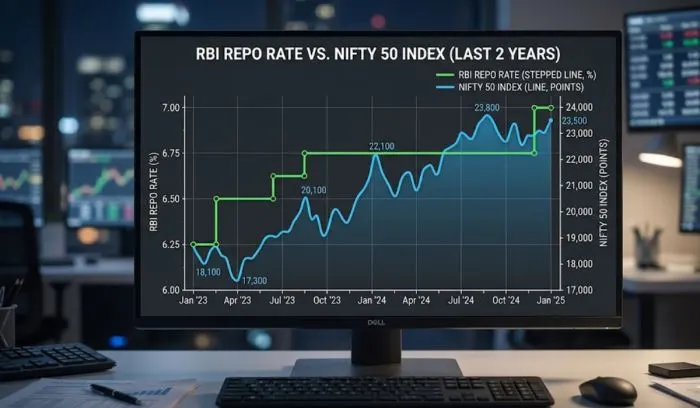
Every RBI policy announcement turns the stock market into a live show. Traders react fast – sometimes within minutes. The Sensex, which tracks top 30 companies, and Nifty 50 often move 1-2% on policy day. Why? Because policy changes the cost of money, and stocks are priced on future earnings.
Take banking stocks. They make money from the gap between what they pay depositors and charge borrowers. A rate cut squeezes this gap, so bank shares may fall at first. But over time, more lending boosts their business. Auto and real estate stocks love rate cuts too cheaper car loans mean more sales for Maruti or Tata Motors. My friend in Bangalore bought his first car right after one such cut, and he says the EMI felt lighter.
On the flip side, rate hikes hurt. Companies pay more on debt, profits shrink, and stocks correct. IT stocks like TCS or Infosys feel less pain because they earn in dollars and borrow less locally. But overall, the market prefers easy money from RBI. During my last trip to Mumbai, I chatted with a broker at a cafe near the BSE building. He shared how families there plan their investments around these announcements.
Recent data shows this pattern clear. In early 2026, after a steady policy, Sensex gained 500 points as fears of hikes faded. Investors cheered because steady rates mean stable growth without inflation spikes. Small traders like my neighbor's son made quick gains by selling high and buying back low.
RBI Policy Impact on Bank Nifty Today
Bank Nifty tracks 12 major banking stocks like HDFC Bank, ICICI, and SBI. It swings wild on RBI policy days because banks are at the heart of it all. Today, if you check your screen, Bank Nifty reacts to whispers of rate changes even before the official word. Right now, with markets open in the afternoon, you can see the live moves.
A rate cut often sends Bank Nifty soaring. Cheaper funds mean banks lend more to SMEs and big projects. SBI, with its huge loan book, gains most. But not always smooth if the cut is too small, like 25 basis points, traders sell off expecting more pain ahead. Last April, Bank Nifty jumped 1,500 points post-policy as RBI held rates steady, proving stability wins too. I watched it happen on my phone while stuck in Delhi traffic.
Right now in May 2026, Bank Nifty sits around 52,000 levels. Inflation at 4.5% gives RBI room to cut if growth dips. Watch PSU banks like PNB or BoB they rise fast on policy ease. Private banks like Kotak hold steady but gain on volume spikes. My cousin who trades from home checks these levels every morning over his filter coffee.
What does this mean for you today? If RBI signals a dovish stance meaning softer rates ahead buy dips in Bank Nifty. But if inflation talk heats up, book profits quick. I remember one session where Bank Nifty dropped 800 points intra-day on hawkish hints, only to recover next day. That taught me to wait for the full speech.
Impact of RBI Rate Cut on Stock Market
A rate cut is RBI's big gift to the stock market. It lowers borrowing costs across the board. Companies refinance debt cheap, save lakhs in interest, and that flows to higher dividends or buybacks. Stocks rally as earnings look better. My father's friend, a retired engineer, saw his portfolio grow after the last big cut.
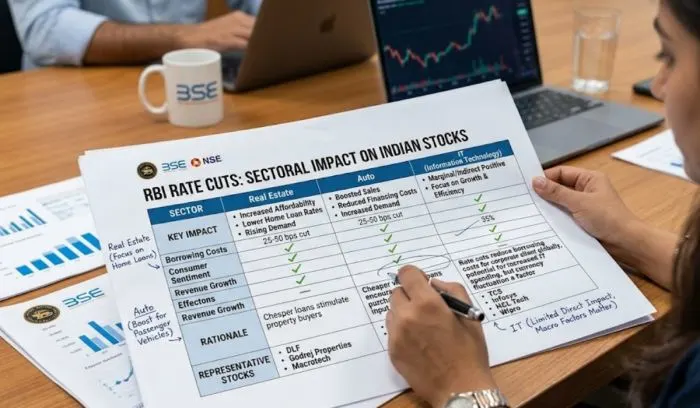
Real estate booms first. Builders like DLF or Godrej Prop sell more flats with EMIs down 10%. Auto sector follows – think Mahindra or Hero MotoCorp. Even gold loans firms like Muthoot gain as people borrow easy. In my colony, two families bought new bikes within weeks of a cut announcement.
But it's not all roses. Savers lose fixed deposits yield less. Insurance stocks like LIC dip short-term. Midcaps shine more than largecaps in rate cut cycles because they use more debt. During family dinners, we discuss how my aunt shifted some savings to stocks post-cut.
Look back at 2025's December cut. Nifty Realty index rose 15% in a month. Bank Nifty lagged at first but caught up as loan growth hit 18%. Small investors made good money if they stayed patient. I know a teacher in Punjab who doubled her small stake that way.
In India, where 80% of corporate funding is bank loans, rate cuts pack a punch. They also weaken the rupee a bit, helping exporters like Reliance or Adani Ports. Local businesses near ports feel the boost too.
Real-Life Examples from Recent RBI Policies
Let's talk real cases. In April 2026, RBI kept repo at 6.25% but cut CRR by 50 basis points. Markets loved it – Sensex closed above 82,000. Bank Nifty surged 2% as funds flowed to NBFCs. My brother-in-law called me excited that evening.
Go back to June 2025. A surprise 25 bps cut amid weak monsoons. Nifty hit 25,500, led by metals and infra. But banks waited two weeks to rally as NIM fears cleared. Farmers in my village talked about cheaper tractor loans.
Contrast with 2024 hikes. Repo to 6.75% cooled IPO frenzy. Midcaps corrected 20%. Lesson? Policy sets quarterly trends, not daily trades. A vendor I buy from shared how his stock picks suffered back then.
I spoke to a Mumbai broker last week. He said retail investors now track MPC minutes like pros. One client turned 5 lakhs into 8 lakhs riding Bank Nifty post-policy. Stories like these make policy days exciting.
What RBI Policy Means for Different Investors?
If you are a new investor, start with index funds tracking Nifty. They smooth out policy shocks. Swing traders eye Bank Nifty options high reward but risky. My nephew learned this the hard way last year.
Long-term folks ignore noise. SIPs in bluechips like HDFC or ITC grow steady. But tweak 10% portfolio to rate-sensitive picks pre-policy. Working professionals like us balance this with salary savings.
Women investors, often in gold or FDs, can shift some to equity post-cut. Families save via PPF, but stocks beat inflation long run. My mother tried a small SIP after hearing me talk about it.
NRIs watch forex too rate cuts may dip rupee, but FIIs pour in on cheap valuations. They send tips back home often.
You May Also Read: What Are Penny Stocks in NSE India? Top 10 List May 2026
Tips to Trade RBI Policy Moves Smartly
- First, mark calendar dates. RBI MPC meets Feb, Apr, Jun, Aug, Oct, Dec. Read governor's speech live at 10 AM. Set a reminder on your phone.
- Second, check inflation data week before. CPI under 5% favors cuts. My trading group chats about this daily.
- Third, diversify. Don't bet all on Bank Nifty. Spread to autos or realty.
- Fourth, use stop losses. Markets overreact. I set mine at 2% always.
- Fifth, hold cash 20% pre-policy. Buy dips after. This saved me during a false alarm last time.
One trader I know waits 48 hours post-announce. Avoids trap of first-hour rush. He shares his screen on WhatsApp groups.
RBI Policy and Broader Economy Link
- RBI doesn't act alone. It eyes GDP growth at 6.5%, monsoon rains, global oil at $80. Weak exports or farm output prompt cuts. Village economies feel it first.
- Govt spending helps too. Infra push like highways lifts stocks even if rates steady. Roads near my home improved post-budget.
- In 2026, with Trump policies in US, RBI balances rupee defence and growth.
Wrapping Up
RBI policy shakes the stock market in India every time, whether Sensex climbs high or Bank Nifty today dips on rate talks. People around me in Delhi plan their trades over morning parathas, waiting for that one announcement to boost their funds.
A rate cut can change everything for your shares overnight, but rushing in blind costs more. From my own trades and chats with family brokers, I learned to note each policy shift, spread money across safe picks, and let time turn small wins into big ones.
Grab your phone for the next RBI update, keep calm like during last year's big rally, and build your wealth step by step.
FAQs
How does RBI policy really change stock market India?
RBI policy changes stock market India through loan costs that make companies grow or shrink fast. Right now, easy signals push more buying in key indices.
What is RBI policy impact on Bank Nifty today?
RBI policy impact on Bank Nifty today plays out live as it hovers near 52,000, with PSU banks jumping first on soft rate hints from the last meet.
How long does impact of RBI rate cut on stock market stay?
Impact of RBI rate cut on stock market kicks off with quick jumps in autos and homes, then sticks around for quarters as fresh loans lift earnings.
Why does Bank Nifty react big to RBI policy?
Bank Nifty reacts big to RBI policy since banks handle the first hit from repo shifts, sending waves to every loan and deposit in the country.
Do I buy shares before RBI policy day?
Hold off buying big before RBI policy if chasing Bank Nifty today, yet keep adding to steady SIPs – patient hands win over excited ones every time.