

Corporate Bonds vs Government Bonds in India: Full Comparison Guide
Many people in India think about putting money in bonds to grow their savings safely. But when you compare corporate bonds and government bonds, you see clear differences in risk, returns, and how easy it is to sell them. This guide breaks it down simply so you can pick the right one for your needs.
India's bond market has grown a lot in recent years. RBI data shows government bonds make up most of the market because they come from the government. Corporate bonds, issued by companies, offer higher returns but carry more risk. If you want steady income with low worry, government bonds suit you best. For those okay with some risk for better gains, corporate bonds might work.
What Are Government Bonds?
Government bonds mean you lend money to the central government or state governments. They pay you back the full amount after some years, along with interest a couple of times each year. In India, we call them G-Secs, short for government securities.
Picture this as giving cash to a family member you trust completely they always return it on time. The government almost never misses payments because it collects taxes and manages the country's money. The Reserve Bank of India puts these up for sale through open bids, and anyone can grab them from banks or apps.
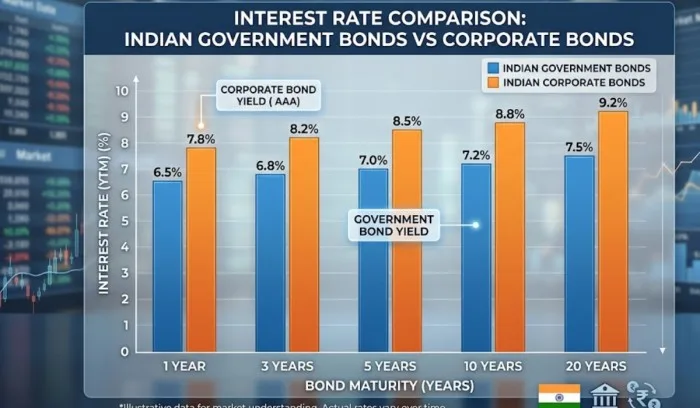
Folks pick these when times feel shaky, like when prices of daily goods go up or jobs get tough. Take a 10-year G-Sec it pays about 7% interest each year, split into two payments. That beats what most banks offer on fixed deposits.
What Are Corporate Bonds?
Corporate bonds happen when you lend to large companies such as Reliance or Tata groups. These businesses take the funds to open new plants, grow their work, or clear old loans. They thank you with higher interest than what government bonds give.
Think of it as helping a busy shopkeeper who works hard and might expand soon, but sales could dip if customers stay away. Agencies check these bonds and give marks AAA for the safest, down to lower ones if the company looks weak. AAA ones hardly ever let you down.
Here in India, they show up on stock exchanges like NSE or BSE. You get them through stock brokers or funds that pool money. Earnings can reach 9% to 12%, which pulls in office-goers tired of low bank rates.
Read More: NBFC Bonds vs Bank FD Comparison: Which is Better in 2026?
Key Differences in Risk Levels

- The main split comes in how much worry each brings. Government bonds carry next to no chance of losing your money because the government promises full backing. Back in 2020, when everything shook, they still paid without fail.
- With corporate bonds, the risk ties to the company's shape—if it hits rough patches, payments might stop or come late. Ratings from places like CRISIL guide you; stay with AA or higher to sleep better. Last year's numbers show just 1-2% of top-rated ones missed payments.
- If safety tops your list, government bonds win hands down. Working adults with stable pay often blend some corporate ones to even things out.
Corporate Bonds vs Government Bonds Returns
What you take home pulls everyone in. Government bonds offer steady but smaller earnings, say 6.5% to 7.5% on ones lasting 5 to 10 years right now. They keep pace with rising costs over time, without wild swings.
Corporate bonds pull ahead with 8% to 11% earnings. Top-rated ones top fixed deposits by a good margin. Taxes trim the gap though both face charges based on your income level.
Let us say you put Rs 1 lakh in a 7% government bond. After one year, it turns to Rs 1.07 lakh. Switch to 9% corporate, and it hits Rs 1.09 lakh. Stretch to five years, and the extra from corporate grows much larger, as long as the company stays strong.
When RBI lowers rates, government bond values climb. Corporate ones drop harder if business slows nationwide.
Who Issues Them and Why It Matters?
The government sells bonds to build roads, schools, and handle army needs. It pays back from tax collections, keeping things rock solid. State governments sell their own, called SDLs, with a touch higher payouts.
Companies sell to skip steep bank loan rates. Strong players like HDFC or Infosys handle it fine. Struggling ones falter when sales slump. Your choice depends on this. Retirees lean government for calm days. Working people eye corporate for push ahead.
Liquidity: How Easy to Sell
- Liquidity covers selling your bond early without losing much. Government bonds change hands every day on markets, with prices staying close. RBI steps in to keep flow smooth.
- Corporate bonds move slower. Lesser-known ones sit unsold, pushing you to cut price. Well-known names like NTPC shift without fuss.
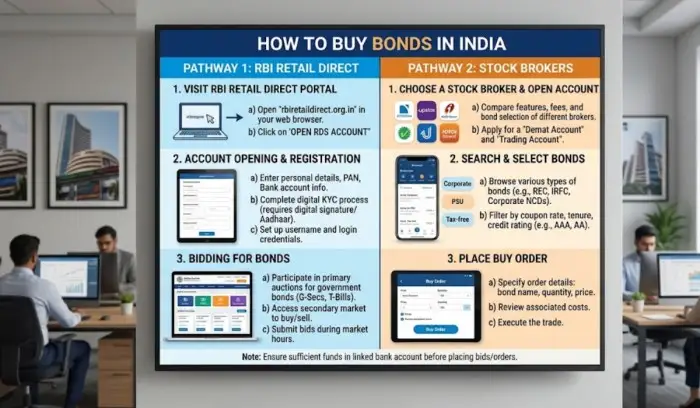
- In our markets, RBI Retail Direct handles government buys easily. Brokers manage corporate. Government takes the lead if you need cash fast.
Tax Rules for Indian Investors
- Taxes cut into what you keep, so get it right. Interest counts as other income for both, charged at your tax bandup to 30% if you earn big.
- Hold over a year for lower gains tax with price rise adjustment. Both qualify, but check corporate ratings closely.
- No tax cut at source for direct government buys. Corporate cuts 10% if interest tops Rs 10,000. Claim back through tax returns.
- Older folks get breaks, favouring government bonds more.
How to Buy in India?
Snag government bonds without hassle. Sign up for free RBI Retail Direct account. Join auctions or pick from open market via SBI-like banks.
Corporate needs a demat setup with Zerodha or Groww. Peek at CRISIL ratings online first. Bond funds mix types for ease. Dip in with Rs 10,000 to start.
You May Also Read: Trending Gold Bonds for Investment Today Sovereign Gold Bond Guide 2026
Which One Fits Your Goals?
First-timers or those nearing retirement grab government bonds for worry-free nights. They match EPF steadiness.
Bold savers blend 60% government and 40% corporate for around 8% overall. Parents saving for child's school go government fixed payout awaits.
Pros and Cons Side by Side
| Feature | Government Bonds | Corporate Bonds |
|---|---|---|
| Safety | Very high, full backing | Solid for top marks, some chance |
| Returns | 6-8%, no surprises | 8-12%, more upside |
| Liquidity | Strong, trades daily | Fair, varies by name |
| Minimum Buy | Rs 10,000 | Rs 10,000-1 lakh |
| Tax | Your rate, no cut direct | Your rate plus cut |
Trade-offs jump out here.
Real-Life Examples from India
- Last year, a 10-year G-Sec yielded 7.1%. Investor Ravi got Rs 7,100 yearly on Rs 1 lakh, tax-free if basic slab.
- Neha bought AAA-rated Vedanta bond at 9.5%. She earned extra Rs 2,400 but watched news for company health.
- During COVID, government bonds held value; some corporate yields jumped to 14% but with pain.
Things to Watch Before Investing
- Check interest rates. RBI cuts rates? Bond prices rise. Track via RBI site.
- Inflation erodes fixed returns aim above 6-7%.
- Diversify: Don't put all in one.
- Use apps like ET Money for tracking.
Common Mistakes to Avoid
- Many chase high corporate yields blindly, ignoring ratings. Stick to AAA/AA.
- Selling early in panic loses gains.
- Forgetting taxes plan post-tax returns.
- Not using demat increases costs.
Future Outlook in India
Bond market grows with Atmanirbhar push. Government targets Rs 20 lakh crore issuances yearly. Corporate bonds may rise as banks tighten loans. FIIs pour in for safe government ones amid global tensions.
Final Thoughts
Corporate bonds vs government bonds shows choices based on your life. Government stands like a firm wall. Corporate pushes like a growing stall.
Match to your years, pay, and worry level. Begin government, sprinkle corporate bit by bit. Chat SEBI advisor for your case. NSE India site gives live updates.
FAQs
What gives better returns: corporate bonds or government bonds?
Corporate bonds pay more, around 8-12%, against 6-8% from government. More pay means more chance of trouble.
Are government bonds safer than corporate bonds?
Yes, government almost never fails thanks to full promise. Corporate rests on firm strength.
How do taxes work on corporate bonds vs government bonds?
Interest taxes at your band for both. Government skips cut if direct; corporate takes 10% on large interest.
Can I buy bonds with small money like Rs 10,000?
Sure, both from Rs 10,000. RBI site for government, brokers for corporate.
Which is better for retirement savings?
Government fits retirement for safety and even flow. Add corporate if income push needed.