

Is Real Estate a Good Investment in India? A Complete Beginner’s Guide
When someone in India thinks about putting their money somewhere, the first thing that comes to mind is often a flat or a plot of land. Our parents did it. Our uncles and aunties did it. So naturally, you also ask this question: is real estate a good investment in India? The answer is not simply yes or no. You have to look at many things. You have to look at your own money situation, the city you live in, and how long you can wait to see your money grow.
In this article, I will help you understand everything from the very start. I will tell you how to invest in real estate with no money. I will show you how to invest in real estate in India online. And I will keep everything very simple because this guide is for real estate investing for beginners.
What Real Estate Investment Really Means?
When people say real estate, they mostly mean buying a house, a shop, or an empty piece of land. You buy it. You hold it for some years. Then you sell it for a higher price. Or you give it on rent and earn money every month. That is the basic idea.
But in India, real estate is a little different from other things like gold or fixed deposits. A fixed deposit gives you a fixed interest every year. Gold you can sell in one hour if you need cash. Real estate is not that easy. You cannot sell a flat in one day. You cannot break a land like you break a fixed deposit. You have to find a buyer. That buyer has to get a loan. The paperwork takes time. So when you put money in real estate, you must be ready to wait.
Read More: Co Working Space in Koramangala: Complete Guide for Startups and Freelancers

Is Real Estate a Good Investment in India Right Now?
If you ask ten people in India, five will say yes and five will say no. That is because real estate depends so much on where you buy. A flat in a good part of Gurgaon can give you very good returns. The same flat in a far away part of Noida may give you nothing for ten years. So the first rule is: location is the king. You cannot forget this.
In the last ten years, many Indian cities have seen property prices stay flat. For example, in some parts of Mumbai or Chennai, prices did not go up much. But at the same time, some new areas near metro lines or new highways became very expensive. So you have to pick the right place.
Another thing to check is rental income. In India, most houses give only two to three percent rent per year compared to the price of the house. That means if you buy a flat for one crore rupees, you might get only two to three lakh rupees rent per year. After you pay maintenance and property tax, the rent left in your hand is even less. So if you are buying a house only for rent, you may feel disappointed.
But there is a good side also. Real estate in India gives you safety. It does not go to zero like a company share can. It does not get stolen like gold. And when you take a home loan, the bank gives you money to buy the property. That is called leverage. If the property price goes up by ten percent, your own small money grows much more because of the loan. That is a special benefit of real estate.
Also, after RERA came into the picture, builders cannot cheat you easily. RERA is the Real Estate Regulatory Authority. Every new project must be registered with RERA. The builder has to give a completion date. If he delays, he has to pay you money. So the market has become cleaner than before.
So the final answer for now is: real estate is a good investment in India if you pick the right location, if you have patience for at least five to seven years, and if you are not hoping for very high rent every month. For a beginner, it is a good place to put some of your money, but not all of your money.
How to Invest in Real Estate with No Money?
This question sounds impossible. You think, how can I buy a flat or land without money? But there are some legal and practical ways to start in real estate even when you do not have a big amount in your bank. Let me explain each way clearly. Remember, no money does not mean zero rupees. It means very little money, or using other people's money the right way.
First Way: Buy Small Parts of Big Properties
In India now, there are new companies that let you buy a small share of a big commercial property. For example, a big office building or a shopping mall costs many crores. You cannot buy the whole thing. But these companies break that property into small parts. Each part costs maybe fifty thousand rupees or one lakh rupees. You buy a few parts. Then every month, you get a share of the rent that the property earns. This is called fractional ownership. It is legal and it is growing in India. You can start with very little money. You do not need to take a loan. You do not need to go to any government office. Everything is done on your phone.
Second Way: Use Your Family or Friends Together
In many Indian families, people come together to buy a property. Four cousins put money together. Two brothers put money together. They buy one flat. They all own a part of it. Then when the flat is sold, they share the profit. You can do this with a very simple agreement written on a stamp paper. You do not need a lawyer for big money. Just write clearly who owns how much percent. This is a very old way in India. It still works.
Third Way: Buy a Property Before It Is Built
This is called pre-construction booking. The builder has just announced a new project. The price is very low because nothing is built yet. You pay a small booking amount, maybe fifty thousand or one lakh rupees. Then over two or three years, you pay the rest in small instalments. But here is the trick. Just before the project is finished, the price goes up. You sell your right to buy that flat to another person.
That person pays you the difference. You never take full ownership. You never pay stamp duty or registration. Your small money becomes bigger in two years. Many people in Mumbai and Pune do this. But careful. This has risk. If the builder delays the project, you may have to wait long to find a buyer.
Fourth Way: Do Not Buy, Just Take the Property on Rent and Give It Again
This is called rent to rent or subletting. You find a big house or a commercial shop. You take it on rent for five years. In your rent agreement, you ask the owner for permission to give part of the house to someone else. Then you find small businesses or students who need rooms. You give those rooms to them for a higher rent. The difference between what you pay and what you collect is your profit. You never buy the property. You just manage it. This needs good talking skills and some time, but almost no money.
These are the honest ways to invest in real estate with no money. Do not believe anyone who says you can buy a flat for zero rupees. That is a lie. But yes, you can start with a few thousand rupees or by using your family or by doing subletting.
How to Invest in Real Estate in India Online
Ten years ago, buying property meant visiting twenty different sites, talking to brokers, looking at papers, and running to the registrar office. Now things have changed. You can do many things online. But full online buying from start to finish is still not possible for land and flats. You have to sign papers in person at least once. But here is what you can do online.
First Online Way: Use Registered Real Estate Websites
Websites like Magicbricks, 99acres, and Housing.com are very famous in India. You can search for properties in any city. You can see photos, floor plans, prices, and contact the owner directly. But do not pay any money online without seeing the property in real life. Many fake posts exist. So use these websites to find the property, but go and see it yourself with someone you trust.
Second Online Way: Invest Through REITs
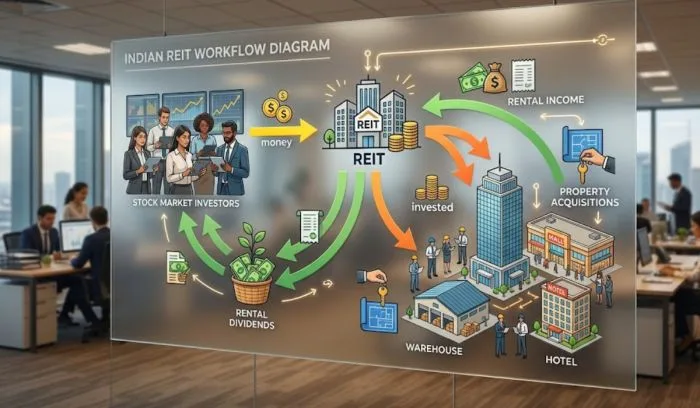
REIT means Real Estate Investment Trust. It is like a mutual fund for properties. You buy units of a REIT on the stock market. Your money goes into big commercial buildings like offices, malls, or hotels. The rent collected from those buildings is given back to you every three or four months as a dividend.
You can buy and sell REIT units just like shares on your mobile app. In India, there are three main REITs right now: Embassy, Mindspace, and Brookfield. You do not need to own any building. You do not need to pay stamp duty or registration. You just need a demat account and a few thousand rupees. This is the easiest way to invest in real estate in India online.
Third Online Way: Fractional Ownership Platforms
I told you about fractional ownership before. The companies that do this work fully online. You go to their website. You look at the property they are offering. You read all the documents. You pay online.
You get your ownership papers in your email. The platform name is something like Strata, PropertyShare, or hBits. These are SEBI registered now. So they are legal and safe. You can start with as little as ten lakh rupees on some platforms, or even less on others. Check each platform carefully.
Fourth Online Way: Do Your Legal Checks Online
Before you buy any property in India, you must check the title of the property, the RERA number, and the tax receipts. You can do all this online now. Go to the state's registration website. Go to the RERA website of your state. You can see if the builder is in any court case. You can see if the land has any loan against it. You can also pay your property tax online. So even if you are buying offline, you can do all the verification online. This saves you from cheaters.
So how to invest in real estate in India online? The simple answer is: buy REITs on your stock trading app, or buy fractional shares on a registered platform, or use online websites to find and verify a property before you go and buy it in person.
Real Estate Investing for Beginners: A Step by Step Guide
If you have never put money in real estate before, this part is for you. I will tell you exactly what to do. No skipping steps. No hidden advice.
Step One: Decide How Much Money You Can Put
Sit down with a notebook. Write your income. Write your monthly expenses. See how much money is left. Never put all your savings into one property. Keep at least six months of expenses in your bank. For a beginner, start with a small amount. You do not need to buy a two crore flat as your first deal. You can start with REITs. You can start with a small piece of land in a growing area. The goal is to learn first. Then you can do bigger deals.
Step Two: Decide Your Goal
Ask yourself why you are investing. Do you want monthly rent? Then look for properties in busy areas near colleges, offices, or markets. Do you want price increase over ten years? Then look for new areas where the metro is coming or where a new highway is being built. Do you want safety? Then buy a small flat in a good society where many families live. Your goal will decide what you buy.
Step Three: Learn About the Costs That No One Tells You
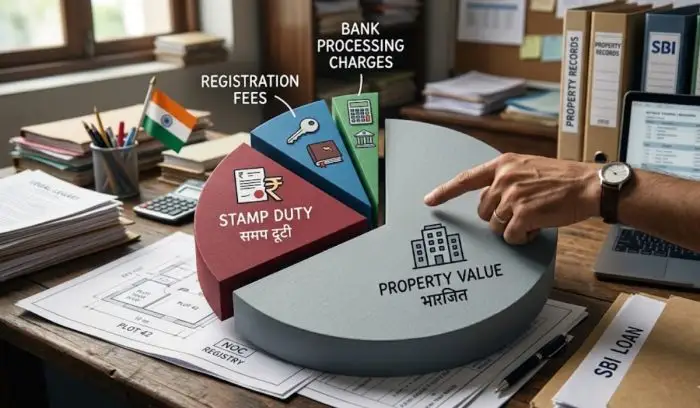
Many beginners only look at the price of the flat. But in India, buying a property has many other costs. You have to pay stamp duty. That is five to seven percent of the property price. You have to pay registration charges. That is another one percent. If you take a loan, the bank charges processing fee. When you get the flat, you pay maintenance charges. When you sell the flat, you pay capital gains tax. All these costs eat your profit. So before you buy, add fifteen to twenty percent extra on top of the price. That is your real cost.
Step Four: Check the Builder and the Papers
Never trust a builder just because he has a big office or a fancy website. Go to the RERA website of your state. Type the builder's name. See how many projects he has finished on time. See if any buyer has complained against him. Also ask the builder for the original land papers. Take those papers to a local lawyer who knows property work. Pay that lawyer a small fee to check everything. This one step can save you from losing your whole money.
Step Five: Take a Loan Only If You Understand It
A home loan can help you buy a bigger property. But the interest on that loan is also big. Do not take a loan for more than ten to fifteen years. Calculate your EMI before you go to the bank. Your EMI should not be more than forty percent of your monthly income. Also, ask the bank if they allow early payment without penalty. Many banks charge a fine if you try to close the loan early. Read the fine print.
Step Six: Start Small and Stay for Long
For a beginner, the biggest mistake is to buy a property and then try to sell it after one year. Real estate in India does not work that way. You need at least five years. In the first two years, prices usually stay flat. Then slowly, if the area grows, prices go up. So if you need money quickly, do not buy real estate. If you have patience, real estate can be very good.
Step Seven: Keep All Papers Safe
Once you buy a property, keep every paper in a safe place. Keep the sale deed, the registration document, the tax receipts, the RERA allotment letter, and the possession letter. Make digital copies on your phone and on your email also. If you lose these papers, selling the property later becomes a big headache.
What Are the Risks of Real Estate Investment in India?
I have told you the good parts. Now let me be honest about the bad parts. You must know the risks.
- First risk is that your money gets stuck. If you need cash for a medical emergency, you cannot sell your flat in two days. Even if you find a buyer, the registration and loan transfer take two to three months. So always keep an emergency fund outside real estate.
- Second risk is the builder delaying the project. In India, many builders take money and then stop work. Even with RERA, some projects are delayed for years. Your money sits in a half built flat. You pay your loan EMI. But you get no house and no rent. To avoid this, buy ready to move in flats. They cost more, but you can see the flat before you pay.
- Third risk is legal trouble. Sometimes the land has an old court case. Sometimes the previous owner did not pay tax. Sometimes the building approval is fake. These problems come to the new buyer. That is why I said hire a lawyer. Do not skip this step.
- Fourth risk is price not going up. If you buy in a place where no new schools, hospitals, or offices are coming, the price may stay the same for ten years. You will get less returns than a fixed deposit. So do your research. Talk to local brokers. See the area on weekends. Check if people are actually moving there.
You May Also Read: Best Residential Projects for NRIs in Mumbai with Price (2026 Guide)
So Should You Invest in Real Estate in India or Not?
After reading all this, you may feel confused. That is normal. Let me make it simple for you.
If you have a steady income, if you have some savings that you do not need for five years, and if you find a good property in a good location with clear papers, then yes, real estate is a very good investment in India. It gives you safety. It gives you a chance to use a bank loan to grow your money faster. It gives you a physical thing that you can see and touch. That feeling is not there in shares or mutual funds.
But if you have very little money, if you may need the money next year, if you do not want to do any paperwork, then do not buy a flat or land. Instead, buy REITs on your phone. Or try fractional ownership. Or do subletting with no money. These are also real estate investing, just in a different way.
For a beginner, my advice is to start with REITs. Put a small amount every month for one year. Learn how property prices move. Learn how rent works. Then after one year, if you feel confident, buy a small flat in your own city. Live in it for one year. Then think about buying a second flat for investment. This slow method will never make you poor.
Conclusion
Real estate can still be a good investment in India if you choose the right city or area, plan for many years, and keep loans and costs under control. For most people, starting with a home to live in or a small rental flat is safer than jumping into big projects with borrowed money.
New options like fractional ownership and REITs help even small investors get a share in property without buying a full house.
FAQs
Question: Can I buy real estate online without going anywhere?
Answer: You can buy REITs and fractional ownership fully online. But for a flat or land, you have to sign papers in front of a registrar. That needs you to be present.
Question: How much money do I really need to start?
Answer: For REITs, you need as little as five hundred rupees. For fractional ownership, you may need one lakh or more. For a flat, you need at least ten to fifteen lakhs for the down payment plus costs.
Question: Is it safe to invest in real estate in India now?
Answer: After RERA, it is safer than before. But you still have to do your own checking. Do not trust anyone blindly.
Question: What is the best city for real estate investment in India?
Answer: There is no single best city. Bangalore, Hyderabad, Pune, Ahmedabad, and parts of Mumbai and Delhi NCR have done well. But every city has good and bad areas. You must check your own city first.
Question: Can I lose all my money in real estate?
Answer: If you buy a property with clear papers in a good location, you will not lose all your money. But you may earn less than expected. If you buy from a fake builder or on disputed land, you can lose everything. So be careful.
Question: How do I know if a property price will go up?
Answer: Look for new metro stations, new schools, new hospitals, new offices, and new roads near the property. Also see if many new buildings are coming up. If all these things are happening, prices will likely go up in five years.