
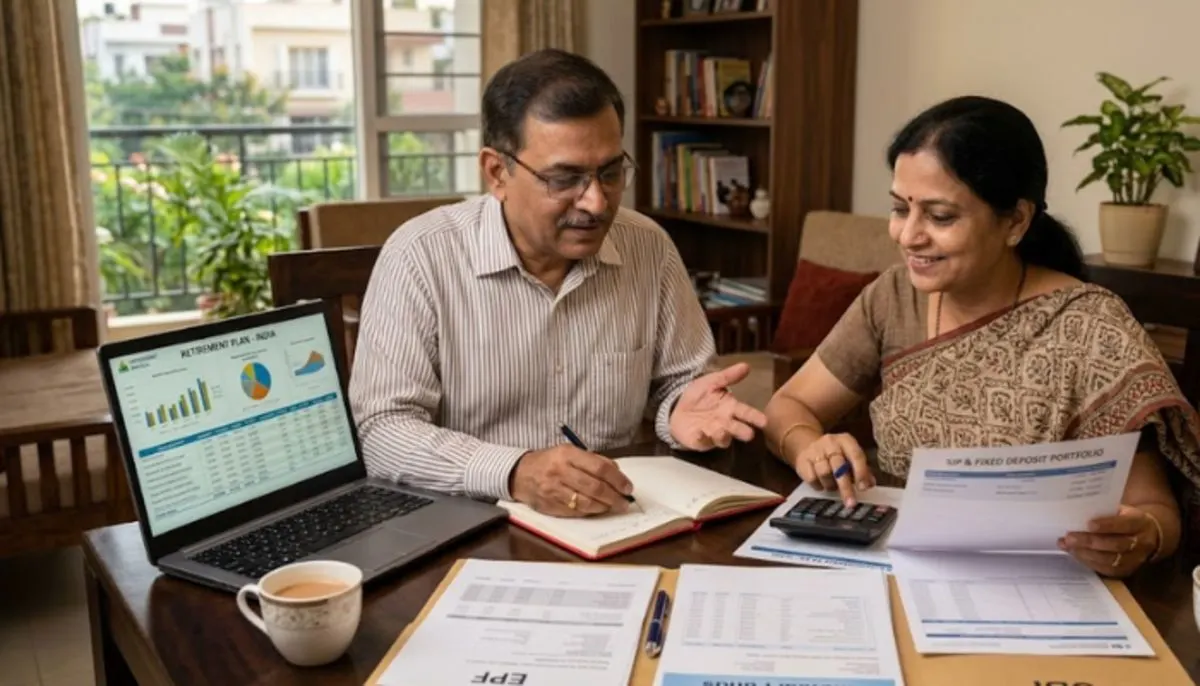
Best Investments for Retirement in India: Top Plans 2026
When you think about retirement, you think about peace. You think about not worrying about money every month. But in India, many people get confused. They see plans that give high returns in one year. They see plans that give monthly income. They also see safe plans for five years. And they ask – which one is really good for retirement?
The truth is simple. Retirement is not one goal. It has many parts. You need some money that grows over many years. You need some money that gives you cash every month after you stop working. And you also need some money that stays safe and beats inflation.
In this article, we will look at the best investments for retirement in India. But we will not just give a list. We will explain each plan with numbers, examples, and real use. We will also cover short term plans like one year high return options, monthly income plans, and safe five year plans. Because your retirement journey starts today, not at age 60.
Why Retirement Planning in India Needs More Than One Type of Investment?
Many Indian investors make one mistake. They put all their money in one place. Some put everything in the Public Provident Fund (PPF). Some put everything in mutual funds. Some only buy land or gold.
But retirement is a long period. It can be 20 to 30 years after you stop working. In that time, you will face inflation. Medical costs will go up. Your monthly needs will change.
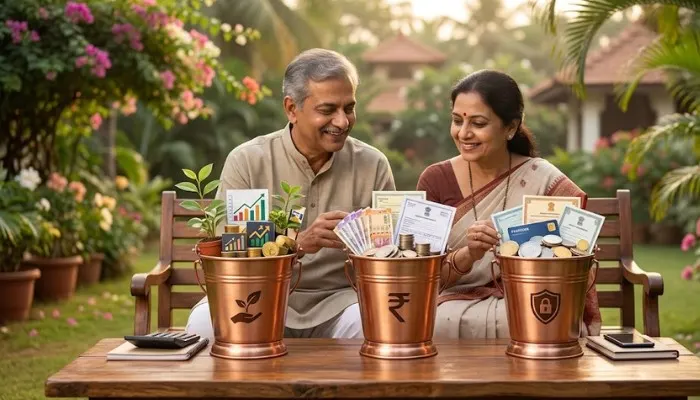
So the right way is to divide your money into three buckets.
- Bucket one – Growth bucket. This is for money you do not need for 10 to 15 years. It gives higher returns but has some risk.
- Bucket two – Monthly income bucket. This gives you regular cash flow after retirement.
- Bucket three – Safety bucket. This protects your money. Returns are lower but your capital does not go down.
Now let us look at the best options for each bucket. We will also answer your specific needs – high returns in one year, monthly income, and safe five year plans in India.
Read More: Growth Investing vs Dividend Investing: Which Strategy Is Better for Indian Investors?
Best Investment for Retirement
If you are 30 or 40 years old, your main goal should be growth. You have time. Time is your biggest helper. Even a small amount every month becomes big after 20 years because of compounding.
Here are the best long term retirement investments in India.
1. National Pension System (NPS)
NPS is made for retirement. You put money every year. You can get tax benefit under section 80C and 80CCD(1B). When you turn 60, you can take out 60 percent of the amount without tax. The remaining 40 percent must buy an annuity plan that gives you monthly pension.
NPS invests part of your money in shares and part in bonds. The share in equity can go up to 75 percent if you choose actively. Over 20 years, NPS has given around 9 to 12 percent returns.
Best for – Salaried people and self employed who want low cost retirement plan.
2. Public Provident Fund (PPF)
PPF is the most trusted safe investment in India. The government backs it. Interest rate changes every quarter but stays around 7 to 8 percent. The lock in period is 15 years. But you can extend it in blocks of 5 years.
The best part – interest and maturity amount are completely tax free. You can also take a loan against your PPF balance from the third year.
Best for – Risk free investors who do not want any market ups and downs.
3. Mutual Funds for Retirement
You do not need to buy ten different funds. For retirement, two types are enough.
One is an index fund that follows Nifty or Sensex. It has very low cost. Over 20 years, index funds have given around 12 to 14 percent returns.
Second is a balanced advantage fund. These funds automatically move money between shares and bonds. They go down less when the market falls.
You can start a Systematic Investment Plan or SIP with just 500 rupees per month. This is the easiest way to build a big retirement fund.
Best for – People who understand that market ups and downs are normal over long term.
Best Investment Plan with High Returns for 1 Year
This is a different need. Maybe you have extra money for one year. You want good return but you do not want to lock it for many years. You also cannot take high risk because you need the money next year.
Here are real options for high returns in one year in India.
1. Short Term Debt Funds
These funds invest in company deposits and bank certificates for less than one year. The returns are usually 7 to 8.5 percent. They are better than savings account. You can take out your money anytime without penalty.
In the last one year, some good short term debt funds gave 8.2 percent returns.
2. Fixed Deposits with Small Finance Banks
Small finance banks like Equitas, Ujjivan, and AU Bank give higher FD rates than large banks. For one year, they offer 8 to 9 percent. Senior citizens get 0.5 percent extra. Deposits up to 5 lakh rupees are safe because of DICGC insurance.
3. Arbitrage Funds
These funds use the price difference between cash market and futures market. They are treated like equity funds for tax. But their risk is very low. For one year, arbitrage funds give 6 to 7.5 percent returns. The tax on gains is only 15 percent if you sell before one year. After one year, long term gains above 1 lakh are taxed at 10 percent.
Which one is best for you? If you want bank level safety, take small finance bank FD. If you want slightly better tax treatment, take arbitrage fund. If you want easy withdrawal, take short term debt fund.
Best Investment Plan for Monthly Income
After retirement, monthly income is not a luxury. It is a need. You have to pay electricity bill, pay for groceries, pay for medicine. A lump sum in the bank is not enough because you will keep spending from it and one day it will end.
Here are the best monthly income plans in India.
1. Senior Citizens Savings Scheme (SCSS)
This is the best monthly income plan for people above 60 years. You can also invest if you are 55 or above and have taken voluntary retirement. The maximum investment is 30 lakh rupees. Interest rate is around 8.2 percent per year. You get paid every three months. The account lasts for 5 years. You can extend it for 3 more years.
The interest is not tax free if you are in higher tax slab. But many senior citizens use this as their main income source.
2. Post Office Monthly Income Scheme (POMIS)
This scheme gives 7.4 percent interest per year. You get paid every month directly into your post office savings account or bank account. A single person can invest up to 9 lakh rupees. Joint account can invest up to 15 lakh rupees. The lock in period is 5 years. You cannot take money before one year. Between 1 and 5 years, withdrawal has a small penalty.
Best for – People who want government safety and monthly cash without any market risk.
3. Systematic Withdrawal Plan or SWP from Mutual Funds
This is a very smart way to create monthly income from a lump sum. Suppose you have 50 lakh rupees. You put it in a balanced mutual fund. Then you tell the fund to send you 25,000 rupees every month to your bank account. The fund sells some units every month and sends you the money.
The remaining money keeps growing. If the fund gives 10 percent return, your 50 lakh can give you monthly income for many years without ending.
SWP is good for people who are comfortable with some market ups and downs. You can stop or change the amount anytime.
Safe Investments with High Returns in India for 5 Years
Five years is a medium term. You need safety. But you also want returns higher than fixed deposit. You do not want to lock money for 15 years like PPF. Here are the best options.
1. 5 Year Tax Saving Fixed Deposit
Every nationalized bank has this FD. You invest for 5 years. You get tax benefit under section 80C up to 1.5 lakh rupees. Interest rate is 7 to 7.5 percent for general public. Senior citizens get 0.5 percent extra. The interest is taxable. But principal is safe.
The only problem – you cannot take money before 5 years. No loan is allowed against this FD.
2. Sovereign Gold Bonds or SGBs
Gold bonds are issued by the government of India. You pay the price of gold. After 5 years, you get the market price of gold. You also get 2.5 percent extra interest every year on your original amount. So even if gold price does not move, you still get some return.
Over the last 5 years, gold has given around 12 percent per year returns. That is much higher than FD. When you sell after 5 years, any profit is tax free. SGBs are very safe because government backs them.
Best for – People who want gold without the trouble of keeping physical gold at home.
3. Bharat Bond ETF
This is a government owned bond fund. It invests only in AAA rated public sector companies. The maturity is 5 years. Current yield is around 7.8 to 8 percent. You can buy and sell on the stock exchange like a share. You do not have to hold exactly 5 years. You can sell anytime.
The cost is very low. And the companies are government owned so default risk is almost zero.
You May Also Read: How to Invest in Mutual Fund via Groww India A Complete Step by Step Guide
How to Mix These Plans for a Comfortable Retirement?
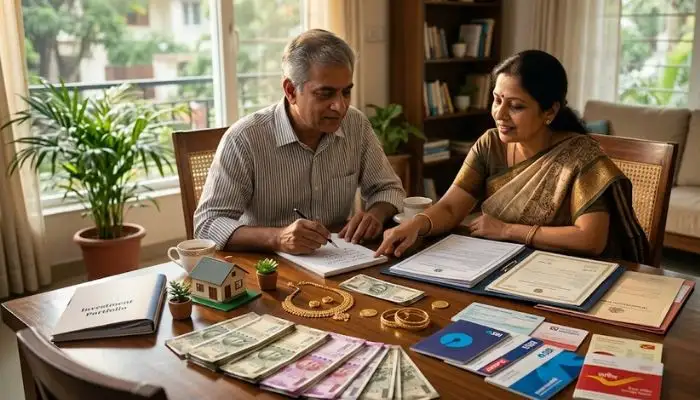
Let us take an example. Rajesh is 45 years old. He wants to retire at 60. He can save 20,000 rupees per month. He also has 10 lakh rupees saved now. He wants monthly income after retirement. He also wants some safety for his 10 lakh.
Here is a simple plan for Rajesh.
Every month he puts 10,000 rupees in NPS. This gives him tax saving and long term growth. He puts 5,000 rupees in an index fund through SIP. Another 5,000 rupees he puts in a balanced advantage fund.
His 10 lakh rupees he divides. 3 lakh goes to a 5 year tax saving FD. 3 lakh goes to Sovereign Gold Bond. 4 lakh he keeps in a short term debt fund for emergencies.
At age 60, his NPS will give him a lump sum and pension. His index fund and balanced fund will have grown well. His FD and gold bond would have matured. He can then put that money into Senior Citizens Savings Scheme for monthly income.
This way, Rajesh gets growth, safety, and monthly income. He does not depend on one single plan.
Common Mistakes People Make in Retirement Planning
Many people think bank FD is enough. But FD interest after tax and inflation often gives zero real return. If inflation is 6 percent and FD gives 7 percent, you only get 1 percent real return.
Many people buy life insurance plans as investment. Those plans give very low returns. Never mix insurance and investment. Use term insurance for protection. Use mutual funds, PPF, NPS for investment.
Many people keep too much money in savings account. Savings account gives only 2.5 to 3.5 percent. That is less than inflation. Keep only 3 to 6 months of expenses in savings account.
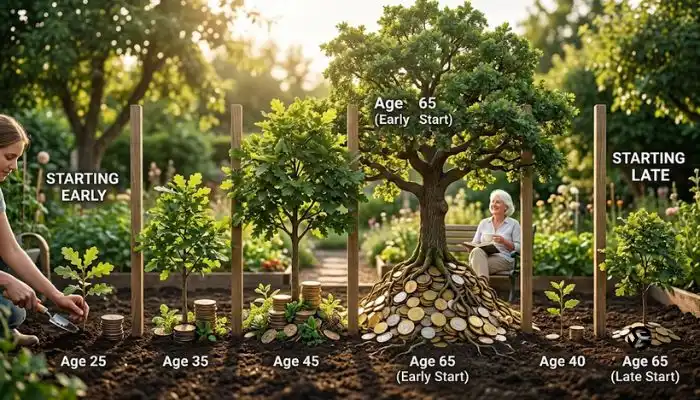
Many people start planning at age 55. That is too late. At age 30, if you save 5,000 rupees per month, at 10 percent return, you get almost 1 crore by age 60. If you start at 50, you need to save 50,000 rupees per month to reach the same amount. Start early. Even small amounts work.
Final Words
Do not try to do everything at once. Start with one plan. If you are young, start an index fund SIP of 2,000 rupees per month. If you are near retirement, open a Senior Citizens Savings Scheme account. If you have extra money for one year, put it in a small finance bank FD.
The best investment for retirement is not one product. It is a mix of growth, safety, and monthly income. Take paper and write down your age, your monthly savings, and your target monthly income after retirement. Then use the plans from this article.
And remember one thing. The best day to start was ten years ago. The second best day is today.