

Best US-Focused ETFs for Indian Investors
Find best US-focused ETFs for Indian investors a smart way to grow savings by tapping into America's top companies like those in the S&P 500, with steady 10-12% yearly returns over decades.
Top picks include Vanguard S&P 500 ETF (VOO) at 0.03% fee for broad growth, Invesco QQQ (QQQ) for tech push at 18-20% past gains, and Schwab US Dividend (SCHD) for regular payouts buy via apps like Vested or IndMoney under RBI's 250,000 USD LRS limit, but watch TCS tax over 7 lakhs and 15-30% total costs from fees plus taxes.
Start with 10-20% portfolio share, use NSE options like Motilal Nasdaq 100 for rupee ease, hold 3-5 years to beat risks like market drops or rupee swings, and sip small monthly for best results.
Why Indian Investors Turn to US ETFs Right Now?
Over many years, the US stock market has given good returns, around 10 to 12 percent each year on average for big indexes like S&P 500. This beats a lot of other places, even with market ups and downs. For us in India, our own market sometimes shakes because of elections or rain issues, so many people look outside for steady growth.
Think about it – US ETFs put your money into hundreds of companies at one go, from tech giants like Apple and Microsoft to everyday names like Walmart. No need to pick just one stock and worry if it falls. From India, the limit stands at 250,000 dollars per year under LRS, and banks add TCS tax if you send more than 7 lakh rupees. But salaried folks or parents saving for a child's abroad study find it works well with small monthly SIPs.
You buy these on Indian stock exchanges or straight from US platforms, open during our trading time. Old records show these ETFs often do better than local funds, and when the dollar stays strong against rupee, you get extra profit on the way back.
Read More: Nifty Alpha Low Volatility 30 ETF Review: Share Price Today
Top 10 ETFs for US Stocks in India Full Details
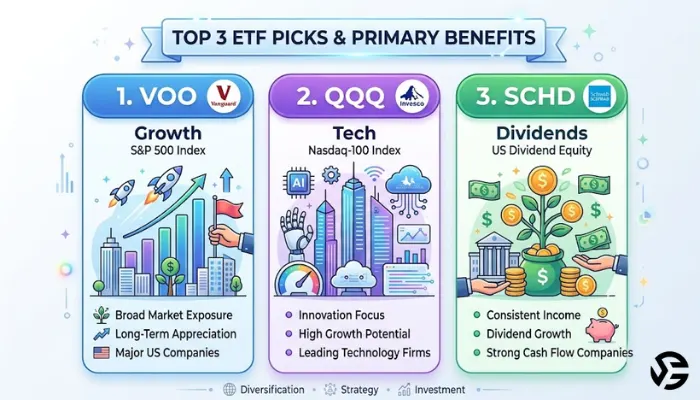
I went through many options and picked these 10 US-focused ETFs that fit Indian needs best. They stand out for low yearly charges, large money inside them already, and solid past growth till early 2026. Some cover the whole market, others focus on tech or steady dividend payers.
Let me break down each one with real reasons why it suits you:
| Rank | ETF Name | Ticker | What It Tracks | Yearly Fee in Percent | 5-Year Return Around | Who Should Pick It |
|---|---|---|---|---|---|---|
| 1 | Vanguard S&P 500 ETF | VOO | Biggest 500 US companies | 0.03 | 14 to 15 | New investors wanting long growth |
| 2 | SPDR S&P 500 ETF | SPY | Same big 500 list | 0.09 | 14 | People who trade often |
| 3 | iShares Core S&P 500 | IVV | S&P 500 again | 0.03 | 15 | Anyone after rock-bottom costs |
| 4 | Invesco QQQ Trust | QQQ | Top 100 tech names | 0.20 | 18 to 20 | Those excited about tech boom |
| 5 | Vanguard Total Stock | VTI | Every US stock big and small | 0.03 | 13 | Full spread across America |
| 6 | Vanguard Growth ETF | VUG | Companies growing fast | 0.04 | 16 | Risk-takers chasing high returns |
| 7 | Schwab US Dividend | SCHD | Firms paying regular dividends | 0.06 | 12 | Need some income along with growth |
| 8 | Vanguard Value ETF | VTV | Undervalued steady companies | 0.04 | 11 | Safety during market drops |
| 9 | iShares MSCI World | URTH | Mostly US with some world mix | 0.24 | 12 | Light global touch |
| 10 | Vanguard FTSE All-World | VT | US plus other countries | 0.07 | 11 | Simple all-in-one for starters |
These figures come straight from fund pages as of April 2026. Returns count dividends but skip currency swings for now. Before you buy, pull up the latest share price on your app.
Take VOO for example – it holds names everyone knows, spreads risk wide, and costs next to nothing to own. Over five years, a 10,000 rupee start could grow a lot if markets stay kind. QQQ pulls ahead in good tech years but falls harder in bad ones, like 2022.
Step-by-Step Guide: Buy Best ETF to Invest in U.S. Market from India
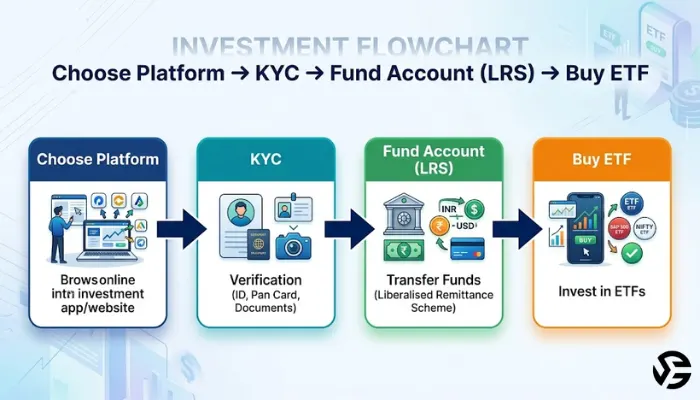
Getting started takes just a few days if you plan right. First, pick a platform – Groww or Zerodha Coin for Indian versions, Vested or Interactive Brokers for direct US access. Link your PAN, bank, and do KYC online.
Here is how I would do it myself:
- Choose one or two from the table above – match to your goal, like growth for retirement or dividends for extra cash.
- Open a demat account – free on most apps, takes 24 hours.
- Fill LRS form at your bank branch or online, send money out – watch for 0.5 to 1 percent forex charge plus TCS at 20 percent over 7 lakhs.
- Place buy order in rupees for NSE-listed ones or dollars for US direct. Set SIP at 5,000 rupees a month to buy more when prices dip.
Indian ETFs like Motilal Oswal Nasdaq 100 let you skip dollar transfers – trade them like Nifty shares. Track the rupee-dollar rate daily; a falling rupee means more rupees when you sell later.
One friend started with 2,000 rupees monthly in VOO two years back – now sits on nice gains despite some dips.
All About Fees and Taxes – Plan Ahead
Fees eat returns if you ignore them. Expense ratio means the cut each year – VOO takes just 0.03 percent, or 30 paise on 10,000 rupees. Skip anything over 0.5 percent; it adds up fast over 10 years.
Taxes make it real:
- Sell within one year, pay your income tax slab rate, maybe 30 percent.
- Hold over one year, 12.5 percent tax but adjust for inflation.
- TCS on money sent out – file ITR next year to get most back.
- US side withholds 25 percent on dividends, but India-US tax pact drops it to 15 percent.
Add it up, and costs take 20 to 30 percent off total returns. Hold for 3 to 5 years minimum to make it worth the effort. Use a spreadsheet to track – put in your buy price, fees, and see net gain.
Real Risks and Simple Ways to Manage
Markets drop sometimes – US tech lost 30 percent in 2022, hit many hard. Dollar can weaken too; if rupee jumps strong, your ETF value drops in rupee terms.
My advice comes from watching this: keep US part at 10 to 20 percent of total savings. Put rest in Indian mutual funds, fixed deposits, or gold. Check your holdings once a year, sell some if US grows too big.
RBI might tweak LRS rules, or US interest rates rise and pull prices down. Read news on Moneycontrol or Economic Times weekly. Start small with SIP – no stress if market waits a bit.
Best International ETF in India Easy Local Choices
You don't always need to send money abroad. NSE has good ones ready:
- Motilal Oswal Nasdaq 100 ETF tracks QQQ, gave 25 to 30 percent past returns, buy in rupees.
- ICICI Pru US Bluechip links to S&P 500, simple for beginners.
- HDFC Nasdaq 100 costs around 0.5 percent yearly.
These cut forex pain but charge more than direct US buys. Perfect if your LRS limit feels tight or you want quick trades. I know a family who picked Motilal version no bank visits, steady growth matching US without hassle.
You May Also Read: Rex Osprey XRP ETF Options Trading: Guide and Strategies 2026
Build and Grow Your Portfolio Over Time
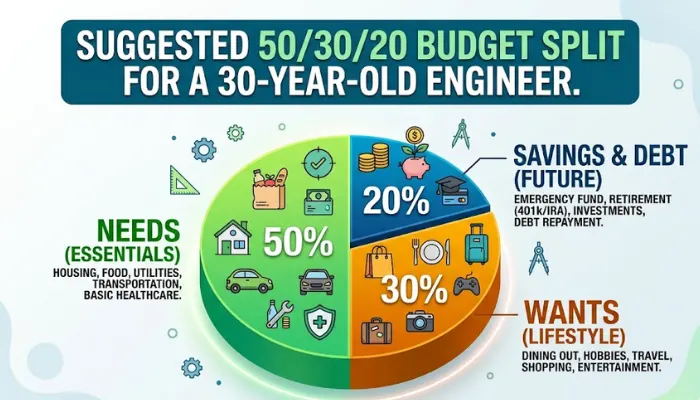
For someone new like a 30-year-old engineer: go 50 percent VOO for base, 30 percent QQQ for push, 20 percent SCHD for payouts. Adjust if you near 50 shift to safer VTV.
Watch on Yahoo Finance app or NSE website every three months. Sell when you hit goal, say 20 lakh for a home down payment.
Age matters under 40, take more QQQ; over 50, lean SCHD. Chat with a SEBI-registered advisor for your exact salary and family needs. Women saving alone often like dividend ones for peace.
Questions People Ask Most
Can I begin with just 1,000 rupees monthly?
Yes, apps let you SIP that small in Indian US ETFs, builds slow but sure.
What happens if rupee falls even more against dollar?
Your holdings gain extra in rupees great for holds over 5 years.
Is 2026 a safe time to jump in?
Markets sit high now, but dollar strength helps – wait for small dips if nervous.
Direct US buy or stick to Indian ETF?
Direct saves fees over time if you send big amounts; Indian easier for under 7 lakhs yearly.
How much tax refund on TCS?
File ITR by July 31, get 80-90 percent back as credit against other taxes.