

Treasury Bonds for Retirement Income: Safe Guide India
When you stop working every day, your salary also stops. But your expenses do not stop. You still need to pay for food, medicines, electricity, house help, and sometimes help your children or grandchildren. This is why retirement income is so important.
Many Indian retirees put their money in bank fixed deposits. Some buy senior citizen savings scheme. But there is another option that is very safe and gives regular interest. That option is treasury bonds for retirement income.
Treasury bonds are loans you give to the government. The government takes your money and promises to pay you interest every few months. After some years, the government returns your full money back to you.
In India, these are called Government Securities or G-Secs. But we will keep it simple and call them treasury bonds.
What Are Treasury Bonds in Simple Words?
Think of it like this. Your neighbour needs money for six months. You give him one lakh rupees. He says – I will give you 500 rupees every month as thank you. After six months, I will give back your one lakh rupees.
Treasury bonds work exactly like this. Only here the government is your neighbour. The government needs money to build roads, run schools, pay salaries. You give your money to the government. The government gives you a paper or digital bond. That bond says – we will pay you this much interest every year. And on this date, we will return your full money.
This is called a bond. The word treasury means it comes from the government. So treasury bond is simply a government loan.
For a retired person, this is very attractive. Because you know exactly how much interest you will get. You know exactly when you will get your money back. There is no guessing. No tension of stock market going up and down.
Why Indian Retirees Think About Treasury Bonds for Retirement Income?
Let us be honest. Bank fixed deposit rates keep falling. Some years back you got 8 percent. Now you get 6.5 or 7 percent. And that too for one or two years only. After that you have to renew at new lower rates.
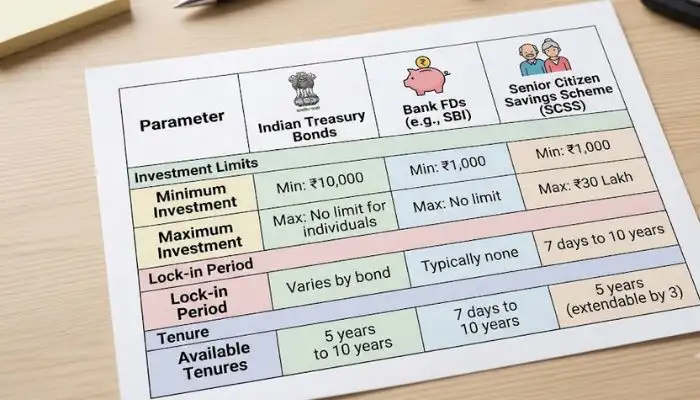
Senior citizen savings scheme gives around 8.2 percent. But the lock in period is five years. You cannot take money out before five years easily. And you can only put up to 30 lakh rupees.
Post office monthly income scheme gives around 7.4 percent. But again there is a limit on how much you can put.
This is where treasury bonds become interesting. You can buy bonds that give interest for ten years, fifteen years, even thirty years. The interest rate is fixed on the day you buy. So if you buy a bond giving 7.5 percent for twenty years, you get 7.5 percent for full twenty years. Even if bank rates fall to 5 percent, you still get 7.5 percent.
For a retired person who wants peace of mind, this is a big relief. You do not have to run to the bank every year to renew your FD. Your interest keeps coming to your bank account automatically.
Read More: How to Invest in Inflation Indexed Bonds in India A Complete Guide
How to Buy Treasury Bonds for Retirement Income
This is the most practical part. Many people think buying government bonds is difficult. It is not. Here are the simple ways.
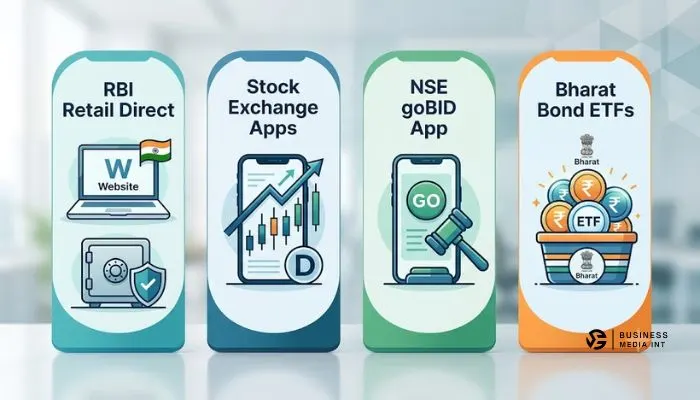
First Way – RBI Retail Direct
Reserve Bank of India started a very good service called RBI Retail Direct. You can open an account on this portal. It is free. Once you open the account, you can buy treasury bonds directly from RBI. There is no broker. No middleman.
You need your PAN card, Aadhaar, bank account details, and a digital signature. The process takes two or three days. After that, you log in, see which bonds are available, and buy them.
The smallest amount you can buy is ten thousand rupees. There is no maximum limit. You can buy for ten thousand, one lakh, ten lakh, or one crore.
When you buy, you choose the bond that matches your retirement need. For example, if you are 60 years old, you might buy a bond that matures when you are 70 or 75. That way, when you need your money back, you get it.
Second Way – Stock Exchange
If you already have a demat account with Zerodha, Groww, Angel One, or any other broker, you can buy treasury bonds just like you buy shares. You open the trading app, search for government bonds, and buy.
The difference is that here you are buying from another person who wants to sell their bond. Not directly from RBI. This is called secondary market.
The advantage is you get bonds very fast. The disadvantage is you have to pay a small brokerage fee.
Third Way – NSE goBID App
National Stock Exchange has a mobile app called goBID. You can download it on your phone. You register with your PAN and bank details. Then you can bid for treasury bonds when RBI issues new bonds.
This is very good for people who are not comfortable with computers. The app is simple. You see the interest rate. You say how many bonds you want. You pay through UPI. Done.
Fourth Way – Bharat Bond ETFs
ETF means exchange traded fund. It is a basket of different government bonds put together. Bharat Bond ETF is made specially for retail investors like you. You can buy it from any broker app. The advantage is you get many bonds in one single purchase. The disadvantage is you pay a small yearly fee.
For most retired people, RBI Retail Direct is the best and cheapest way. No fees. Direct from government. Very safe.
Best Treasury Bonds for Retirement Income
Not all bonds are same. Some give interest every year. Some give interest every six months. Some have three years left. Some have thirty years left. For retirement, you want bonds that match your age and your monthly expense need.
Here are the good options for Indian retirees.
Long Term Fixed Rate Bonds
These bonds give you a fixed interest rate for ten years or more. For example, the Government of India issues bonds called 7.25 percent GS 2035. That means you get 7.25 percent interest every year until the year 2035. In 2035, you get your full money back.
If you are 55 years old, buying a bond that matures at 65 or 70 is perfect. You get regular interest for ten or fifteen years. Then at 70, you get your full money back as a lump sum. That lump sum can be used for medical expenses or to give to grandchildren.
Floating Rate Bonds
These are different. The interest rate changes every year based on a formula. When RBI increases interest rates, your bond interest also goes up. When RBI cuts rates, your bond interest goes down.
Some retirees like this because if inflation goes up, RBI raises rates, and your bond interest also rises. But some retirees do not like the uncertainty. This is a personal choice.
Inflation Indexed Bonds
These are special bonds. The interest rate is fixed, but the principal amount goes up with inflation. Meaning if you buy a bond for one lakh rupees and inflation is 6 percent, your one lakh becomes one lakh six thousand. Then you get interest on that higher amount.
In India, these are called Inflation Indexed National Saving Securities. They are very good for retirement because inflation eats your savings. But these bonds are not always available. RBI issues them from time to time. You have to watch the RBI website.
Treasury Bills for Short Term
If you are already retired and very old, say 75 years, you may not want to lock money for ten years. You need money soon. For that, you can buy Treasury Bills. These are bonds for less than one year. 91 days, 182 days, or 364 days.
You buy a treasury bill at a lower price. Example – you pay 98,000 rupees for a bill. After 364 days, the government gives you 1,00,000 rupees. Your profit is 2,000 rupees. It is not a big return, but it is safe and short.
Disadvantages of Treasury Bonds for Retirement Income
We must be honest. Nothing is perfect. Treasury bonds also have problems. You must know these problems before putting your retirement money.
Interest Rate Risk
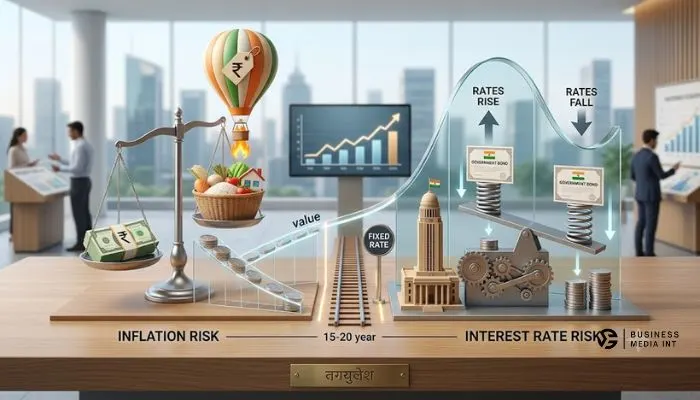
This is the biggest problem. When you buy a bond, the price of that bond changes every day in the market. Even though the government will give you full money on maturity date, the market price goes up and down.
Suppose you buy a bond giving 7 percent interest. Next year, new bonds are giving 8 percent interest. Now your bond is less attractive. If you try to sell your bond before maturity, you will get less money than what you paid.
Example – you paid one lakh rupees. Market price may fall to 95,000 rupees. You lose 5,000 rupees if you sell early.
For a retired person, this is dangerous if you suddenly need money for medical emergency. You are forced to sell at a loss. So only put money in bonds that you are sure you will not need until maturity date.
Inflation Risk
This is a silent killer. You get 7 percent interest on your bond. But every year prices of rice, dal, milk, medicine, petrol go up by 6 percent. Your real profit is only 1 percent. If inflation goes to 8 percent, you are actually losing money.
Indian inflation is unpredictable. Some years it is 4 percent. Some years it is 7 percent. If you lock your money for twenty years at 7 percent and inflation averages 6.5 percent, your real return is very small.
One way to manage this is to also put some money in inflation indexed bonds. But as said earlier, they are not always available.
Liquidity Risk
Liquidity means how easily you can sell something. Treasury bonds in India do not have very high liquidity. Meaning if you want to sell your bond on a Monday morning, you may not find a buyer quickly. Or you may have to sell at a bad price.
This is different from a bank fixed deposit. In FD, you go to the bank and break it. You lose some interest but you get your money the same day. In bonds, you have to wait for a buyer.
For a retired person who needs money suddenly, this is a real problem. So always keep some emergency fund separate in a savings account or liquid fund. Do not put every rupee into bonds.
You May Also Read: Short Term vs Long Term Bonds India Which One is Better for You?
Lower Returns Compared to Equities
This is not really a disadvantage. It is a trade off. Equities (shares) give higher returns over long term. But they also go up and down a lot. In one year, your share portfolio can fall 20 percent. In bonds, it will not fall like that.
But for people who retired at 60 and have a large corpus, equities are still useful. A mix of 60 percent bonds and 40 percent shares is often better than 100 percent bonds. Because shares give growth to beat inflation.
So do not make the mistake of putting all your money in bonds only because they are safe. Keep some in good dividend paying shares or balanced mutual funds.
Tax On Interest
The interest you get from treasury bonds is added to your income. You pay income tax according to your tax slab. If you are in 20 percent or 30 percent tax slab, a large part of your interest goes to tax.
For example, if you get 70,000 rupees interest in a year and you are in 20 percent slab, you pay 14,000 rupees tax. Your actual return becomes lower.
There is some relief if you hold the bond for more than three years. Then you get indexation benefit. Indexation means you adjust the purchase price for inflation before calculating profit. This reduces your tax. But you need to talk to a tax consultant for this.
Treasury Bonds vs Other Retirement Options in India
Let us compare quickly. This will help you decide.
Vs Bank Fixed Deposit
Bank FD gives you option to break anytime. But you lose some interest. Treasury bond you cannot break easily. You have to sell in the market. FD interest rates are not fixed for long. Every one or two years, you renew at new rates. Treasury bond rate is fixed for ten or twenty years.
For a young retiree of 55 to 60, bond is better. For an older retiree above 75, FD is better because of easy break.
Vs Senior Citizen Savings Scheme
SCSS gives around 8.2 percent. But maximum investment is 30 lakh rupees. And lock in is five years. Treasury bonds have no upper limit. And you can choose any maturity from one year to forty years.
For people with more than 30 lakh rupees, bonds are the only choice for safe government backed returns.
Vs Pradhan Mantri Vaya Vandana Yojana
PMVVY gives around 7.4 percent for ten years. Maximum is 15 lakh rupees. This is very safe because it is from LIC. But again the limit is small. Treasury bonds have no limit. But PMVVY is simpler. You just go to LIC office and buy. No demat account needed.
Vs Monthly Income Scheme from Post Office
POMIS gives around 7.4 percent. Maximum is 9 lakh rupees for single account and 15 lakh for joint. Again small limit. And the interest is paid monthly, which many retirees like. Treasury bonds mostly pay half yearly. But you can adjust your budget accordingly.
How Much Money to Put in Treasury Bonds for Retirement?
This is a personal question. But here is a simple rule. Take all your retirement savings. Divide into three parts.
First part – emergency money. Keep this in savings bank account or short term fixed deposit. Enough for six months of expenses.
Second part – safe regular income money. Put this in treasury bonds with different maturity years. Some bonds maturing in five years, some in ten years, some in fifteen years. This way every few years some money comes back to you.
Third part – growth money. Put this in good balanced mutual funds or index ETFs. This will grow over time and protect you against inflation.
For most Indian retirees, putting 40 to 50 percent of total savings in treasury bonds is reasonable. The rest goes to emergency fund and growth assets.
Step by Step Guide to Buy Your First Treasury Bond
If you want to start today, follow these steps.
- Step one – Open a bank account if you do not have one. Most nationalised banks work fine.
- Step two – Get your PAN card and Aadhaar ready.
- Step three – Go to RBI Retail Direct website. Click on open account. Fill your details. Upload your documents. Complete video KYC. This takes about ten minutes.
- Step four – Once account is opened, log in. Add money from your bank account to your RBI Retail Direct wallet.
- Step five – See the list of available bonds. You will see columns like maturity date, coupon rate (interest rate), next interest payment date.
- Step six – Choose a bond that matures when you want your money back. For retirement income, choose a bond with interest rate above 7 percent if available.
- Step seven – Enter how many bonds you want. Each bond is usually one thousand or ten thousand rupees face value. Enter quantity. Click buy. Confirm.
- Step eight – Your bond will be credited to your account in two or three days. Interest will start coming to your bank account on the dates mentioned.
That is it. You have now bought a treasury bond for your retirement income.
Common Mistakes Retirees Make With Bonds
First mistake – buying only one bond with very long maturity. Example – a sixty year old buying a thirty year bond. What if you need money at seventy five? You cannot break it easily. Better to buy bonds with different maturity years. This is called laddering.
Second mistake – ignoring tax. Always calculate post tax return. If you get 7.5 percent but pay 20 percent tax, your actual return is only 6 percent. Then FD may look better.
Third mistake – putting all money in bonds. Inflation will slowly eat your purchasing power. Keep some money in assets that grow.
Fourth mistake – selling bond when price falls due to interest rate increase. If you do not need money, do not sell. Hold until maturity. At maturity, government gives you full face value irrespective of market price.
Final Verdict
Yes. But with conditions. They are very good for the safe portion of your retirement portfolio. They give fixed predictable income. They are backed by the Government of India. There is no default risk. No tension of stock market.
But they are not perfect for every situation. If you are very old and need money every month without any delay, bank FD or post office monthly scheme may be simpler. If you have a small corpus below 30 lakh rupees, senior citizen savings scheme may give higher return.
For retired people with two crore or more, treasury bonds are excellent to park fifty percent of that money. You get regular interest. No tension. No need to check share prices every morning.
The best approach is to mix. Put some money in treasury bonds for safety and fixed income. Put some in balanced mutual funds for growth. Keep some in savings account for emergencies.
And most importantly – talk to a fee only financial advisor once before putting large money. Every person's health, family situation, expenses, and tax status is different. A good advisor will tell you the exact split for your specific case.
FAQs
Can a retired person buy treasury bonds after retirement?
Yes. Age does not matter. Anyone with a PAN card and bank account can buy.
Is there any age limit?
No. No minimum or maximum age.
How often do I get interest?
Most treasury bonds pay interest every six months. Some pay every year. Check the bond details before buying.
Can I buy treasury bonds from a post office?
No. Post office does not sell government bonds. Use RBI Retail Direct or stock exchange.
What happens if I die before bond matures?
The bond goes to your nominee. Your family will get the interest and final maturity amount.
Are treasury bonds better than fixed deposit for senior citizens?
For long term fixed income, yes. For short term or emergency funds, no. Both have their place.