
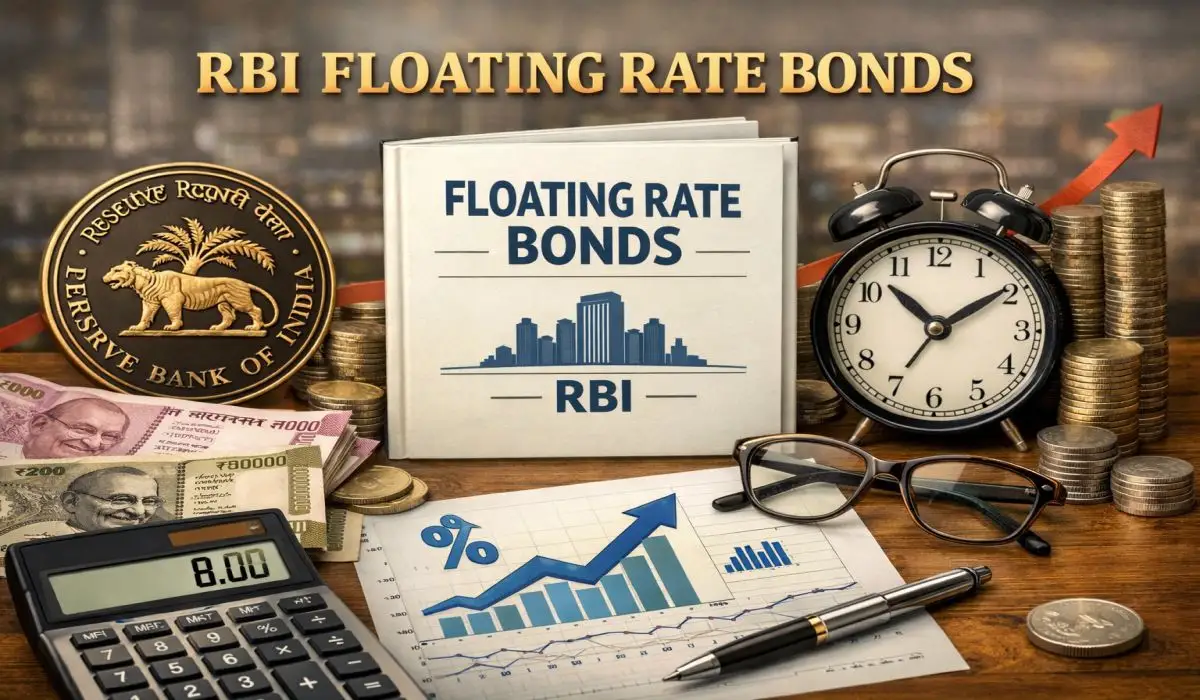
RBI Floating Rate Bonds Retail Investor Guide: Safe Way to Grow Your Money
RBI floating rate bonds give regular income with rates that go up when bank rates rise. These bonds suit people in India who want safe returns better than fixed deposits. This guide shows you everything from what they are to how to buy them step by step.
What Are RBI Floating Rate Bonds
RBI floating rate bonds are savings bonds issued by the Reserve Bank of India for common people like you and me. They run for seven years and pay interest two times each year. The interest rate changes every six months based on the National Savings Certificate rate plus a small extra amount of 0.35 per cent.
These bonds keep your money safe because the government backs them fully. You can start with just one thousand rupees and buy in blocks of that amount. No upper limit means you put in as much as you want. Interest goes straight to your bank account on January 1 and July 1 every year.
Many families in India pick these bonds for children's education or wedding funds. They beat bank fixed deposits when rates climb because the bond rate follows market changes. Last reset in January 2026 set the rate at 8.21 per cent, which helps beat inflation over time.
Read More: How to Calculate Bond Return: Simple Steps and Examples Guide

Key Features You Must Know
These bonds come with clear rules that make them easy to understand. First, only people living in India can buy them, along with Hindu Undivided Families. Non-Resident Indians cannot join in.
The bonds lock your money for seven years. But senior citizens over sixty get a way out after four years if needed. Regular buyers wait full time or sell back to RBI after seven years. No early exit for others means you plan your cash needs ahead.
Interest adds up but you get it twice a year, not at the end. No tax cut at source so you keep full amount in your account. At the end, RBI pays back your full money with no loss.
| Feature | Details |
|---|---|
| Tenure | 7 years |
| Minimum Buy | Rs 1000 |
| Interest Pay | Every 6 months |
| Rate Reset | NSC rate + 0.35% |
| Who Can Buy | Residents, HUFs |
| Safety | 100% Government |
This table sums up why thousands of retail buyers choose them each year.
Why Invest in Government Bonds Like These
Government bonds top the list for safe places to park money in India. RBI floating rate bonds stand out because rates move with the economy. When RBI raises key rates to fight price rise, your bond interest jumps too.
Fixed deposits from banks offer steady rates but fall behind if market rates go up. These bonds adjust so you stay ahead. Plus, no worry about bank failure since RBI handles everything.
Retail investors gain most from sovereign guarantee. Your one lakh rupees grows to over two lakhs in seven years at current rates, with tax on interest as per your slab. Many use them for steady income after retirement.
In cities like Mumbai or Delhi, people see these as better than savings accounts paying just four per cent. They fit post office schemes but with better liquidity for seniors.
How to Buy Government Bonds in India: RBI Floating Rate Bonds
Buying RBI floating rate bonds takes simple steps anyone can follow. No need for demat account unless you want secondary market trades, but fresh issue works direct.
Step-by-Step Process
-
Open RBI Retail Direct Account: Go to rbiretaildirect.org.in and sign up with PAN, Aadhaar, and bank details. It takes ten minutes and costs nothing.
-
Log In and Find Bonds: After approval in two days, check under "New Issue" for floating rate bonds. They open on set dates like last week of July.
-
Fill Application: Pick amount in thousands, say fifty thousand. Add nominee details and bank mandate for interest.
-
Pay Money: Use net banking from linked account. RBI confirms in three days with bond number.
Banks like SBI or HDFC also sell them over counter. Take PAN, address proof, and cheque to branch. Stock exchanges NSE or BSE list them too if you have trading account.
| Buy Method | Best For | Time Taken |
|---|---|---|
| RBI Retail Direct | Online ease | 2-3 days |
| Banks | Branch visit | Same day |
| Stock Exchanges | Traders | Instant |
Follow these and your money works for you soon.
Full Process for Government Bonds Investment
Beyond RBI bonds, India offers G-Secs or state bonds but floating ones suit beginners most. RBI Retail Direct gives all in one place. Link your savings account once and buy any government paper.
For first timers, start small with ten thousand to learn. Watch interest hit your account first July. Track rate reset on RBI site to see gains.
Paper form still works at banks for those without net. But online rules now so get Aadhaar linked. Whole family can hold under one guardian for minors.
You May Also Read: Easy Guide to Corporate Bond Pricing Trends 2026
Benefits Over Other Options
RBI floating rate bonds shine against bank FDs or post office bonds. FD rates lock now at seven per cent but may drop. These bonds chase higher so you win long term.
No credit risk unlike company bonds paying nine per cent but with default chance. Government never fails on payments.
Tax treatment same as income but no TDS means plan your returns better. Seniors love early exit option missing in FDs.
| Option | Rate Now | Lock-in | Risk |
|---|---|---|---|
| RBI Floating | 8.21% | 7 years | None |
| Bank FD | 7% | 1-5 years | Low |
| Post Office | 7.5% | 5 years | None |
Table shows clear edge for patient investors.
Risks and Things to Watch
No big risks but rates can dip if RBI cuts them. Still beats savings at four per cent. Lock-in hurts if you need cash soon, except seniors.
- Interest counts as income so pay tax if over five lakh slab. No indexation benefit like property.
- Market price swings if you sell before time on exchanges, but hold to maturity for full value. Inflation may eat gains if over eight per cent long term.
- Plan around your goals. Use for five lakh plus lumpsum where safety matters over quick cash.
Tax Rules You Need to Follow
Interest from these bonds adds to your total income. If you earn fifteen lakh a year, tax hits at thirty per cent slab. No special break but better than some schemes.
- File ITR showing under "income from other sources". Keep bond statements for records.
- Seniors get rebate up to five lakh income so check that. Gifts to family still attract tax if over fifty thousand.
Tips to Get Most Out of Your Investment
Buy during low rate times so future resets boost returns. Ladder buys mean put some now, some later for average gains.
- Link to SIP mindset but safer. Teach kids about bonds for future money habits.
- Track RBI monetary policy meetings as they hint rate paths. Join investor forums for updates.
- Renew at maturity into new bonds for steady income stream.
Common Questions Answered
Can NRIs buy?
No, only residents and HUFs.
What if I forget rate reset?
RBI sends SMS and updates site.
Sell before seven years?
Seniors after four, others hold full.
Safe for one crore investment?
Yes, no limit and full safety.
Compare to Sovereign Gold Bonds?
These pay regular cash, gold gives lump at end.