

Difference Between Bonds and Debentures – Simple Guide for Indian Investors
In case you are considering investing a significant amount of money in bonds and debentures in India, one of your initial questions is probably, “What exactly is the difference between bonds and debentures?” Many people use both these words interchangeably, but it can result in incorrect investment decisions for a typical investor.
In this article you will get a full, Indiaoriented explanation of bonds and debentures in very simple language, with clear examples, how they work in real life, and how they are different in everyday terms. The aim is to help you understand them like you would talk with a friend, not like a finance book, and to help you make a safer, more sensible choice for your money.
What Are Bonds in Simple Words?
In India, a bond is a simple way for a government or a big company to borrow money from regular people. When you buy a bond, you are giving your money to that organisation for a fixed period. In return, they promise to pay you a fixed rate of interest at regular intervals and return your full amount at the end of the term, if nothing goes wrong.
For example, if the government or a large public sector bank issues a 5year bond at 7% interest, you put 1 lakh with them today. You get about 7,000 each year as interest, and at the end of 5 years, you get your full 1 lakh back, unless there is some serious trouble. This fixedreturn setup is why many people like bonds, especially those who want more safety and regular income, such as pensioners or parents saving for children’s education or marriage.
Bonds are usually backed by some real strength, such as government power or the reputation of a big bank. In India, central government bonds and statelevel government bonds are treated as very safe because they are linked to the government’s ability to collect taxes and manage the economy.
Read More: RBI Bonds for Senior Citizens: How to Buy the Floating Rate Savings Bond
What Are Debentures in Simple Words?

A debenture is also a way for a company to borrow money, but it is more commonly used by private firms to raise money from the public. When you buy a debenture, you lend money to a company for a fixed time, and the company promises to pay interest regularly and return your main amount at the end of the term.
The main idea, in simple words, is that many debentures do not have strong security like many government bonds do. In a lot of cases, your loan is backed mainly by the company’s name and its future earnings, not by clear physical assets that can be quickly sold if the business fails.
For example, if a fastmoving consumergoods company issues a 7year debenture at 9% interest, you lend them money hoping the company will stay healthy and keep paying interest on time. The return you receive is better than the one you would achieve on a normal bank fixed deposit but if the business is having serious trouble then you may not get the interest on time or you may get back less money than you had expected. This is the reason why debentures are considered somewhat riskier to buy than government bonds, but may be safer than purchased shares of a solid company with a clear term.
Key Differences Between Bonds and Debentures
Even though both bonds and debentures are “loan papers” that pay interest, there are some important differences that matter for Indian investors.
1. Who Issues Them
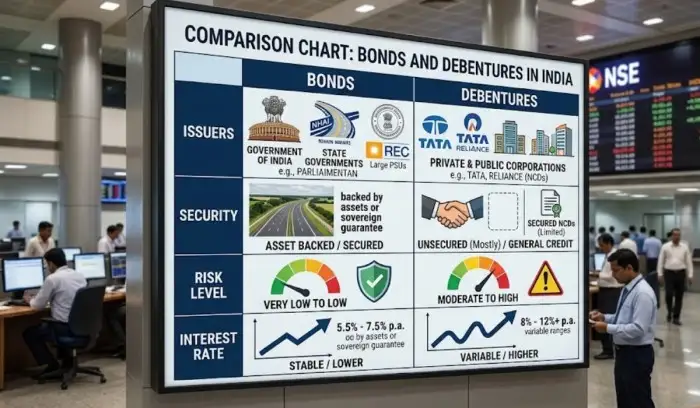
- Bonds in India are mostly issued by central or state governments, public sector banks, and large, trusted financial institutions.
- Debentures are mostly issued by private companies and sometimes by smaller or newer financial bodies to raise money from the market.
Because of this, the name and public image of the issuer play a big role in how safe your money feels before you decide to invest.
2. Level of Security
-
Many bonds in India are secured, which means they are backed by government assets or by the legal strength of the government to collect taxes and manage the economy.
-
Many debentures are unsecured, meaning there may not be a clear physical asset directly attached to your loan. If the company fails, debenture holders may get paid only after secured creditors and banks are settled.
In plain language, if something goes wrong, bond investors usually sit at a better place than many debenture investors.
3. Risk and Return
-
Bonds usually offer lower interest rates because they are seen as safer. For example, government bonds may give around 6–7% per year, depending on the time and market situation.
-
Debentures often offer higher interest rates (for example 8–10% or more) to attract investors, because the risk is a bit higher. Higher return comes with more responsibility on you to check the company’s health and background.
If you are a very cautious person, you may prefer bonds, especially those from government or big public banks. If you are okay with a little more risk and want better returns, you may look at goodquality debentures from strong, wellknown companies.
4. Priority During Company Trouble
If a company runs into serious financial trouble or is liquidated:
-
Secured bond holders and secured creditors usually get their dues first from the sale of company assets.
-
Debenture holders, especially unsecured ones, may have to wait longer and may get only a part of their money back, depending on what is left after others are paid.
This is why many advisors in India tell normal investors to focus more on bonds from trusted institutions and to treat company debentures as a separate, higherrisk option that needs extra research.
5. Tax Treatment and Liquidity
The bonds and debentures of India are included in interest income and capital gains provisions, depending on the method of holding and the holding period of the bonds and debentures.
The interest on bonds and debentures is generally credited to your total income and taxed as per your tax slab.
The profit or loss from the sale of bond or debenture prior to maturity shall be considered capital gains, which may be either short term or long term gains, depending on the holding period.
A number of special bonds and government bonds may provide tax advantages (such as tax-free bonds or bonds issued under certain government programs) which may only apply if the government applies tax rules that are different from theyear before, so you should always check the latest tax rules and your own tax situation before making any decisions.
Bonds and Debentures Investment – What Indian Investors Should Know
For an Indian investor, the main task is to match bonds and debentures with the right goal in life.
If You Want Safety and Stability
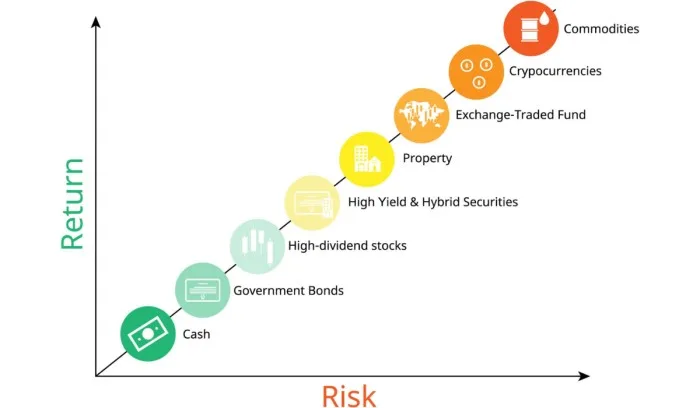
If you want money that grows slowly but stays safe, and you cannot afford big losses (for example, money for retirement, children’s education, or medical needs), government or highquality bank bonds are usually better.
- They give you fixed interest, which helps in planning monthly or yearly expenses.
- The risk of losing your main investment is much lower compared to shares or unsecured company debentures.
Many salaried people in India use such bonds as part of a balanced mix where some money stays in safe options and some goes into higherrisk choices like shares or mutual funds.
If You Are Okay with Some Risk for Better Returns
If you are younger, earn a steady income, and can handle some risk, you may consider goodquality debentures from strong companies.
Here, the key is:
- Check the track record of the company.
- Understand whether the debenture is secured or unsecured.
- Look at the credit rating from agencies like CRISIL, ICRA, or CARE.
A higher credit rating means the company is seen as more likely to pay on time. A lower rating means higher risk and higher interest, so you must decide if your financial situation can handle that risk.
Bonds and Debentures Example
Let us take two simple, reallifelike examples that you can easily relate to.
Example 1 – Government Bond
- The Government of India issues a 10year bond with 7% interest.
- You invest 5 lakh in this bond.
- You get about 35,000 per year as interest (before tax).
- After 10 years, you get your full 5 lakh back, if there is no default.
This is a typical safe, longterm bond used by conservative investors who want low risk and steady income.
Example 2 – Company Debenture
- A wellknown FMCG company issues a 7year debenture with 9% interest.
- You invest 3 lakh in this debenture.
- You get about 27,000 per year as interest (before tax).
- If the company does well, you get regular interest and your 3 lakh at the end.
- If the company faces serious business or financial trouble, you may get late interest or even get back less money, depending on the situation.
This is a higherinterest, higherrisk option from a company, commonly used by investors who want better returns than regular bank FDs.
These examples show how bonds and debentures look similar on paper (lend money, get interest, get money back later) but feel different in safety and risk level.
You May Also Read: Municipal Bonds India: How to Buy and Interest Rate Guide
Simple Tips to Stay Safe as an Indian Investor
To keep your money safe while using bonds and debentures, follow these simple habits:
-
Read the main points of the document – Even if you do not read every line, at least check the issuer name, interest rate, and whether it is secured or unsecured.
-
Check the credit rating – Higher ratings (like AAA or similar) mean better safety.
-
Avoid unknown companies – Do not invest just because the interest is very high and the company name is unfamiliar.
-
Spread your money across different options – Do not put all your extra money in one bond or debenture. Spread it across different types and issuers.
-
Talk to a trusted advisor if in doubt – If you are unsure, ask a registered financial advisor or a bank investment officer who understands your income and goals.
Conclusion
For most Indian investors, the real question is not which one is “better” but which fits your life. Bonds are usually safer, backed by governments or big institutions, and give steady, lower returns. Debentures come from companies, can be riskier, and give higher interest to match that risk.
If you want safety and simple planning, lean towards bonds. If you are okay with some risk and basic research, you can add small parts of goodquality debentures to your mix.
FAQs
-
What is the basic difference between bonds and debentures?
Bonds are usually from governments or big trusted bodies and are safer. Debentures are from companies, often less secure, and pay more interest to balance the risk. -
Are bonds and debentures safe for small investors in India?
Government and highquality institutional bonds are generally safe for small investors in India. Debentures can be okay if the company is strong and rated well, but they are riskier, so small investors should keep the amount low and check the company carefully. -
How do bonds and debentures investment suit longterm goals?
For longterm goals like children’s education or retirement, bonds and debentures investment can give fixed yearly interest and help you plan. Bonds are better for lowrisk longterm planning, while debentures can add better returns if you are okay with a bit more risk and regular checking of the company’s health. -
Can you give one bonds and debentures example from India?
One clear bonds and debentures example from India is: a government bond where you invest 5 lakh, get about 7% inteest each year, and get your 5 lakh back after 10 years if there is no default; and a company debenture where a known FMCG firm gives 9% interest for 7 years, you put 3 lakh, and get higher yearly income but with more risk if the company runs into serious business problems.