
How to Calculate Book Value Per Share: Guide for Indian Investors
How to calculate book value per share is the first question many Indian investors ask when checking if a stock on NSE or BSE is a good buy. People across India, from Mumbai traders to small town savers, often scratch their heads over stock prices. Is this share worth buying or just hype? Book value per share answers that by showing what the company truly holds after clearing all debts. It acts like a safety check before you put money in NSE or BSE stocks.
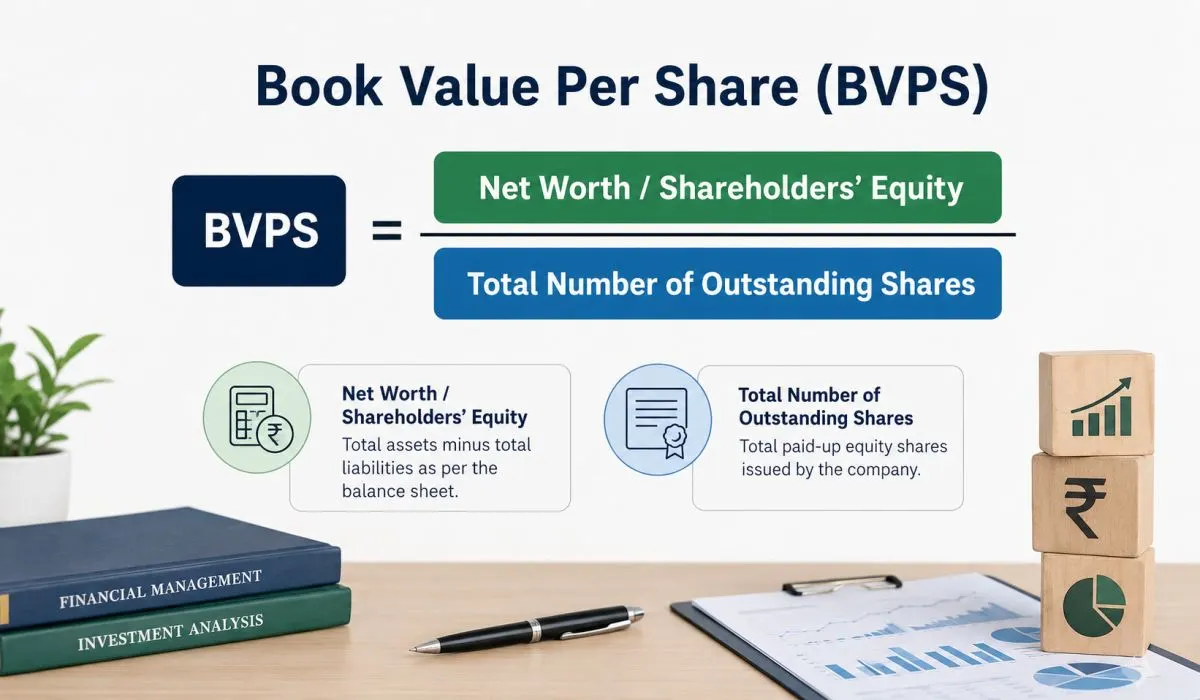
You pull this figure straight from the balance sheet. Start with total assets, cut out liabilities, then split the rest by total shares out there. I will take you through each part with real Indian company examples so you can do it yourself next time you check your portfolio.
What Book Value Per Share Actually Means?
Picture the company shutting down today. It sells all buildings, machines, cash, everything. Pays off loans and bills. What remains belongs to common shareholders. Divide that amount by shares issued, and you get book value per share.
Indian firms list this under "shareholders funds" in yearly reports. Say a company owns Rs 200 crore worth of stuff but owes Rs 120 crore. Left over is Rs 80 crore. With 20 crore shares, book value per share comes to Rs 4 only. Simple as that.
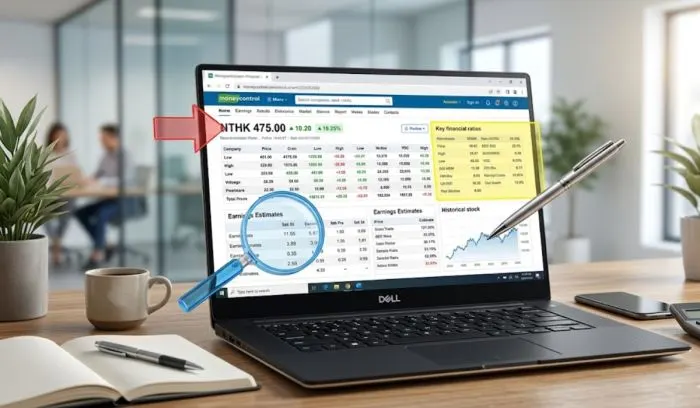
Check sites like Moneycontrol or company websites for latest numbers. Take ITC or Tata Steel they put it right there in investor sections. This tells you the real floor price of one share, different from what market buyers agree on each day.
Read More: Bull Market vs Bear Market India Examples: Key Differences and Tips
Why This Number Helps Indian Investors Daily?
Market prices jump around with news, elections, or global events. Book value does not budge much it sticks to audited accounts. Smart investors in India, think of those copying Rakesh Jhunjhunwala moves, always start here.
Spot a share selling below book value? Could be a steal. But dig why – old machinery or legal fights maybe. During bull runs like 2021 or steady climbs in 2026, this stops you chasing overpriced names.
PSU banks teach this best. Shares often sit at half book value due to past bad loans. Clean books later, and returns pour in. Retail folks using Groww or Zerodha apps save lakhs this way.
Step-by-Step Way to Work Out Book Value Per Share Yourself
Grab a notebook or phone calculator. You need balance sheet basics: shareholders equity, any preferred stock, and shares outstanding. Latest quarterly or yearly report has them.
Open PDF from BSE site or company page. Head to balance sheet.
Find Shareholders Equity First
Add up share capital and reserves. Minus losses if any. Reliance Industries showed over Rs 7 lakh crore last year in this spot.
Next, Minus Preferred Stock Value
Rare in India outside some banks. Zero it out if absent.
Last, Divide by Total Shares
Equity figure divided by shares. Excel makes it fast – cell A1 equity, B1 shares, C1 formula =A1/B1.
HDFC Bank Example Walkthrough
- Recent quarter: Equity around Rs 3.4 lakh crore. Shares: 7.6 billion.
- Math: 3,40,000 crore divided by 7,600 crore shares equals Rs 447 per share.
- Market sat at Rs 1,600 then, so three and half times book value.
Try Infosys for Practice
- March 2025 numbers: Equity Rs 1.45 lakh crore. No preferred. Shares 4,141 crore.
- 1,45,000 / 4,141 = Rs 350 book value. Market price Rs 1,800, P/B at 5.1. Fast growth explains premium.
- Run these checks every quarter. Track how it climbs with profits added.
What Counts as a Good Book Value Per Share in India
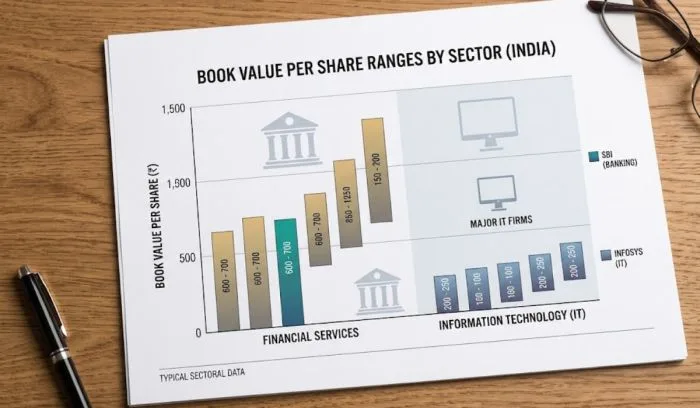
No magic number works everywhere. Steel makers need Rs 150-250 solid base from plants. Banks target Rs 400-600 with loan books.
Better yet, watch yearly growth. Up 12-15% means management builds real value. Pull five-year trends from NSE site charts.
PSUs like ONGC boast high book from oil fields but slow rise. IT giants TCS keep it Rs 200-350 yet deliver returns. Match it against same sector friends.
- Maruti Suzuki hits Rs 1,200 book value on car factories. Hero MotoCorp around Rs 350. Size matters.
- SBI bank book at Rs 500, trades 1.5 times – fair play. Private peers at 2-3 times show trust.
- Growth names like Zomato start low, build as they expand outlets.
Quick Sector Guide Table
| Sector | Typical Good Range (Rs) | Sample Firm |
|---|---|---|
| Banking | 350-650 | State Bank |
| IT | 250-450 | Wipro |
| Cars | 600-1,400 | Mahindra |
| Everyday Goods | 150-350 | HUL |
| Oil PSUs | 450+ | BPCL |
Spot check your picks against these.
You May Also Read: Blue Chip Stocks List in India 2026: Top 10 with Prices
Book Value Per Share vs Market Value Per Share
People often mix up these two when checking stocks on NSE or BSE. Book value per share comes from company books, while market value per share is what you see live on trading apps. Here is a clear breakdown point by point.
-
Source of the Number
Book value per share uses the balance sheet total assets minus all debts, split by shares. Market value per share is just the price buyers and sellers agree on right now at open market. -
How Often It Changes
Book value updates with quarterly or yearly results, stays put till next report. Market value shifts every second with trades, jumps on news or big orders. -
What It Really Shows
Book value per share tells real asset worth on paper, like cash and factories after loans. Market value per share mixes that with hopes for future profits, brands, or growth bets. -
When to Trust Each One
Use book value per share for safety check, spot if share sells below real worth. Rely on market value per share for timing buys or sells in fast markets like 2026 Nifty runs. -
P/B Ratio Links Them
Divide market price by book value per share to get P/B. Below 1 means cheap against books, like many PSU banks. Above 3 signals premium, common in IT firms like Infosys. -
Indian Stock Examples
SBI book value per share around Rs 500, market often 1.5 times that – fair deal. Zomato book low at Rs 50, market higher on delivery growth dreams. -
Limits to Watch Out For
Book value per share misses brands like Amul or software code value. Market value per share swings wild, think Adani dips in 2023. Always pair both for smart picks.
Side-by-Side Look Table
| Aspect | Book Value Per Share | Market Value Per Share |
|---|---|---|
| Comes From | Company accounts | Exchange trades |
| How Often Changes | Results season | Every trade |
| Reveals | Actual holdings | Hope and buzz |
| Use It For | Bargain hunt | Sell or hold timing |
| India Case | LIC Rs 100 book, Rs 950 market | Insurance future priced in |
- Book strengths: Real, audited numbers. Weak spots: Skips brands like Parle-G or software code.
- Market ups: Sees ahead. Downs: Wild swings, Adani 2023 style.
- Best bet: Scoop when market dips under book on turnaround signs.

Pitfalls Indians Often Hit with This Check
- Fresh Zerodha users grab low book value shares blind. Miss huge debts eating assets.
- Wrong sector match – bank Rs 500 not like auto Rs 1,000.
- Stale numbers from 2024 fool you. Grab Q1 2026 fresh.
- Mergers puff book with goodwill. Discount that mentally.
- India tax rules: Profits boost book post-tax mostly.
Quick Tools for Indian Users
- Screener.in sorts by book value free.
- Moneycontrol PDFs download easy.
- NSE/BSE sites post results fast.
- Tickertape app peers in seconds.
Pull data, crunch in Google Sheets. Learn hands-on.
Tata Steel Real Story
2020: Book Rs 600, market Rs 400, P/B 0.7 amid debt mess. 2025 cleanup: Book Rs 800, market Rs 1,200, P/B 1.5. Patient holders smiled.
Paytm Flip: Book Rs 50 start, market soared then tanked to Rs 10. Profits matter over promises.
Building Wealth as Book Value Climbs
- Yearly profits pile into reserves, lift book value steady. Reinvest payouts, watch it multiply.
- Pick 8-10 risers for long haul. Decade later, nest egg grows fat.
Bank Rules in India Angle
RBI demands strong books for safety. SBI Rs 500 signals solid under Basel. Post-2020 write-offs dipped many, rebounds now.
Wrapping It Up
You now hold the key to smarter investing with book value per share. Next time you eye a stock on your Groww or Zerodha screen, pull the balance sheet and run the numbers yourself.
Pair it with market price checks, and you dodge overpriced traps while spotting real bargains in Indian markets. Start today with one stock from your watchlist watch how this simple habit grows your wealth over time.
FAQs
What is book value per share meaning in easy terms?
Book value per share meaning is the net amount left for each share after a company clears all debts from its assets. It shows the true base worth on paper.
What is a good book value per share for Indian stocks?
A good book value per share varies by sector – aim for Rs 400-600 in banks or Rs 200-400 in IT firms like Infosys, especially if it grows 10-15% each year.
How to calculate book value per share for SBI?
To calculate book value per share for SBI, take its latest shareholders equity of around Rs 5 lakh crore and divide by 89 billion shares outstanding lands near Rs 560.
Book value per share vs market value per share – key difference?
Book value per share vs market value per share differs as book uses company accounts for real assets, while market reflects daily buyer bids full of growth hopes or fears.
Why check book value per share before buying NSE shares?
Check book value per share before buying NSE shares to spot if a stock trades cheap against its real worth, helping you grab deals like PSU banks during dips.