

Bull Market vs Bear Market India Examples: Key Differences and Tips
Indian stock markets swing between bull market vs bear market India examples that shape how we all invest. Picture Sensex shooting from 3000 points back in 2003 up to 21000 by 2008 good monsoons filled farms, IT firms pocketed dollars from abroad, jobs popped up everywhere, shops buzzed with buyers.
Then came bear blows like 2008 when it plunged to 8000 as US bank troubles dried up cash worldwide, or 2020 Covid scare dropping it from 41000 to 25000 in a flash with lockdowns killing trade.
Bullish days mean grab shares as prices lift on hope, bearish ones scream sell or wait since fear tanks values smart folks buy cheap at bear bottoms like ICICI shares in 09 lows for fat gains later, hold tight through bull climbs but skim peaks.
What Is Bear Market ?
A bear market is a time when share prices fall sharply and stay low for months. It happens when the main indexes like Sensex drop by 20 percent or more from their top point.
This phase brings fear among investors who sell shares to cut losses. Businesses face slow sales, fewer jobs open up, and banks hold back loans. Everyone waits for better days.
Bear markets test patience but end with recovery. Smart buyers pick strong shares at low prices for gains later. In India, they follow good times and clear the way for fresh starts.
Read More: Blue Chip Stocks List in India 2026: Top 10 with Prices

Bull Market Explained
A bull market takes hold when share prices climb over many months. People feel good about money matters and start buying more stocks. The Sensex or Nifty goes up by 20 percent or higher from the bottom.
It often kicks off after tough times end. Better rains help farms, factories run full shifts, and banks lend without much fuss. Shops see crowds again. Companies post stronger sales numbers. Share prices ride that wave.
In places like Mumbai or Delhi trading floors, talk turns to big wins. Fresh faces open accounts at brokers. Volumes shoot up on screens. Yet no one should think the good run goes on without end.
Bullish Meaning in Stock Market
Bullish shows a positive view where prices look set to rise. Investors who feel bullish buy shares with hope for gains ahead.
- Prices move up over time, often by steady steps on charts.
- People show confidence from good news like strong company sales or government plans.
- Demand for shares grows high while sellers stay few, pushing values higher.
- Indexes like Sensex climb, drawing more buyers into the market.
- Traders talk bullish when economy picks up with jobs and spending.
Bearish Meaning in Stock Market
Bearish points to a negative outlook where prices seem ready to fall. Those with bearish views sell shares to avoid losses.
- Prices drop sharp, sometimes 20 percent or more from peaks.
- Fear spreads from bad news such as weak profits or global troubles.
- Sellers flood the market while buyers pull back, driving values down.
- Indexes like Nifty head lower, with low trade volumes at times.
- Investors turn bearish during slowdowns with job cuts and tight money
Side by Side View
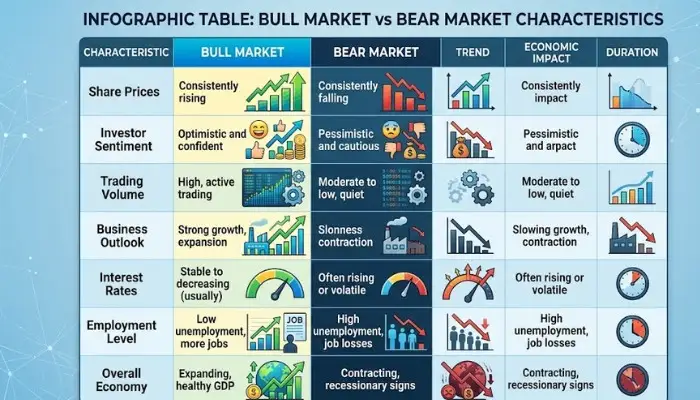
Take a quick look at how bull market stacks against bear market.
| Aspect | Bull Market | Bear Market |
|---|---|---|
| Share Prices | Climb steady over time | Drop sharp and stay low |
| People’s Take | Buy with eyes on gains | Sell to cut further pain |
| Business Scene | Jobs flow, cash moves free | Slow pace, belts tighten |
| How Long | Spans months into years | Stretches over same stretch |
| Best Move | Pick shares, sit through rise | Hold cash, grab dips |
Spot these signs to stay ahead of the curve.
Bullish Bearish in Play
Bullish points to prices set to lift. You pick stocks now for payoffs down the road. Picture a bull thrusting horns skyward, much like charts turning north.
Bearish signals prices headed lower. You offload holdings or sit aside. Think of a bear pawing down in a fight, akin to lines dipping on screens.
Traders in India chat about bullish days after strong budget news. Bearish vibes hit post poor rains or global shocks. These words paint the day’s feel.
Real Bull Runs in India
India lived through solid bull stretches worth noting.
Take 2003 to 2008. Sensex sat near 3,000 after global jitters in 2001. Solid monsoons boosted fields. Software firms sent code abroad for dollars. Lenders like HDFC grew books fast. Index touched 21,000 by 2007 peak. Early birds cashed in big.
Then 2009 into 2010. World money crunch in 08 left Sensex at 8,000 lows. Centre cut rates, pumped funds into roads and power. Rally pushed past 21,000 once more. Quick turnaround proved markets heal.
From late 2020 onward stood another. Lockdowns crushed trade, yet jabs rolled out and work shifted online. Sensex jumped from 35,000 to beyond 60,000 in 2021. Tech names and drug makers pulled ahead. Even smaller outfits rode along.
Past bull market vs bear market India examples underline rewards for those who stick around.
You May Also Read: How to Buy Stocks Online Step by Step for Beginners in India
Tough Bear Spells in India
Bear times sting yet fade out. India faced stark ones.
2008 global storm stands tall. Sensex crowned 21,000 early that year. US lender woes dried funds worldwide. Index crashed to 8,000 by March 09. Half the pot vanished for many. Folks turned to gold bars or bank fixed plans.
2011 through 2013 dragged on. Fuel costs soared, graft cases rocked trust, growth stalled. Sensex eased from 21,000 to 15,000 floors. Local currency slid against dollar. Overseas cash flowed out. Two years tested waits.
2020 COVID drop came swift. Sensex shed from 41,000 January highs to 25,000 March bottom. Shutdowns choked supply lines. Short burst ended as aid poured in. Such bear market cases drive home that bottoms lead to fresh starts.
When to Buy in Bull or Bear?
Right timing shifts bull vs bear market odds your way. Catch bull starts as green signs show. Firm quarterly numbers or policy boosts signal entry. Add positions in stages up the hill.
Bear bottoms call for buys amid max gloom. News hits worst, prices touch floors. Eye outfits with fat cash reserves and light borrowings. Spread buys over dips, not lump sum. ICICI shares at 09 troughs handed fat returns to patient takers.
Plain rule holds: Scoop when crowds dump. Lock gains near bull crests. Set price guards to shield downsides.
Ways to Play Both Sides

Smart plans weather bull market vs bear market swings.
Bull phase tips:
- Lean to fast growers in tech or daily needs.
- Ride winners longer, skim peaks for cash.
- Spread via funds that pick winners.
Bear phase shifts:
- Pick steady names in soaps or health.
- Stack rupees for bargain hunts.
- Skip loans or borrowed trades.
Keep tabs on Mint Street calls, yearly budgets, world headlines. Phone apps from Groww or Zerodha flash live Sensex shifts.
Traps That Trip Investors
- Chasing bull peaks burns cash. Folks pile in at tops sans value checks. Bear panics prompt full exits at worst hours.
- Skip TV shouts without your homework. Tune out social stock pumps. Bank on sales upticks and solid balance sheets.
Wrap Up
Markets in India go through bull market vs bear market phases time and again. Look back at the 2003 climb when Sensex jumped from 3,000 to 21,000 points, or the 2008 fall that cut it down to 8,000. Those bull market vs bear market India examples make one point clear tough bear times pass, and good bull runs reward those who hold steady.
Keep your eyes on company earnings and government steps, buy shares when prices sit low in bear spells, and take some profits when bull mood runs too hot. That simple approach builds your money over years without big risks.
FAQs
What does bullish and bearish mean in the stock market?
When you feel bullish, you see share prices going up soon, so you put money into stocks. Bearish hits when you think prices drop ahead, and you sell what you hold or stay away. Bulls lift with horns from below, bears swipe down with claws that’s where the names stick from old trading floors.
In bull vs bear market, when should you buy?
Step into buys at the start of a bull market once you spot prices turning up after bad news fades. During bear market lows, grab shares from solid firms when everyone else runs scared that’s your best shot at low costs before the next rise kicks in.
Can you name bull market vs bear market India examples?
Sensex run from 3,000 in 2003 to 21,000 by 2008 stands as a classic bull market case, driven by rains and IT cash. The 2008 bear market then pulled it to 8,000 amid world bank troubles real turns that shaped many pockets.
How much time does a bear market take in India?
Some bear markets wrap up in months like the quick 2020 COVID dip from 41,000 to 25,000. Others stretch to two years, take 2011 to 2013 when oil bills and scandals kept Sensex stuck around 15,000-21,000 range.
Where to find bull market vs bear market India examples PDF?
NSE India puts out free PDFs full of charts on past bull and bear runs head to their learn section, type in market cycles, and grab downloads that break down Sensex moves with dates and tips.